
Why No One Can Climb Mount Kailash ? The Hidden Truth Reavled?
The Sacred Mountain of Four Religions Spiritual Importance in Hinduism, Buddhism, Jainism, and Bon The Belief That Lord Shiva Resides on Kailash Mount Meru: The Center of the Universe Chinese Government Ban on Climbing Respecting Religious Sentiments and Global Pressure Harsh Weather and Dangerous Terrain High Altitude and Life-Threatening Conditions The Sacred Kora (Pilgrimage Walk) Around the Mountain Why Faith Is More Powerful Than Adventure A Mountain Meant to Be Worshipped, Not Conquered The Mystery and Spiritual Energy of Kailash

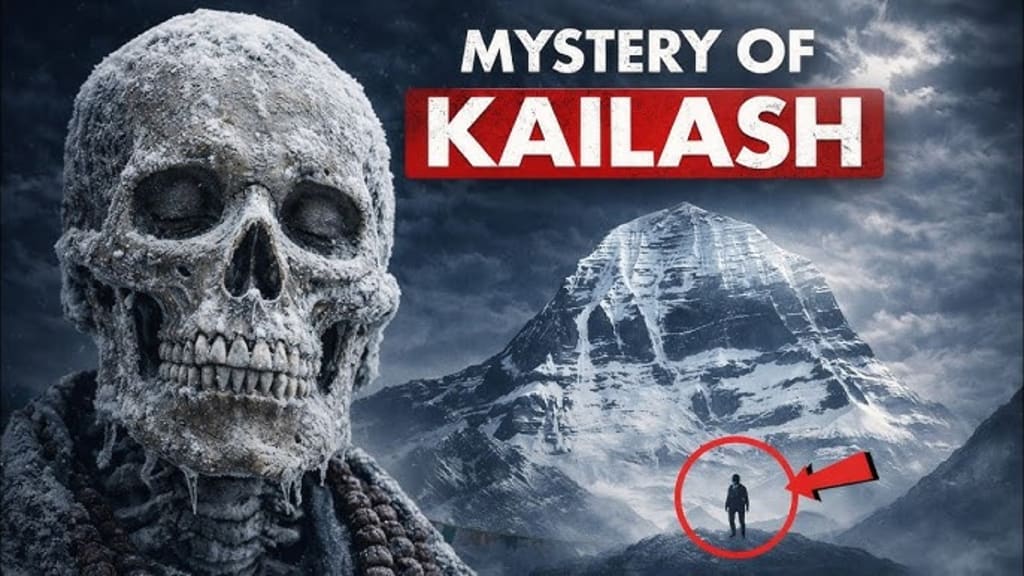
Mount Kailash
Why No One Can Climb Mount Kailash
Rising dramatically from the remote plateau of western Tibet, Mount Kailash stands at about 6,638 meters (21,778 feet) above sea level. Unlike other famous peaks of the Himalayas, it is not the tallest, nor the most technically difficult mountain in the region. Yet, it remains one of the only major mountains in the world that has never been officially climbed. The mystery surrounding why no one can climb Mount Kailash is deeply connected to religion, culture, politics, and natural conditions.
A Sacred Mountain for Billions
The primary reason Mount Kailash has never been climbed is its immense religious significance. For followers of Shiva in Hinduism, the mountain is believed to be the earthly home of Lord Shiva, the god of destruction and transformation. Hindus consider it the spiritual center of the universe, a place of divine energy and cosmic power. Climbing the mountain would be seen as a serious act of disrespect.
In Buddhism, Mount Kailash is associated with Milarepa, one of Tibet’s most famous saints. Buddhists believe the mountain represents Mount Meru, the mythical center of the universe. For Jains, it is where their first spiritual teacher achieved liberation. Followers of the ancient Bon religion also regard it as sacred. Because of this shared reverence among multiple religions, the mountain is treated as a holy sanctuary rather than a physical challenge.
Official Ban on Climbing
Another important reason is that the Chinese government, which administers Tibet, has placed a strict ban on climbing Mount Kailash. While mountaineers have climbed much higher and more dangerous peaks, such as Mount Everest, Mount Kailash remains protected due to religious sensitivity and political considerations.
In the past, a few explorers showed interest in climbing it, but permission was never granted. There are reports that even when discussions about a possible expedition arose, strong opposition from religious communities led authorities to reject the idea. The government now officially respects the spiritual importance of the mountain and does not issue climbing permits.
The Difficult Terrain and Weather
Although it is not the tallest peak in the Himalayas, Mount Kailash has a unique pyramid-like shape with steep, smooth faces that make climbing extremely challenging. The mountain’s icy slopes, unpredictable weather, and remote location add further difficulties. The region is known for sudden storms, freezing temperatures, and high winds.
Moreover, the altitude itself poses serious health risks. Climbers attempting high-altitude ascents often suffer from altitude sickness, which can be life-threatening. The isolation of the area means rescue operations would be extremely difficult in case of emergency.
However, it is important to note that physical difficulty alone is not the main reason it remains unclimbed. Many mountains that are technically harder have been successfully summited. The deeper reason lies in respect for spiritual traditions.
Pilgrimage Instead of Climbing
Instead of climbing the peak, thousands of pilgrims travel every year to perform a sacred walk known as the “kora” around the mountain. This 52-kilometer journey is believed to cleanse sins and bring spiritual merit. Pilgrims from India, Nepal, Tibet, and other countries endure harsh conditions to complete the circuit on foot, often at high altitude.
For these pilgrims, reaching the summit is not important. In fact, setting foot on the top would be considered a violation of the mountain’s holiness. The goal is spiritual purification, not physical conquest.
A Symbol Beyond Adventure
In modern times, mountaineering has become a symbol of human achievement and adventure. Climbers aim to conquer peaks as a demonstration of courage and endurance. But Mount Kailash represents something different. It symbolizes humility before the sacred. The world has collectively decided that some places should remain untouched out of respect.
Therefore, no one climbs Mount Kailash not because it is impossible, but because it is protected by faith, law, and tradition. It stands as a rare example where spiritual values are placed above human ambition. In a world where almost every natural wonder has been explored and conquered, Mount Kailash remains a powerful reminder that some mountains are meant to be honored, not climbed.
About the Creator
Discovery Channel
The channel is widely respected for its diverse content, covering topics such as wildlife, survival, space exploration, engineering, history, and groundbreaking technology. It brings audiences face-to-face with nature’s wonders,
Keep reading
More stories from Discovery Channel and writers in Chapters and other communities.
save your dog life
save your dog life buy https://www.digistore24.com/redir/448769/ihsandanish32/ Dog health is a vital aspect of responsible pet ownership. As devoted companions, our dogs deserve the best care to ensure a happy and vibrant life. By prioritizing their well-being, we can prevent common health issues and improve their overall quality of life. In this article, we will explore key areas of dog health, including nutrition, exercise, vaccinations, grooming, and regular veterinary check-ups. By following these guidelines, you can provide your beloved furry friend with a healthy
By Discovery Channel 3 years ago in Petlife
The Cave Part 6
If you have ever heard a tale about yourself that you cannot remember and doubtless think is made up, you will know how I felt when Tharkin related all that the eagle had seen of me before my memories were scattered. Of far distances and traveling companions that I did not recall, camping out under the stars and making our way to the mountains with deliberate purpose. The great bird had lost contact with my party once we entered the forests, and the seven other members were not seen again by him or his brethren since.
By Jamye Sharp8 days ago in Chapters
The Cave Part 5
Tharkin never answered my question. I tried to get him to interpret the vision I had seen in the smoke, but he claimed he had not seen what I had. This was no more satisfying for me than it would be for anyone else, but after several days of working with him maintaining the extensive gardens and tending to the livestock, I learned that he was master of what he would reveal and when. If I wanted to learn more of the voice in the cave, I would have to seek it out, or stumble on the answer in my own time.
By Jamye Sharp8 days ago in Chapters
Unofficial Challenge: What would you do if you were rich?
I love the kind of work I get to do in my career, but as I job search and browse apartments again due to another understaffed and unsustainable work environment that I did not intend to get into, my daydreams of better days consistently lean into the same question: What would I do if I didn't have to worry about my basic needs being met?
By Kay Husnick6 days ago in Writers



Comments
There are no comments for this story
Be the first to respond and start the conversation.