
Why Is Blue So Rare In Nature?
The blue color
There are no blue tigers. No blue bats, no blue squirrels, or blue dogs. Even blue whales aren’t that blue. Animals come in pretty much every color, but
blue seems to be the rarest. What’s cool, though, is when we do find
a blue animal, they’re awesome looking. Nature doesn’t do halfway with blue. To understand why this is, we’re gonna journey
through evolution, chemistry, and some very cool physics. But, first we’re gonna need to understand
why animals are any color at all, and to do that, we need to go look at some butterflies…
because butterflies are awesome… and if you don’t think so, you’re wrong This is Bob Robbins. He’s curator of Lepidoptera at the National
Museum of Natural History in Washington D.C. Butterflies ARE awesome. Make no mistake about it. They’re a group of moths that evolved to
be active during the day, and if you’re active during the day, you have an advantage:
You can use light to communicate. You probably realize this, but out of all insects, butterflies display the brightest and most detailed patterns. And there’s a good reason for that: The colors in butterfly wings deliver messages,
like “I’m toxic”, or “I’m a male and this is my territory”, but not all butterfly
colors are created equal. If we zoom way in on a butterfly wing, we
see the colors come from tiny scales. It’s actually how moths and butterflies
get their scientific name. Oranges, reds, yellows browns…those scales
all contain pigments, organic molecules that absorb every color except what we see. Black scales absorb all colors. Animals, from butterflies to birds to you
and me, don’t make these pigments from scratch, they’re made from ingredients in our diet. You might know this thanks to flamingos: They’re
born gray, but turn pink thanks to pigments called carotenoids in crustaceans they eat. So when it comes to these colors: You are
what you eat. But not so for blue. Blue is *different* If you move the camera, you can see that the
color changes as you move the camera. It does. It’s like a hologram thing. This is because there’s no blue pigment
in these butterflies Wait… so they’re blue, but they’re not
really blue? That’s correct! Yes. You’re lying to me butterflies! These are Blue Morpho butterflies, maybe the prettiest butterflies of all. I mean… they did make it the butterfly emoji. The blue color isn’t from a pigment. The blue comes from the shape of the wing
scale itself, and when I learned how this works, it kinda blew my mind. If we zoom way in on a blue wing scale, we
see these little ridges. If we slice across the scale, and look closer,
we see those ridges are shaped like tiny Christmas trees. The arrangement of the branches is what gives
Morpho wings their blue color. When light comes in, some bounces off the
top surface. But some light passes into the layer and reflects
off the bottom surface. For most colors of light, waves reflecting
from the top and bottom will be out of phase, they’ll be canceled out, and that light
is removed. But blue light has just the right wavelength:
the reflected light waves are in sync, and that color makes it to our eye. This hall of mirrors only lets blue light
escape. There’s even a pigment at the base that
absorbs stray red and green light to make the blue even more pure. That’s how we get this awesome iridescent
blue. The microscopic structure of the wing itself. All of this happens because of the way light
bends when it moves from air into another material. So if we fill all those tiny gaps with something
other than air, like alcohol, the blue disappears. Technically, this “changes the index of
refraction”, but in plain English that means blue light is no longer bent the right way. The microscopic light filter is broken. Until the alcohol evaporates. And the color returns. But these butterflies live in the rainforest. You think they’d lose their color any time
they got wet, right? Well watch this. These wing scales are made of a material that’s
naturally water-resistant. What about this blue jay feather? If we look through it, the color completely
disappears. No blue pigment. Each feather bristle contains light-scattering
microscopic beads, spaced so everything but blue light is canceled out. Unlike the highly-ordered structures we find
in butterfly wings, these feather structures are more messy, like a foam, so instead of
changing as we move, the color’s more even from every direction. Peacock tail feathers? Again it’s the shape of the feather, not
pigment. But the light reflecting structures here are
more ordered, like a crystal, so it’s brighter from certain angles. There’s even a monkey–WHOA let’s keep
this PG!!–even that color is made by the adding and subtracting of light waves thanks
to structures in the skin… not pigment. And yes, even your blue eyes, are colored
by structures, not pigments. Outside of the ocean, almost exclusively,
the bluest living things make their colors with microscopic structures, and each one’s
a little different. No vertebrate, not a single bird or mammal
or reptile that we know of, makes a blue pigment on its body. In fact, there’s only one known butterfly
that has cracked the code for making a true blue pigment. Blue as a pigment in nature is incredibly
rare. But there’s one exception so far that we
know about, and these are over here called the olivewings. They have evolved a blue pigment. They’re not very common and we don’t know
much about them, and I don’t know of any other blue pigment. That’s a really special butterfly. Why is almost all of nature’s blue made
from structures and not pigments like everything else? I’ve asked this question to several scientists
that study color, and here’s their best theory so far: At some point way back in time,
birds and butterflies evolved the ability to see blue light. But they hadn’t yet evolved a way to paint
their bodies that color. But if they could, it’d be like going from
early Beatles to Sgt. Pepper’s Beatles. it meant new opportunities for communicating
and survival. Creating some blue pigment–out of the blue–would
have required inventing new chemistry, and there was no way to just add that recipe to
their genes. It was much easier for evolution to change
the shape of their bodies, ever so slightly, at the most microscopic level, and create
blue using physics instead. They solved a biology problem with engineering. What I love about this is these colors have
fascinated curious people for hundreds of years. After looking at peacock feathers through
one of the first microscopes back in the 1600’s Robert Hooke wrote:
“these colours are onely fantastical ones” Even Isaac Newton noticed there was something
unusual about these blues, and scientists have been studying it ever since. Not only because the science is interesting,
but because it’s beautiful. Thanks for watching, and stay curious.
About the Creator
Keep reading
More stories from TBH Agencia Exclusiva Colsanitas and writers in Chapters and other communities.
Tattoos and Rail Guns Chapter 18: When Demons Plan For the Future
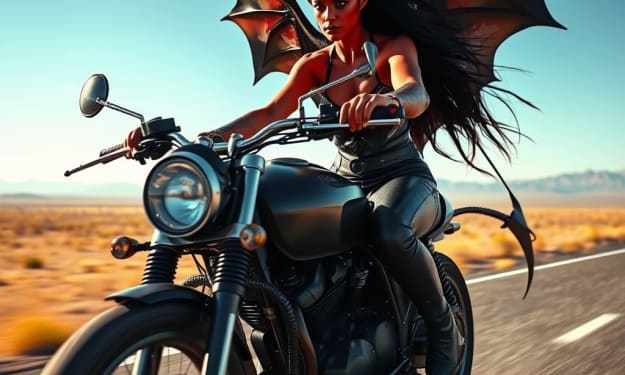
Sharness rode up to her “temple”; the 1920s mansion had been refurbished with an apocalypse in mind, making it an excellent base for her operations. She had fallen in love with the curves and swoops of the mansion; it was a gorgeous edifice only highlighted by the gardens around it and the pools that someone had taken care to design slides, fire pits, and hidden nooks. It was made to satisfy the needs of those who had lived there and she could appreciate that as no human living on the planet could.
By Jamais Jochim7 days ago in Chapters


Comments (1)
Nice analysis