
Why Fast Disease Detection Shapes Public Health
Fast disease detection


Fast disease detection is one of the most powerful tools available in modern public health. When new illnesses emerge or familiar ones suddenly surge, the speed at which health systems identify them influences how communities respond, how quickly treatment becomes available, and how far the illness spreads. Early detection does more than guide clinical decisions. It safeguards economies, strengthens healthcare capacity, and protects lives.
Why Early Detection Matters in Public Health
Every disease outbreak has a starting point. Some begin quietly with a few unexplained symptoms, while others appear suddenly and spread rapidly. If health authorities recognize the threat early, they can trace infections, isolate cases, inform the public, and prevent avoidable transmission. Without early detection, the disease may advance unnoticed, increasing hospitalizations, overwhelming healthcare systems, and leading to higher mortality rates.
Early detection also supports equitable care. Communities with faster access to accurate health data are better positioned to receive timely treatment, vaccines, and preventive measures.
How Outbreaks Spread Without Timely Identification
Outbreaks rarely escalate overnight. They often move through predictable phases, and weak detection systems allow them to evolve unchecked.
Undetected Community Transmission
Many infections begin spreading long before symptoms appear. People may unknowingly pass the disease to others at workplaces, schools, and public spaces. By the time patients seek medical attention, the outbreak may already have expanded beyond containment.
Delayed Clinical Reporting
If healthcare workers lack the right tools, training, or resources to identify new pathogens, early warning signs may be missed. Slow reporting can create gaps in national and global disease surveillance, delaying response plans.
Inaccurate or Incomplete Data
Without reliable testing, health officials work with estimates rather than confirmed cases. This can lead to ineffective policies, misallocation of medical supplies, and poor community guidance.
The Role of Surveillance Systems in Protecting Communities
Disease surveillance systems serve as the backbone of public health readiness. They collect, interpret, and share data about infections, trends, and emerging threats.
Routine Monitoring
Public health agencies continually track seasonal illnesses, foodborne pathogens, and antimicrobial resistance. Routine monitoring helps establish baselines, making unusual patterns easier to identify.
Global Data Sharing
Diseases do not respect borders. International reporting networks allow countries to collaborate, compare findings, and prepare before an outbreak becomes widespread. Transparent communication supports faster vaccine development and coordinated response strategies.
Technology-Driven Surveillance
Digital platforms, automated reporting, and advanced analytics now support near real-time monitoring. These tools improve accuracy and make detection more accessible, especially in remote regions.
How Fast Detection Strengthens Pandemic Response
Pandemics highlight the importance of early action. When detection is slow, governments and healthcare systems may face shortages of hospital beds, medications, and public health workers.
Faster Public Health Interventions
Quarantines, vaccination campaigns, and targeted awareness programs are most effective when launched early. Timely detection informs decision-making and ensures that interventions align with the actual threat level.
Protecting High-Risk Groups
Vulnerable populations, including older adults, immunocompromised patients, and infants, rely on quick detection to stay safe. Early alerts help communities take precautions before exposure occurs.
Reducing Economic Disruption
Workplaces, transportation, and trade can continue operating more safely when outbreaks are identified and contained early. This reduces financial losses for individuals, businesses, and governments.
How Molecular Testing Supports Early Detection
Molecular diagnostics help identify infectious diseases at the genetic level. These tools are widely used in hospitals, research labs, and public health agencies because they detect pathogens with high accuracy, often before symptoms fully appear.
A commonly used method is the Polymerase Chain Reaction kit, which amplifies genetic material from viruses or bacteria so that even small amounts can be analyzed. Molecular testing contributes to rapid identification, supports clinical decision-making, and provides reliable data for surveillance systems. When used at scale, it becomes a crucial component of outbreak control.
Building a Future Where Detection Is Faster and More Accessible
Public health experts continue working toward a world where fast disease detection is standard, not situational. Expanding laboratory capacity, training health workers, improving community education, and investing in surveillance technology all help close detection gaps. Strengthening global collaboration also ensures that countries can identify and respond to emerging threats more effectively.
Fast detection is not only about science or healthcare. It reflects a collective commitment to protecting communities, preserving stability, and valuing human life. As technology advances and awareness increases, early detection will continue shaping a safer and more prepared public health future.
About the Creator
Meaghan Howe
I'm Meaghan Howe, an experienced education blogger with a strong foundation in Education. Through engaging writing, I provide practical advice and innovative strategies. My goal is to empower educators worldwide.
Keep reading
More stories from Meaghan Howe and writers in Chapters and other communities.
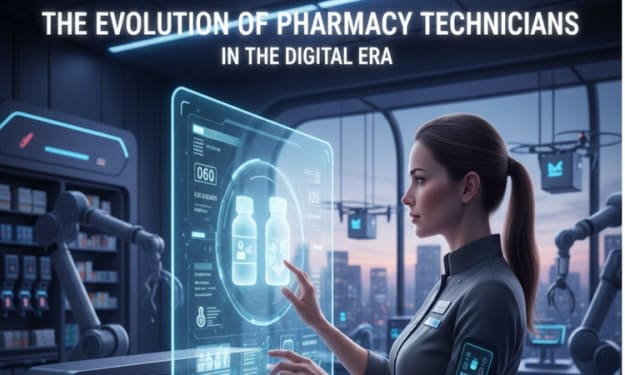
The Evolution of Pharmacy Technicians in the Digital Era
A subtle transformation is presently occurring within the healthcare industry, fueled by automation, telepharmacy, and a significant change in access to education. As healthcare embraces technologies, the technician’s role is evolving from a mere logistical assistant to a fundamental part of patient care and clinical services.
By Meaghan Howe3 months ago in Education
My Story in Canada
Opening Reflection Some journeys don’t change your life in dramatic ways. Instead, they soften you. They remind you of the quiet beauty in ordinary days, the comfort of family, and the way small moments can stay with you long after you return home. My trip to Canada was like that—a collection of gentle memories stitched together by love, curiosity, and the simple joy of being somewhere new.
By Iqraa Toqeer2 days ago in Chapters
A Historic Declaration
We the People of the Husbands of the United States of America, in Order to form a more perfect Union, and I mean you...with me...establish Justice, insure domestic Tranquility, provide for the common defence, promote the general Welfare, and secure the Blessings of Liberty to ourselves, after Puberty, do ordain and establish this Declaration of Co-Dependence.
By Gerard DiLeo5 days ago in Humans



Comments
There are no comments for this story
Be the first to respond and start the conversation.