
Why Are Electric Trains So Fast?
Unveiling the Magnetic Marvels Behind High-Speed Rail

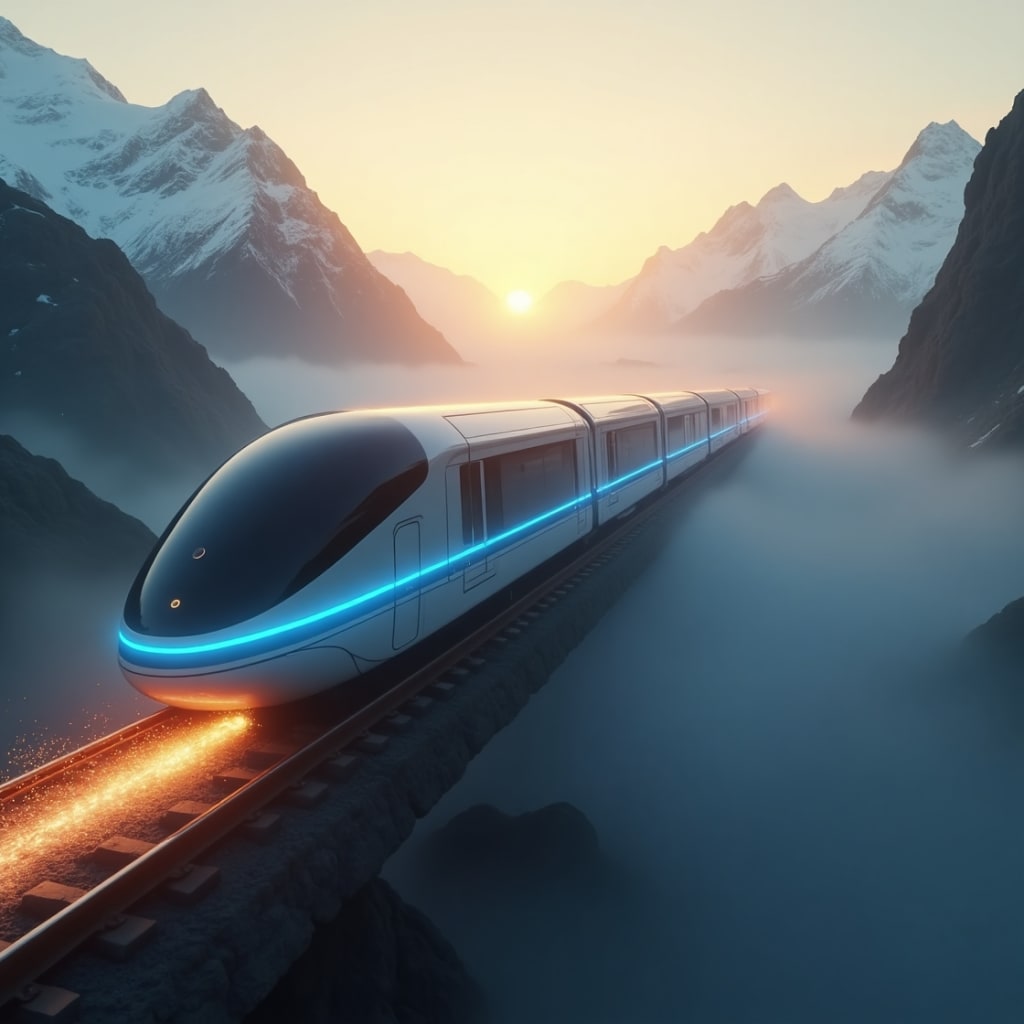
Electric trains are not just modern—they’re masterpieces of speed and science. Unlike old diesel trains that take their time puffing along, electric trains zoom ahead with breathtaking force. The secret? It all starts with electricity. Electric motors give instant power, allowing trains to launch forward with zero delay. There's no slow buildup—just smooth, strong acceleration that feels almost like flying.
One of the biggest reasons electric trains are so fast is that they don't rely on gears or heavy mechanical parts like older trains. Electric motors are sleek, simple, and smart. They send power directly to the wheels, without wasting time or energy. Less friction, fewer moving parts, and more control means more speed—every single second.
But the real star of the show is magnetic levitation, also known as Maglev. These trains don’t even touch the tracks. That’s right—no wheels on rails. Powerful magnets lift the train just above the track, and other magnets push it forward. No touching means no friction. No friction means nothing to slow it down. The result? Trains that can cruise at over 600 km/h (373 mph), smoother than silk and quieter than a whisper.
Imagine this: a train floating silently above its tracks, slicing through the air with a nose like a jet plane. That’s what makes Maglev trains feel like something out of science fiction—but they’re very real, and they’re already running in places like Japan and China. The ride is not just fast; it’s shockingly smooth, with no bumps or jolts. Just pure, gliding motion.
Design plays a huge part too. High-speed electric trains are built for one thing—speed. Their shapes are aerodynamic, like birds or missiles, carefully crafted to cut through wind. Materials like aluminum and carbon fiber keep them lightweight but strong. Every curve and every surface is engineered to reduce drag and increase flow. The train doesn’t fight the wind—it dances with it.
And the tracks? These aren’t your ordinary railway lines. High-speed electric trains use special tracks that are super straight and carefully designed. Fewer turns, fewer hills, and smart digital control systems mean the train can stay fast and safe. Signals are managed by advanced computers, keeping the whole system smooth, fast, and incredibly efficient.
There’s also an eco-friendly bonus. Electric trains run clean. They don’t burn fuel, they don’t release smoke, and they can be powered by renewable sources like solar or wind. So while you're racing across the country at lightning speed, you're also being kind to the planet.
Braking systems are just as smart as the engines. Regenerative braking allows the train to slow down quickly and safely—while turning that slowing motion back into electricity! It’s like recharging while you stop. This helps save energy and time, keeping everything efficient and fast.
What’s most exciting is that the future is even faster. Engineers are now working on new systems like the Hyperloop, where trains will travel inside vacuum tubes with almost no air resistance at all. These could reach speeds of over 1,000 km/h, making city-to-city travel faster than airplanes.
So why are electric trains so fast? Because they’re built that way—powered by electricity, guided by magnets, shaped like rockets, and driven by science. They glide, they fly, and they lead us into the future of transport. What was once a dream is now a track away.
No dream is too big, and no journey is too long when you believe in your own power. Every small step forward is progress. Keep going, even when the path is tough—because strength grows in struggle, and success comes to those who refuse to give up. Your future is worth it.
About the Creator
Leesh lala
A mind full of dreams, a heart wired for wonder. I craft stories, chase beauty in chaos, and leave sparks of meaning behind. Built to rise, made to inspire.
Keep reading
More stories from Leesh lala and writers in Chapters and other communities.
Myopia
Myopia, commonly known as nearsightedness, is a vision problem that affects millions of people around the world. It means that objects close to us are clear, but things far away appear blurry. For many, this condition begins quietly, slowly creeping into their daily life without much notice. But myopia is very real, and it can deeply affect not just how we see the world, but also how we live in it. Please, take care. Please take care of your eyes—they are precious beyond words.
By Leesh lala10 months ago in Chapters
Valentine's Dates Over the Years
Colin grinned as Brooklyn slipped into the living room. “Is it all set?” he asked. The twenty-one year old grinned. She was in her last year of college and Colin knew that Lincoln was proud of her. Although she had been away at college, she’d eagerly helped Colin plan his surprise for Lincoln. “I’m so glad you’re finally doing this,” she said.
By Reb Kreyling26 days ago in Chapters
US CENTCOM Deploys LUCAS Drone Against Iran, Raising Questions Over Starlink Integration
The United States Central Command (CENTCOM) has announced that the US has used new long-range drones against Iran. Structurally, these drones resemble the Iranian “Shahed” drones.
By Real content7 days ago in Chapters
The BAFTA Awards
By now, in a stunning departure from recent years, most of the world is aware of what happened at the BAFTA film awards. Social Media Headlines will tell you the bare bones: that John Davidson, a Tourette's Syndrome advocate, shouted a racial slur at two Actors of Colour, Michael B Jordan and Delroy Lindo.
By Natasja Rose7 days ago in Psyche



Comments
There are no comments for this story
Be the first to respond and start the conversation.