

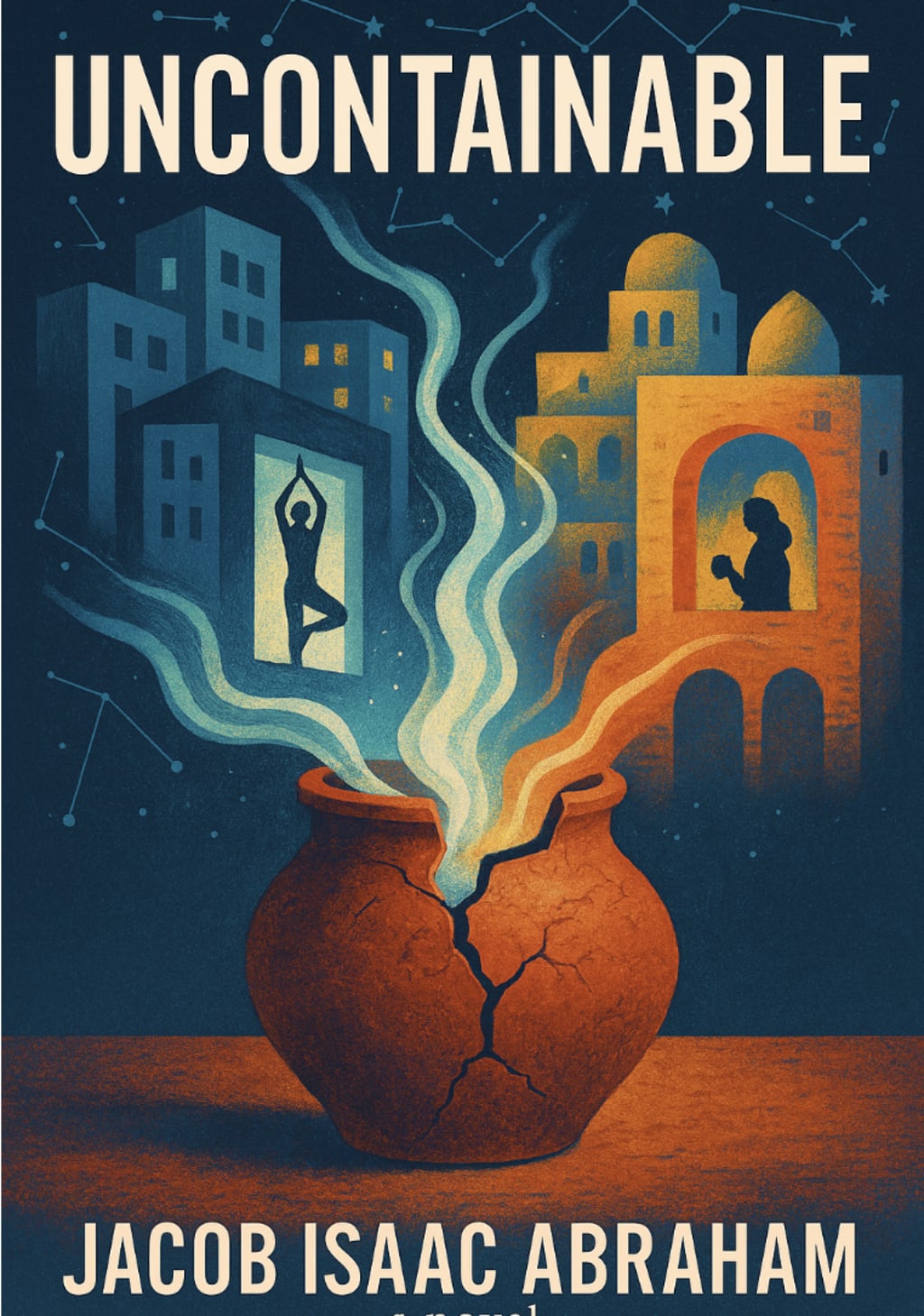
As modernity emerged, rich families might be funding new neighborhoods outside the old city walls of Jerusalem with paper money from far away lands, but inside, in the twisted alleys where ways of knowing pressed against each other like old neighbors sharing walls, people traded their pasts.
The marketplace of dreams itself operated in the liminal hours between afternoon prayers and sunset, when the light turned the Jerusalem stone to gold and made everything feel slightly less real. Here, a Greek Orthodox pilgrim might trade twenty years of memories - his childhood in Thessaloniki, the death of his mother, his failed business in Athens - for the right to begin again as a candlemaker in the Christian Quarter. An elderly Yemenite jeweler could exchange the story of his apprenticeship in Sana'a for a new narrative as a Torah scribe. Even the Bedouin, coming in from the desert, brought tales of tribal feuds and lost oases to trade for urban identities.
The most valuable stories were the ones about journey and arrival. "Tell me how you came to Jerusalem," the merchants would say, and that telling itself was worth a week's lodging, a new trade, a different name. The marketplace recognized that everyone who came to Jerusalem was, in some way, trying to shed an old self. The city had always been a place of transformation - why not make that transformation literal, economic, a matter of fair exchange?
A lifetime could be cut up and traded in different stories, making elder arrivals wealthier. A life’s supposedly most precious experience could be broken apart, traded: the anxiety and joy of your wedding day for some lodging, your father’s advice for some sheep, or the pain of making love to someone you didn’t know for the daily routines of the celibate.
The dream merchants themselves were a guild of sorts. Jews, Arabs, and Armenians who had mastered the art of extracting and preserving narratives. They kept their collected stories in clay jars like their parents had taught them when they were old enough to write, each one labeled with the date and origin of the tale inside. Some said that on very quiet nights, you could hear the jars whispering their contained lives to each other in a hundred different languages.
What no one talked about was what happened to the old stories, the surrendered identities. Some said they seeped into the stones of the city itself, becoming part of Jerusalem's endless layers. Others claimed that on certain nights, you could see them drifting like smoke above the rooftops, looking for new bodies to inhabit. The dream merchants themselves just smiled when asked, and said that every story finds its characters eventually.
The only ones who never traded stories were the Jerusalem-born. They had no need. Their identities were already woven into the city's fabric. Instead, they acted as witnesses and guarantors, verifying that each transformation was genuine, that each new self was truly born from the death of the old.
…
The first story that escaped wasn't supposed to be dangerous. Just a standard transformation tale: Bukharian merchant becoming Jerusalem spice seller, three generations of silk route memories traded for a shop near the Damascus Gate. My grandfather had sealed thousands like it, each jar labeled with the old name and the new, each identity properly exchanged and preserved.
But this one wept. Not water. Something thinner than water, thicker than light. At first just a hairline crack, releasing the scent of cardamom and camel sweat, the sound of silk being measured by hand. Then the neighboring jars started to resonate. A Polish baker's memories of childhood snow began to melt. A Persian goldsmith's mountain winds escaped their clay womb. A Russian monk's prayers tangled with a Sufi's dreams.
The marketplace of dreams had always run on a delicate economy of forgetting and becoming. Every new identity required the proper preservation of the old. You couldn't become a Jerusalem butcher unless your memories of being a Damascene shepherd were properly stored. You couldn't transform into a grave digger unless your past as a jester was sealed in clay, labeled, and shelved.
But now the stories were mixing. People who had traded their pasts for new futures suddenly remembered both versions of themselves. A customer who had become a candlemaker three years ago walked in smelling of the sea, speaking in his old sailor's tongue. A woman who had traded her desert chronicles for a new life as a baker's wife began singing Bedouin songs in the market.
The marketplace's carefully maintained ledger of transformations began to blur. Who owned which memories? Which dreams belonged to whom? The very currency of identity started to dissolve. You couldn't trade what you couldn't contain, couldn't price what you couldn't separate.
By sunset, the marketplace of dreams had transformed from exchange to exodus. Story merchants shuttered their stalls, clutching their remaining jars like children. The price of transformation skyrocketed. No one would trade identities when the containers themselves couldn't be trusted. Some tried using new vessels: glass bottles, copper urns, even British tea tins. But stories that had tasted clay for centuries refused these modern homes.
The economy shifted overnight. Customers who had been saving their childhood memories to trade for new professions now spent them recklessly, whispering their stories to strangers in coffee houses, leaving trails of identity like scattered coins. Others hoarded their pasts, refusing to trade at all. You'd see them in the market clutching their memories close, learning to live with two or three or four versions of themselves rather than risk a faulty exchange.
The British hadn't needed to shut down the marketplace of dreams. It was collapsing under its own impossibility. You could see the change in the new buildings rising outside the walls - solid stone structures that allowed for only one kind of person, one kind of name. The Rothschilds' banks dealt in paper money, paper identities. Even the Ottoman authorities, who had always looked the other way, now demanded written records, fixed addresses, registered professions.
Within a year, the clay jar merchants had mostly converted to other trades. Some became regular pottery sellers, their jars holding nothing more dangerous than olive oil. Others adapted to the new economy, becoming document writers or passport photographers - fixing identities in ink and silver nitrate instead of clay and story-stuff. A few maintained secret exchanges in back rooms, but the stories they traded grew smaller, safer, more personal. No more transformations of essence, just gentle adjustments to memory.
By the time they made constellation maps for children, you couldn't pay your rent in dreams anymore. The marketplace survived only in echoes: grandmothers who somehow spoke four languages they'd never learned, shopkeepers whose hands remembered trades their papers didn't show, children who woke crying for homes their families had never visited. The British built their hotels, the Zionists built their neighborhoods, the Arab nationalists built their movements. Everyone now requiring single, solid identities that could be documented and tracked.
But in the oldest parts of Jerusalem, behind walls that had absorbed centuries of transformed lives, you could still find traces. Cracks in stone that whispered in forgotten voices. Doorways that remembered all the different names that had passed through them. And in certain families, objects that held more history than their owners claimed.
They say the marketplace closed when what happened was what was in the newspaper and they started planting powerlines instead of trees. But others insist it simply transformed, operating now in dreams and chance encounters, in moments when we suddenly remember childhoods we didn't have, or speaking in voices not our own. The clay jars were lost or broken, but their contents continue to circulate - in prayers said without understanding their meaning, in melodies hummed while waiting for buses in cities our ancestors never imagined, in the sudden desire to measure precisely what cannot be contained.
About the Creator
Keep reading
More stories from Jacob Isaac Abraham and writers in Chapters and other communities.
The Cave Part 6
If you have ever heard a tale about yourself that you cannot remember and doubtless think is made up, you will know how I felt when Tharkin related all that the eagle had seen of me before my memories were scattered. Of far distances and traveling companions that I did not recall, camping out under the stars and making our way to the mountains with deliberate purpose. The great bird had lost contact with my party once we entered the forests, and the seven other members were not seen again by him or his brethren since.
By Jamye Sharp13 days ago in Chapters




Comments
There are no comments for this story
Be the first to respond and start the conversation.