
Trump’s Controversial Police Comments Spark Debate Over Accountability and Public Safety
When Words Become Policy: Trump’s ‘Do Whatever You Want’ Moment and Its Legal Ripples

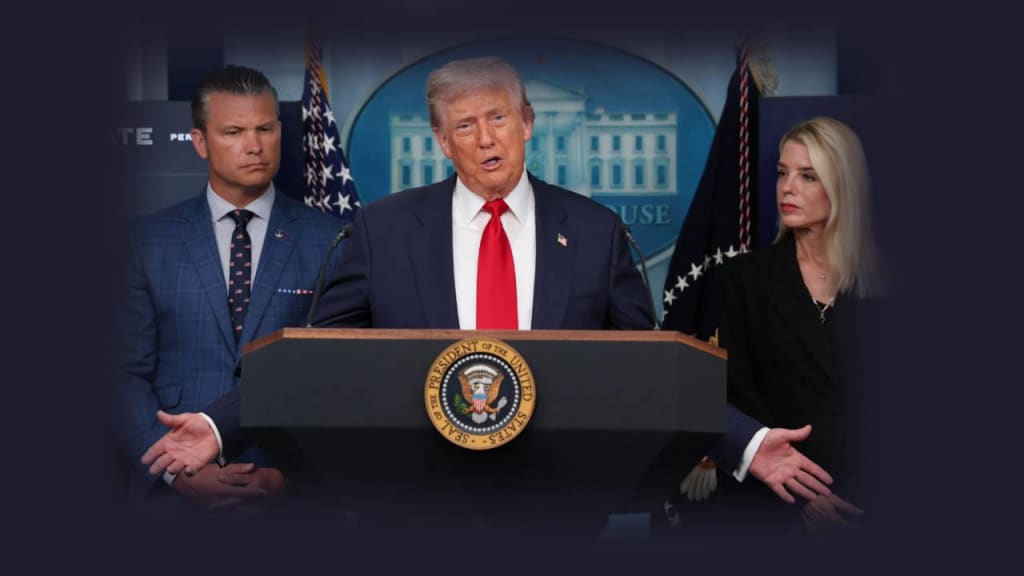
Former U.S. President Donald Trump has once again found himself at the center of a heated national debate following his recent remarks suggesting that police are now “allowed to do whatever the hell they want.” While the statement was made in a political setting and may have been aimed at energizing his base, it has drawn sharp criticism from civil rights advocates, legal experts, and community leaders concerned about the message it sends regarding law enforcement accountability.
The Statement in Context
The controversial remark was delivered during a public appearance where Trump spoke about crime, law enforcement, and his vision for restoring order in American cities. He framed his comment as part of a broader call for stronger policing and tougher measures against criminal activity. Supporters interpret it as an endorsement of giving police officers more freedom to act decisively, while opponents warn it could be seen as a green light for excessive force or abuse of power.
It is important to note that while politicians often use hyperbolic language to make a point, such statements can have a significant influence on public perception and policy discussions.
Historical Background on Police Powers in the U.S.
Law enforcement in the United States operates within a complex framework of constitutional rights, state laws, and departmental policies. The Fourth Amendment protects citizens from unlawful searches and seizures, while the Fifth and Fourteenth Amendments guarantee due process and equal protection under the law. These legal safeguards are meant to balance police authority with the civil liberties of individuals.
Past presidents have taken different approaches to policing. Some have pushed for reforms aimed at improving accountability, while others have focused on increasing resources for law enforcement to address crime. The tension between public safety and civil liberties has long been a defining feature of the U.S. political landscape.
Reactions from Supporters
Supporters of Trump’s stance argue that police officers have been unfairly restricted by political pressures and public scrutiny, making it harder for them to effectively do their jobs. They believe that empowering officers to act decisively can deter crime, improve community safety, and restore public order in high-crime areas.
Some conservative commentators have also suggested that critics of strong policing overlook the reality faced by officers on the ground, who often have to make split-second decisions in dangerous situations. For these supporters, Trump’s statement is seen as a show of solidarity with law enforcement.
Reactions from Critics
Critics view Trump’s remarks as reckless and potentially harmful. Civil rights advocates argue that telling police they can do “whatever they want” risks undermining the very laws and constitutional protections they are sworn to uphold. They warn that such rhetoric could embolden misconduct and erode trust between law enforcement and the communities they serve.
Community leaders also highlight the danger of fueling tensions at a time when many cities are still dealing with the aftermath of high-profile cases of police violence. Public trust in law enforcement is fragile in some areas, and statements perceived as encouraging unchecked authority can set back progress toward building positive relationships.
Legal Perspective
From a legal standpoint, no political figure has the authority to override the constitutional and statutory limits on police powers. Law enforcement officers are bound by federal and state laws, court rulings, and internal department regulations. Any violation of these laws can result in disciplinary action, criminal charges, or civil lawsuits.
Legal experts emphasize that even in times of heightened concern about crime, the rule of law must remain paramount. The idea that police could operate without accountability runs counter to the core principles of American democracy.
Potential Impact on Policing and Communities
In the short term, Trump’s comment may energize his political base and appeal to voters who prioritize law-and-order policies. However, it could also create challenges for police departments trying to maintain professional standards and public trust.
For communities, the real-world impact will depend on how officers and law enforcement leaders interpret the statement. While most police professionals understand the legal boundaries of their work, rhetoric from high-profile political figures can still shape public expectations and perceptions.
Conclusion
Donald Trump’s recent comments about police authority have sparked a broader conversation about the balance between empowering law enforcement and ensuring accountability. Supporters see it as a call to restore respect and authority to the badge, while critics fear it could weaken the safeguards that protect civil liberties.
Regardless of political affiliation, the debate highlights an important truth: effective policing requires both the tools to maintain public safety and the commitment to uphold the rule of law. Striking that balance will continue to be a central challenge for leaders, communities, and officers alike.
About the Creator
Syed Ali
I’m a streamer and writer sharing tips and guides on accessing geo-restricted streaming platforms, helping you watch your favorite content from anywhere in the world.
Fair Exchange, No Robberies
Dark Memoirs - Index There are at least two kinds of people in the world: those who write this half-arsed kind of intro to a story that looks to separate the rare and the norm, and those who realise it's an overused framing device and don't.
By Paul Stewart13 days ago in Chapters
Brass Ring Chapter 10: Bruno Gets Back In The Saddle
Bruno loved the Reubens at the Loaded Swallow, and he savored his sandwich. Well, the one he had to order after my idiot boyfriend was gone. He was also scrolling through the paperwork for the Blue Card Program. He also checked to make sure that Paul was still listed as part of the program; while officially it was set up to make life easier for CAPES members, unofficially it was created to fuel a certain speedster while in the field. It was something he was happy to do; nothing was worse than a hungry speedster in an enclosed space. He had found that out when Paul was trapped by Tintran the Terrible several Christmases ago.
By Jamais Jochim7 days ago in Chapters



Comments
There are no comments for this story
Be the first to respond and start the conversation.