
Trump, Obama, and the ‘Apes’ Video: When Racist AI Memes Enter Presidential Politics
A racist AI meme involving the Obamas sparked backlash after appearing on Trump’s social account

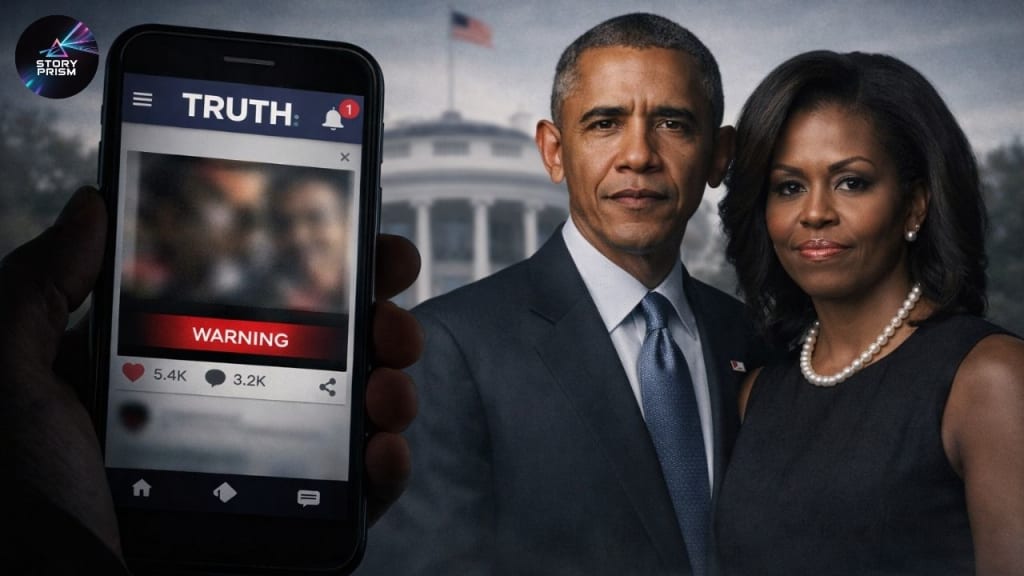
In early February, a short video clip posted to Donald Trump’s Truth Social account ignited a political firestorm. The video, which included a racist depiction of former President Barack Obama and former First Lady Michelle Obama as apes, drew swift condemnation across the political spectrum before being quietly removed. While the clip itself lasted only seconds, its implications — about race, power, artificial intelligence, and the normalization of extremist online culture — linger far longer.
The video was part of a longer post promoting false claims about voter fraud in the 2020 presidential election. At the very end, it abruptly cut to an AI-generated parody inspired by The Lion King, portraying Trump as the “king of the jungle” while several Democratic figures appeared as animals. Among them were the Obamas, depicted as apes — a racist trope with deep and painful historical roots.
For centuries, caricaturing Black people as monkeys or apes has been used to justify slavery, segregation, lynching, and Jim Crow laws. It is not accidental imagery, nor is it politically neutral. That such a depiction appeared on a sitting president’s official social media account — during Black History Month — amplified the outrage.
Initially, the White House defended the post. Press Secretary Karoline Leavitt dismissed criticism as “fake outrage,” framing the clip as merely an “internet meme video.” That defense, however, quickly collapsed under mounting pressure. Republican Senator Tim Scott of South Carolina, a close ally of Trump and the only Black Republican in the U.S. Senate, publicly condemned the video, calling it “the most racist thing I’ve seen out of this White House.” Other Republicans followed, urging the president to remove the post and issue an apology.
The video was eventually deleted, with a White House official blaming a staffer for “erroneously” posting it. Yet no formal apology was issued, and the administration declined to explain why the post was removed after previously defending it. That silence became part of the story.
Civil rights organizations reacted forcefully. NAACP President Derrick Johnson described the video as “blatantly racist, disgusting, and utterly despicable.” Democratic leaders went further, accusing Trump of deliberately inflaming racial divisions to distract from other political and legal troubles. The Obamas themselves did not respond publicly — a restraint many supporters viewed as dignified, but telling.
This incident did not occur in a vacuum. Trump has a long history of promoting conspiracy theories and racially charged narratives involving Barack Obama. Before entering politics, he was a leading voice in the “birther” movement, falsely claiming that Obama was born in Kenya and therefore illegitimate as president. Even after acknowledging Obama’s U.S. birth, Trump never fully reckoned with the racial undertones of that campaign.
What makes this episode different is the role of artificial intelligence and meme culture. The clip originated from an online MAGA meme account and was generated using AI tools that allow creators to produce highly shareable, provocative content at lightning speed. Such tools blur the line between satire, misinformation, and hate speech — and when amplified by powerful figures, they can normalize ideas once considered politically disqualifying.
In previous eras of American politics, overtly racist imagery often resulted in swift consequences: resignations, firings, public disgrace. Today, the response appears more fragmented. While backlash was intense, it was also temporary. The post came down, the news cycle moved on, and accountability remained elusive.
The broader concern is not only what Trump shared, but what his sharing signals. When a president reposts racist AI-generated content — intentionally or not — it legitimizes the online ecosystems that produce it. It sends a message that cruelty can be dismissed as humor, racism as “memes,” and historical trauma as internet fodder.
This normalization has consequences beyond partisan politics. It shapes how technology is used, how history is remembered, and how future leaders may behave. AI is not inherently racist, but it reflects the values of those who wield it. When political leaders amplify its worst outputs, they help define what is acceptable in public discourse.
The “Trump Obama apes” video will likely fade into the archive of political controversies, but it leaves behind an uncomfortable question: if such imagery can circulate at the highest levels of government with only minimal consequences, what boundaries remain?
In the end, the issue is not about one deleted post. It is about whether American politics still recognizes a moral line — and whether power now protects those who cross it.
About the Creator
Keep reading
More stories from Story Prism and writers in Chapters and other communities.
Trump, Obama, and the ‘Apes’ Post: How a Deleted Meme Reignited America’s Longest Political Wound
The phrase “trump obama apes” would have seemed unthinkable in official political discourse just a few decades ago. Yet in early February 2026, it became the center of a national controversy after a social media post shared from President Donald Trump’s account depicted former President Barack Obama and former First Lady Michelle Obama as primates. The post was later deleted following widespread backlash, but not before reopening one of the deepest wounds in American political culture: the racialization of power.
By Story Prisma day ago in Chapters



Comments
There are no comments for this story
Be the first to respond and start the conversation.