
TikTok banned in the United States
President Trump Signs Executive Order Effectively Banning TikTok in the United States

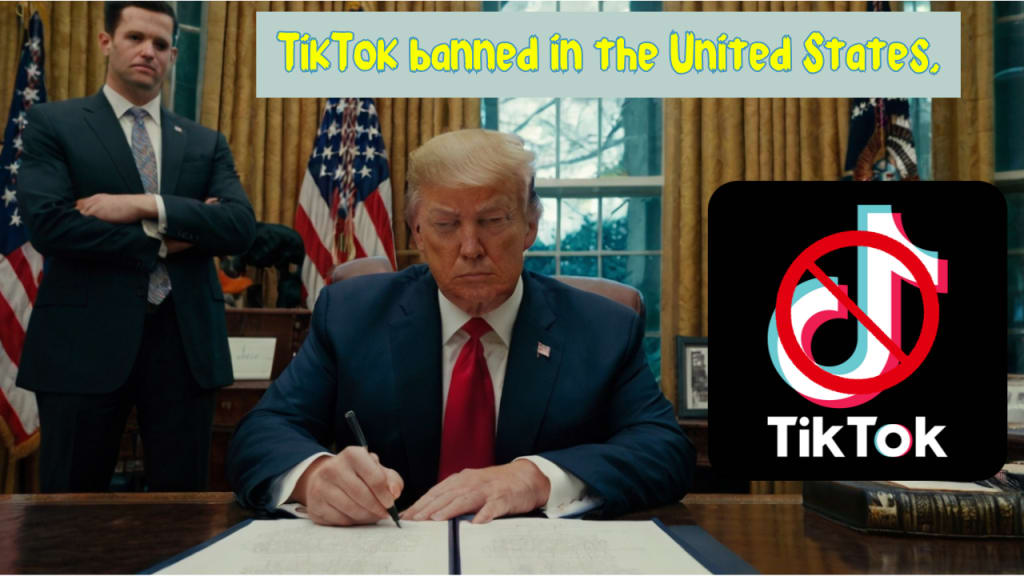
TikTok Ban in the United States: Latest Developments and Its Impact on the App
In a notable development, the United States has entered a new phase in its confrontation with the app "TikTok," with the U.S. government imposing a full ban on the app in the country. This significant move, effective as of January 19, 2025, marks a decisive step in escalating tensions between the U.S. and China in the technology sector. The decision, announced late on the evening of January 18, 2025, represents a major escalation in the legal and political battle over national security and data protection.
Background of the Ban
TikTok has long been a target of scrutiny by governments around the world, particularly in the United States, where growing concerns have emerged over the app’s data collection practices. Owned by the Chinese company "ByteDance," the app has faced accusations of allowing the Chinese government access to American users' data. U.S. authorities have consistently raised alarms about the potential use of this data for espionage or interference in U.S. politics, particularly concerning elections.
The U.S. government had previously demanded that ByteDance sell its U.S. operations to an American company as a condition for TikTok to continue operating in the country. Failure to comply with these demands would result in the threat of a ban.
Details of the New Ban
On January 19, 2025, the U.S. imposed the ban on TikTok, which came into effect immediately. As part of this decision, the app was removed from major app stores, such as the Apple App Store and Google Play Store, making it unavailable for download or update to U.S. users. As a result, millions of American users are now unable to access the app.
TikTok issued a statement to U.S. users on the evening of January 18, 2025, confirming that the app would be "temporarily unavailable" starting Sunday, January 19, 2025, in accordance with the new law banning the app nationwide. The decision followed a ruling by the U.S. Supreme Court that rejected an appeal by TikTok’s owners to block the ban, making the decision final.
Reasons for the Ban
The main reason for this ban lies in concerns over national security, with the U.S. government believing that TikTok could provide the Chinese government with access to sensitive user data. The primary concern has been the storage and potential use of this data, especially as tensions between the U.S. and China were escalating. U.S. officials argue that the data collected by the app could be used for espionage or manipulation of U.S. politics.
Beyond this, the ban is part of a broader effort by the U.S. to curb Chinese digital influence in its markets. The U.S. sees Chinese apps like TikTok as a threat to national security, believing that these platforms could be used as tools to expand Chinese influence in the global digital space.
Reactions to the Ban
TikTok's Response: TikTok responded quickly to the ban, confirming the significant impact it would have on millions of American users who rely on the app for self-expression and engagement. The company reiterated that user data is not sent to China and that it is committed to protecting user privacy. TikTok expressed disappointment over the decision, but acknowledged that it was a consequence of ongoing legal and political challenges.
U.S. Public Reaction: The ban was met with mixed reactions from the public in the U.S., particularly from young people who represent the app’s core user base. Many influencers and creators expressed their frustration, noting that the ban would disrupt their professional lives and diminish opportunities to monetize content. TikTok has become a key platform for many to build careers, and its sudden removal posed significant challenges for these individuals.
China's Response: The Chinese government voiced its displeasure with the U.S. decision, calling it an interference in the operations of Chinese companies. China has consistently argued that these actions are part of a broader U.S. effort to undermine Chinese companies and monopolize the global digital economy. The TikTok ban adds to the mounting tension between the two countries, especially as trade and diplomatic relations continue to deteriorate.
Economic and Social Impacts
Impact on the Tech Industry: The TikTok ban is expected to have a significant impact on the U.S. tech industry, particularly in digital marketing. Many American companies have relied heavily on TikTok as a major advertising platform, and small businesses have utilized the app to reach younger audiences. With the app now unavailable, these companies face the challenge of shifting to alternative platforms, which may not offer the same level of engagement or reach.
Economic Consequences for the U.S.: The ban may also result in economic losses in the U.S. market, particularly in the advertising sector. Brands that previously used TikTok as a key part of their marketing strategy will need to find new ways to connect with the younger demographic. TikTok's removal may cause disruptions for businesses that have integrated the app into their marketing strategies.
Impact on U.S.-China Relations: The TikTok ban signals a new level of escalation in the already tense relationship between the U.S. and China. This move reflects broader concerns over Chinese technological influence in the U.S. and around the world. The decision to ban TikTok could have far-reaching consequences on trade and diplomatic relations between the two countries, particularly in the technology and e-commerce sectors.
Conclusion
The decision to ban TikTok in the United States marks a significant turning point in the ongoing dispute between the U.S. and China over digital security and data privacy. While the U.S. government views this as a necessary step to protect national security, the ban could have far-reaching economic and social implications. The effects on the app’s users, creators, and businesses that rely on the platform will likely be profound, and the case highlights the growing tensions between the two largest economies in the world in the digital age.
As the dust settles, the next steps will involve seeing how TikTok and its parent company, ByteDance, respond, and whether this ban will inspire similar actions by other countries concerned about Chinese digital influence. Ultimately, the TikTok ban underscores the importance of securing personal data in an increasingly interconnected digital world.
About the Creator
💓 Pulse of Stories 💓
The world of short and inspiring stories! Here you will find stories that touch hearts, ignite the imagination, and take you on quick yet deep journeys.
Keep reading
More stories from 💓 Pulse of Stories 💓 and writers in Chapters and other communities.
A Lesson from the Collapse of the Soviet Union
A Lesson from the Collapse of the Soviet Union: How Does a Modern Empire Fall? The collapse of the Soviet Union in 1991 is considered one of the most significant events in modern history, marking the end of the Cold War and reshaping global power dynamics. The Soviet Union was a superpower spanning a vast territory of 15 republics, controlling much of Eastern Europe and Asia. Yet, this political and economic giant collapsed relatively suddenly. In this article, we will explore the factors that led to the collapse of the Soviet Union and how this collapse serves as a lesson for understanding the fall of modern empires.
By 💓 Pulse of Stories 💓about a year ago in Chapters
Pakistan's defense agreement with Saudi Arabia, will Pakistan remain neutral in a war between Iran and Saudi Arabia?
The scope of attacks that began on February 28, 2026, between the United States, Israel, and Iran has expanded into a regional war, raising questions about Pakistan’s foreign policy as well as its defense agreement with Saudi Arabia.
By Real content7 days ago in Chapters




Comments
There are no comments for this story
Be the first to respond and start the conversation.