
A Lesson from the Collapse of the Soviet Union
A Lesson from the Collapse of the Soviet Union: How Does a Modern Empire Fall?

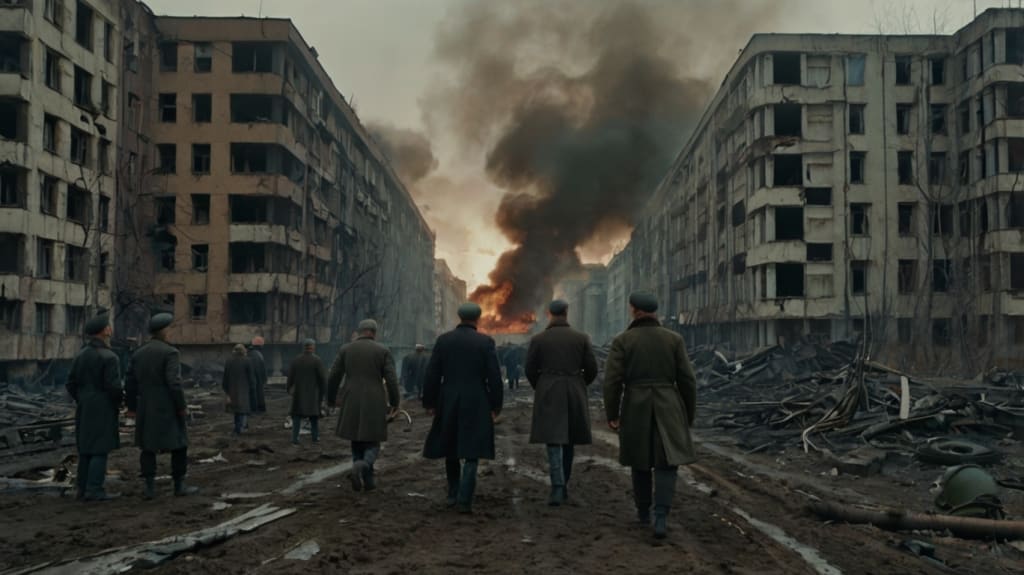
A Lesson from the Collapse of the Soviet Union: How Does a Modern Empire Fall?
The collapse of the Soviet Union in 1991 is considered one of the most significant events in modern history, marking the end of the Cold War and reshaping global power dynamics. The Soviet Union was a superpower spanning a vast territory of 15 republics, controlling much of Eastern Europe and Asia. Yet, this political and economic giant collapsed relatively suddenly. In this article, we will explore the factors that led to the collapse of the Soviet Union and how this collapse serves as a lesson for understanding the fall of modern empires.
1. Economic Causes: The Failure of the Socialist System
The socialist economic system was one of the foundational pillars of the Soviet Union, but it proved unsustainable in the long term. The system relied on central planning, where the state controlled all aspects of the economy, from production to distribution. This led to:
Inefficiency: Factories and farms operated without regard for quality or efficiency, resulting in shortages of basic goods.
Excessive Bureaucracy: Centralized administration created massive bureaucratic complexities, slowing down decision-making processes.
Inflation and Debt: By the 1980s, the state was suffering from high inflation and massive external debts, severely weakening the economy.
2. Political Leadership: Lack of Effective Reforms
Despite reform attempts by Mikhail Gorbachev, the last Soviet leader, these reforms came too late and were insufficient to save the system. Gorbachev’s reforms included:
Glasnost (Openness): Allowing freedom of expression, which led to public criticism of the regime.
Perestroika (Restructuring): Attempts to reform the economy, but these failed due to bureaucratic resistance and poor planning.
However, these reforms exacerbated the situation rather than improving it, as they exposed the system’s flaws without providing effective solutions.
3. External Pressures: The Cold War and Arms Race
During the Cold War, the Soviet Union engaged in a costly arms race with the United States. This resulted in:
Resource Drain: A significant portion of the state’s budget was spent on military buildup, affecting other sectors like healthcare and education.
International Isolation: Hostile foreign policies led to the Soviet Union’s isolation from the international community, reducing opportunities for economic and trade cooperation.
4. Internal Divisions: Nationalism and Independence
The Soviet Union consisted of 15 republics, each with its own cultural and linguistic identity. As central authority weakened, these republics began demanding independence. This led to:
Rise of Nationalist Movements: In republics like Lithuania and Ukraine, independence movements gained momentum.
Weakened Central Control: The central government in Moscow could not control these movements, leading to the union’s disintegration.
5. Social Crises: Loss of Trust in the System
Soviet citizens suffered from declining living standards and shortages of basic services. This resulted in:
Loss of Trust in the System: Citizens no longer believed in the system’s ability to meet their needs.
Corruption: Widespread corruption further fueled public discontent.
6. Global Changes: The End of the Cold War
With the end of the Cold War, the Soviet Union lost much of its international influence. This led to:
Collapse of the Eastern Bloc: Eastern European countries under Soviet influence began to break free and transition to democracy.
Loss of Legitimacy: The Soviet Union could no longer present itself as a viable alternative to the capitalist system.
Conclusion: Lessons from the Collapse of the Soviet Union
The collapse of the Soviet Union offers several important lessons for understanding how modern empires fall:
The Importance of Economic Flexibility: A rigid, centrally planned economic system was a major factor in the collapse. Modern empires need economic systems capable of adapting to global changes.
The Need for Timely Reforms: Reforms that come too late or are poorly planned can exacerbate crises rather than solve them.
Managing Cultural and National Diversity: Empires comprising diverse ethnic and cultural groups need policies that ensure unity without suppressing local identities.
Avoiding Military Overextension: Excessive military spending can drain a state’s resources and hinder internal development.
Maintaining Public Trust: Without public support, empires lose their legitimacy and ability to endure.
The collapse of the Soviet Union is not just a historical event but a vital lesson for understanding the challenges faced by modern empires. By studying these factors, nations can avoid a similar fate and work toward building more stable and resilient systems.
About the Creator
💓 Pulse of Stories 💓
The world of short and inspiring stories! Here you will find stories that touch hearts, ignite the imagination, and take you on quick yet deep journeys.
Keep reading
More stories from 💓 Pulse of Stories 💓 and writers in Chapters and other communities.
The Light at the End of the Hallway
The Light at the End of the Hallway In a small village surrounded by towering mountains, there stood an old house known as the "House of the Mysterious Light." The house had been abandoned for many years, but the villagers spoke of a strange light that appeared at the end of a long hallway inside the house every night. The light glowed with a warm golden hue, as if inviting anyone who saw it to come closer. However, anyone who attempted to approach it never returned.
By 💓 Pulse of Stories 💓12 months ago in Chapters
Bruce Lee and The God of War: Kuan Ti
It starts with love.. The Power to the God Of War and Wealth Walk into a Chinese restaurant (even in Oklahoma, USA), a Chinese police station, a kung fu martial arts studio or even a Chinese temple and you often see a red faced warrior holding a heavy quan-do (spear like weapon).
By WILD WAYNE : The Dragon King7 days ago in Chapters
Why is everyone's lifestyle different when it comes to living life
When we look at the lifestyles that people lead do we ever wonder why they are not all the same? Is the fact that lifestyles for people are all different because people are all different and that is what makes it unique? That is what I would say, because if we all had the same lifestyle the world would be a very boring place. So do different things then your neighbour when you do this you will feel so much better and so much more will come into your life that I am sure of. Lifestyles are what makes life worth living because we live our lives in the way that works for us, some of us work constantly, some of us know how to relax and take a break by doing the things we enjoy and we call those things hobbies. Everyone does different things in there lives because that is what makes us the people we are. Lifestyles are different because then life is different. When we live our lives, we do so because of what we want out of them don’t we? That is the way that I look at it, what about you? Everyone’s life is different because, if it was all the same then it wouldn’t be any fun, LIfe is meant to be fun and full of hobbies or else it isn’t anything at all, that is the way I look at it.
By Louise Barraco5 days ago in Chapters
Day 4 of Quitting
If this is how sobriety feels, maybe it’s better to go through life a little buzzed… this, along with other hits like, I want to kill myself, I wish I was dead, and I’m going to throw myself off a bridge have been the only thoughts on rotation these past few days. I promise myself that if, in a month, I still feel like this (‘this’ meaning despondent, full of rage, and simultaneously numb) I can go back to smoking. Until mid-February though? Nicotine is off the table.
By sleepy drafts7 days ago in Longevity




Comments
There are no comments for this story
Be the first to respond and start the conversation.