
“The Year I Stopped Performing Happiness”
Honest, raw essay on what happens when you drop the façade of positivity.
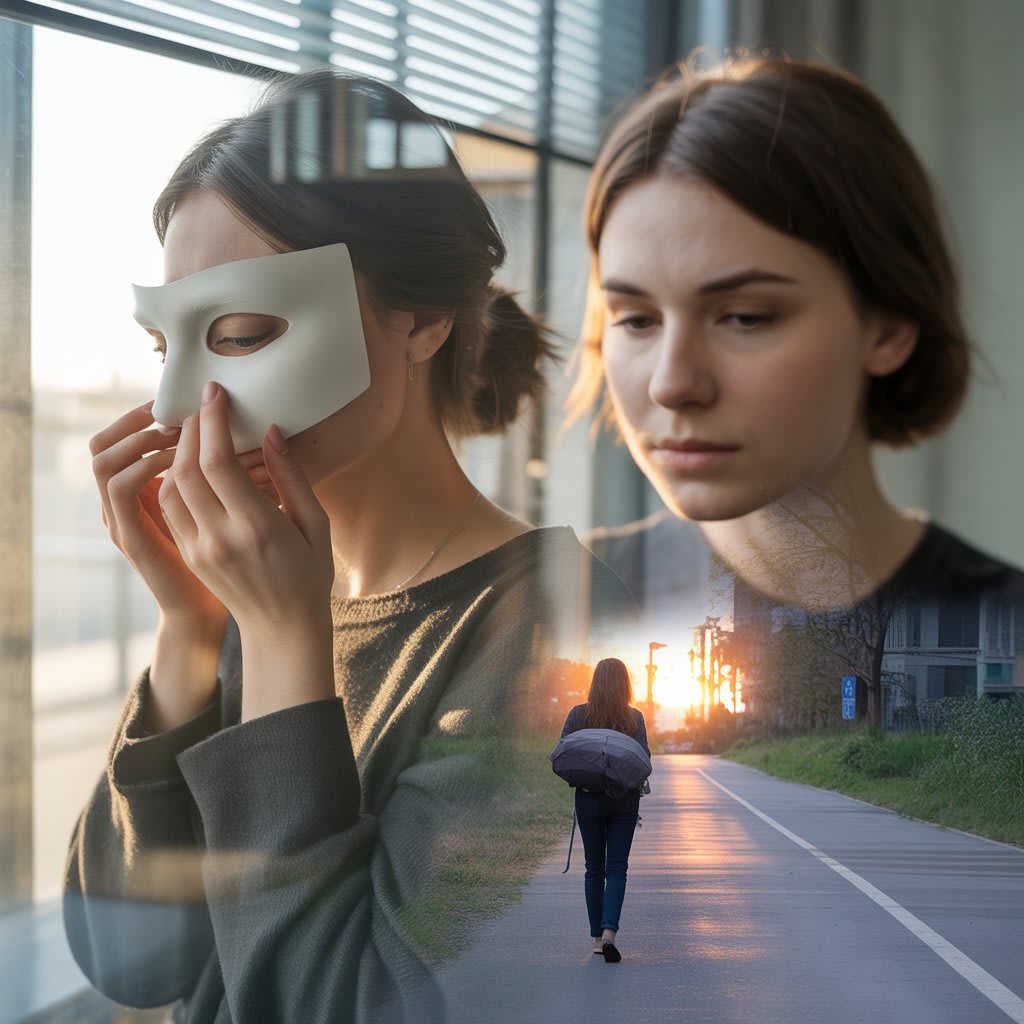
The Year I Stopped Performing Happiness
I used to think happiness was a performance — a kind of social currency you traded for belonging. Smile at the right moments, say “I’m fine” when people ask, post the highlight reel online, and you’ll convince the world you’re okay. Maybe, in time, you’ll convince yourself too.
For years, I was good at it — a professional optimist. I laughed loudly at jokes that weren’t funny, cracked self-deprecating humor before anyone else could, and became the reliable “positive one” in every group. If life was a party, I was the one handing out emotional cocktails, mixing humor and lightness until everyone else felt better.
And secretly, I was exhausted.
The cracks started showing quietly. I began waking up with a tightness in my chest that coffee couldn’t fix. My reflection felt like a stranger’s. I’d smile, but the muscles in my face ached afterward — like holding a pose for too long. I told myself it was just stress, or hormones, or “a phase.” But deep down, I knew what it was.
It was burnout — not just from work, but from pretending.
The year I stopped performing happiness wasn’t planned. There was no dramatic breakdown or epiphany. It happened slowly, like winter creeping into autumn. I just stopped saying “I’m fine” when I wasn’t. I stopped laughing when I didn’t feel like it. I stopped forcing silver linings onto every cloud that hovered above me.
At first, it terrified me.
I was scared that people would leave — that they only liked the cheerful version of me. I worried I’d become the “negative one,” the downer, the friend who brought the mood down. But something unexpected happened instead: life didn’t fall apart. It actually started to make sense.
When I began being honest — really honest — some people did drift away. But others stayed, and those connections deepened in ways I didn’t think were possible. Conversations became quieter, slower, and real. I learned that vulnerability isn’t weakness; it’s the glue that holds genuine relationships together. When I said, “I’m having a hard time,” someone else would say, “Me too.”
And suddenly, we were both a little less alone.
There’s a strange relief that comes from admitting you’re not okay. It’s like exhaling after holding your breath for years. The world doesn’t crumble when you stop pretending to be happy. It softens.
But here’s the part no one talks about: the honesty hurts at first.
When the mask falls off, so does the illusion that everything’s under control. I had to face the sadness I’d been sweeping under the rug — years of disappointments, loneliness, and unspoken grief. I had to sit with them, name them, and learn that feeling bad wasn’t something to fix; it was something to understand.
That year, I learned to live slower. I went on long walks without my phone. I cried — sometimes in public, sometimes in my car, sometimes for no clear reason. I took photos of small things: a broken seashell, morning sunlight through blinds, raindrops on my window. These were the moments happiness used to drown out — the quiet, unnoticed ones that actually tether you to being alive.
I started journaling again.
Not the “gratitude only” lists I used to write, but full honesty — pages that sometimes looked like storms. Some days, my handwriting was angry, jagged, uneven. Other days, it was calm and flowing. Both were me, and for the first time, I let them coexist.
People often say happiness is a choice. I don’t think that’s true — at least not in the way we’ve been told. You can’t choose to be happy every day, but you can choose to stop pretending. And that’s a kind of freedom that runs deeper than happiness. It’s peace.
By the end of that year, I noticed something subtle but profound: the moments of joy that did appear — a good meal, a friend’s laughter, a lazy Sunday — felt real. Not polished or performed, just real. They didn’t arrive because I chased them. They came because I finally made room for them.
Now, when someone asks, “How are you?” I pause before I answer. Sometimes I say, “I’m okay,” and mean it. Other times, I say, “It’s been rough,” and that’s okay too. I no longer owe anyone a smile. My happiness is not a show; it’s a pulse — quiet, steady, and mine.
I didn’t become happier by pretending less sad. I became human by allowing both to exist.
So no, I don’t perform happiness anymore. I live through it, alongside sadness, fear, hope, and everything in between. The year I stopped performing happiness was the year I finally learned to tell the truth — and the truth, it turns out, is a much softer place to live.
About the Creator
Valentine's Dates Over the Years
Colin grinned as Brooklyn slipped into the living room. “Is it all set?” he asked. The twenty-one year old grinned. She was in her last year of college and Colin knew that Lincoln was proud of her. Although she had been away at college, she’d eagerly helped Colin plan his surprise for Lincoln. “I’m so glad you’re finally doing this,” she said.
By Reb Kreyling18 days ago in Chapters
Kia Ford: The Hammer Girl's English Premiere Production
Wearing an immaculate beige ensemble, highlighting innocent marketable features, Kia Ford continued surveying the courtyard, debating the open space future, “I have the two tickets here, are you prepared to head over to Anfield’s afternoon delight music festival series?”
By Marc OBriena day ago in Chapters
Flower Bloom 369
FLOWER Bloom 2/25/26 Wednesday By Mariann Carroll Karen had been with Tony for 7 years. Tony started acting strangely after her surgery. He would mow the lawn in the rain and be on his cellphone. He started pushing Karen away. Tony came clean about seeing someone. Karen moved out two months later. Karen moved in with a friend. She felt betrayed.
By Mariann Carroll4 days ago in Fiction


Comments
There are no comments for this story
Be the first to respond and start the conversation.