
The Hypothesis of Humans as Descendants from Mars
Science Fiction or Plausible Theory

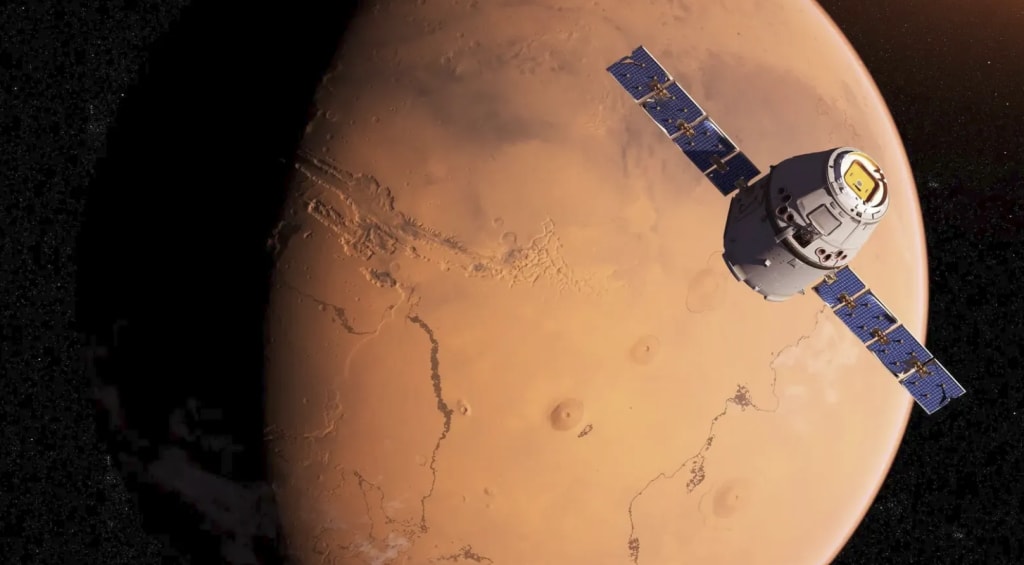
The idea that humans might be descendants of Martian life has long been a subject of fascination, popularized by science fiction and occasionally entertained by scientists. While this concept might seem far-fetched, it taps into deeper questions about the origins of life on Earth and the possibility of life elsewhere in the universe. Although there is no definitive evidence to support the theory that humans are Martian descendants, there are intriguing scientific hypotheses and discoveries that keep the conversation alive.
Panspermia: A Framework for Interplanetary Life Transfer
At the heart of the theory that humans — or life on Earth in general — might have Martian origins is the concept of panspermia. Panspermia is the hypothesis that life, or the building blocks of life, can be transferred between planets via space-faring rocks, like meteorites, or through other mechanisms. According to this theory, life might not have originated independently on Earth but could have been seeded by organisms or organic compounds from another planet, such as Mars.
Mars, with its past conditions believed to be more Earth-like, is often cited as a potential source of these life-seeding materials. It’s possible that ancient Martian microorganisms could have been ejected from the planet’s surface by a massive impact event and traveled through space to land on Earth. Once here, they could have found suitable conditions to thrive and eventually evolve into the complex forms of life we see today, including humans.
Mars: A Hospitable Environment in the Past?
For the idea of Martian descent to hold water, Mars would need to have been a habitable environment at some point in its history. Evidence from various Mars missions suggests that the planet once had liquid water on its surface, a key ingredient for life as we know it. Features such as dried-up riverbeds, ancient lake beds, and mineral deposits indicate that Mars may have had a warmer, wetter climate billions of years ago.
Furthermore, the discovery of organic molecules by the Curiosity rover and the detection of seasonal methane emissions on Mars have fueled speculation about the planet’s potential to support life. These findings, while not direct evidence of past or present life, suggest that the basic ingredients for life might have been present on Mars long ago.
If Mars was indeed habitable in the distant past, it’s conceivable that life could have developed there before conditions on Earth were suitable for life to take hold. Under this scenario, Earth could have been “seeded” with Martian life, making us, in a sense, Martians.
Meteorites: Messengers from Mars
One of the most compelling pieces of evidence supporting the possibility of life transfer between Mars and Earth comes from meteorites. Scientists have identified several meteorites on Earth that originated from Mars, known as Martian meteorites. These rocks were ejected from Mars by impact events and traveled through space before eventually landing on Earth.
The most famous of these is the ALH84001 meteorite, discovered in Antarctica in 1984. In 1996, a team of scientists announced that they had found possible microfossils of bacteria within the meteorite, sparking widespread excitement and debate. While the interpretation of these structures as evidence of Martian life remains controversial, the fact that Martian meteorites can reach Earth provides a potential mechanism for the transfer of life between the two planets.
The Challenges and Limitations of the Theory
While the idea of humans as Martian descendants is intriguing, there are significant challenges and limitations to this theory. First and foremost, there is no direct evidence that life ever existed on Mars, let alone that it could have been transferred to Earth. Additionally, even if life did exist on Mars, the journey through space would be incredibly harsh, with extreme temperatures, radiation, and other factors making survival unlikely.
Moreover, the genetic similarity between all known life forms on Earth suggests a common origin here, rather than an extraterrestrial one. The theory of abiogenesis, which posits that life arose spontaneously from non-living matter on Earth, remains the most widely accepted explanation for the origin of life.
The Appeal of the Martian Origin Hypothesis
Despite these challenges, the hypothesis that humans might have Martian ancestry continues to captivate the imagination. It speaks to the human desire to explore our origins and our place in the universe. The idea also aligns with the broader search for extraterrestrial life and the possibility that life might be more common in the cosmos than we currently know.
Furthermore, the concept of Martian descent offers an alternative perspective on humanity’s relationship with Mars. Instead of viewing the planet as an alien world to be conquered and explored, it invites us to consider Mars as a potential cradle of life — perhaps even our own.
The hypothesis that humans are descendants of Martian life remains speculative and unproven. While intriguing, it faces significant scientific challenges and lacks concrete evidence. However, the exploration of this idea continues to inspire both scientific inquiry and creative storytelling. As we continue to explore Mars and search for signs of past or present life, we may one day uncover clues that either support or refute this fascinating possibility. Whether or not we are truly Martians, the search for answers about our origins will undoubtedly lead to new discoveries and a deeper understanding of our place in the universe.
About the Creator
Keep reading
More stories from Gustavo Woltmann and writers in Chapters and other communities.
Mysteries of the Egyptian Pyramids
The pyramids of Egypt, especially the Great Pyramid of Giza, have captivated the imagination of people around the world for millennia. These monumental structures, built as tombs for the Pharaohs, are not only architectural marvels but also shrouded in mystery. The questions surrounding their construction, purpose, and the knowledge of the ancient Egyptians continue to intrigue scholars, archaeologists, and enthusiasts alike.
By Gustavo Woltmann7 months ago in Chapters




Comments