
The Emerging Pattern of Feet mysterious police cases that are still unsolved
mysterious police cases that are still unsolved

The Emerging Pattern of Feet
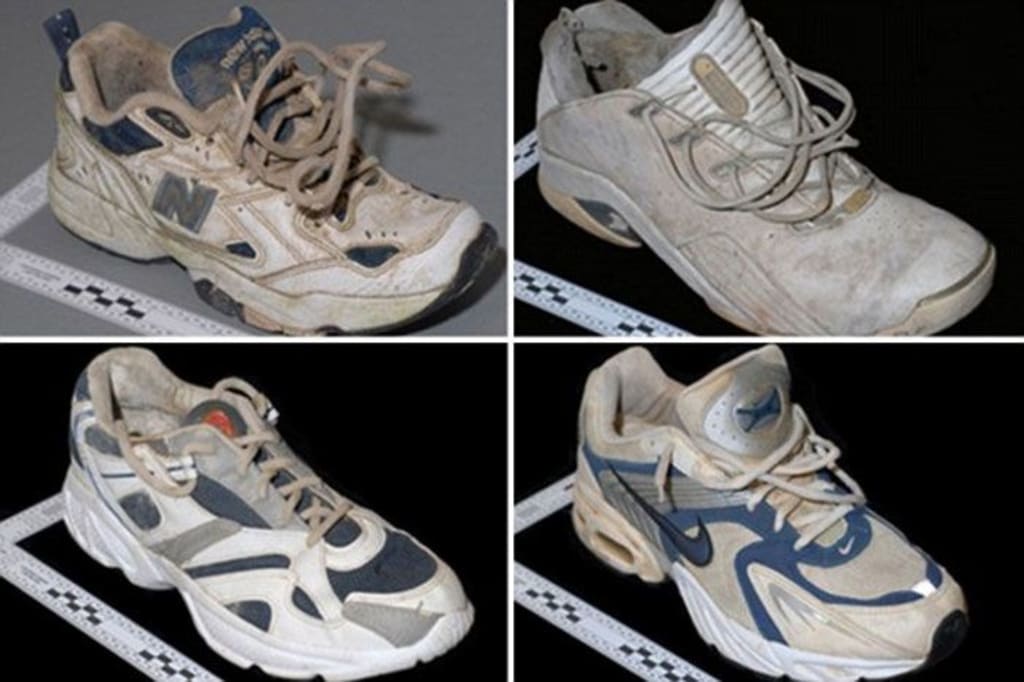
The first foot showed up on Jedediah Island, a gruesome discovery made by a tourist from Washington. The woman picked up a shoe on the beach and saw a sock inside it. She opened the sock, expecting to find a crab or a lump of sand and instead found a man's foot. The foot was in a shoe that was distributed largely in India in 2003. At the time, not much was made of it, except for the local press. Human remains often wash up on sea shores. When another foot, also belonging to a man, but clearly a different man, was found six days later on a nearby island, the wider press started taking note.
Since then the discoveries have happened regularly. They cluster around the summer months. The most common month to find feet is August, though there have been discoveries in November, December, and February. Although this could be because of tidal patterns, it's also probably the fact that people tend to be on the beach most in the summer, and so they're there to make the discoveries.
Most of the feet are single, but four of the feet have been shown to belong to two people, bringing the total to nine people's remains discovered. Three of those people have been identified, and their deaths attributed to 'natural causes.' Some of the known victims were local, and thought to be suicidal during their lives. While this explains a few of the victims, the rest have frustrated local authorities.
The Complications
The major stumbling block to identification is the effect of the environment on body tissue. Many people think of bodies as rotting. What happens in the ocean, particularly in oxygen-starved environments, is the build up of adipocerous. Adipocere is a waxy substance, often found in soap. It builds up in bodies that are exposed to bacteria, but not to air. The anaerobic bacteria process the fat tissue and create adipocerous. This distorts the features of the foot. Authorities were able to identify the three known victims due to DNA, but for the rest, they can only guess at the gender and age by looking at the size of the foot and the type of shoe. Since both women and younger men tend to wear men's running shoes, most feet, unless they have toenail polish on them, are classified as either 'juvenile or female.'
It's also hard to be sure where and when the feet came from. Many different currents end up along the Washington and BC coastlines. Because of the cold ocean, the fact that the feet have built up different amounts of adipocerous, the foot could have come from a body nearly anywhere or at any depth in the Pacific, and could have been in the water for years or even decades before it turned up on the beach.
The Questions and the Theories
The last foot, of an undetermined gender in a size 9 man's running shoe, washed up in August 31st of this year. Authorities again announced that they were not going to treat the discovery as a murder or any kind of unnatural death. At first glance, this would seem strange. Disembodied feet again and again washing up on one bit of coast can't be natural. Even if the coastal currents do collect a lot of debris, why now? Why feet?
Although the mystery centers on feet, there are plenty of body parts that wash ashore all over the world. Feet, though, are one of the more innocent parts - not indicating foul play. When a body spends a long time in the water, it comes apart at certain weak points. Ankles and wrists are the weakest of those points. While hands are usually not attached to anything, feet are in shoes. Shoes can either have buoyant rubber souls or can trap pockets of air that lift the foot upwards, letting it float ashore.
That leads to the question of why the feet just started turning up now. An early theory posed by some people, before two victims were identified, was that these were the remains of people who had been killed in the tsunami of 2004. None of the shoes, then, had been identified as models that had been made after 2004. The fact that three out of nine have been identified as local people and not tsunami victims put a damper on that theory.
Other people suggest that it could be the increasing bulk of athletic shoes. As sneakers are getting bigger and puffier, they become more buoyant and more remains float long enough to make it to the beach. Still, there were plenty of big sneakers in the late 1990s, and not as many feet were found then.
In the end, it could be selection bias. People are more likely to look for feet, or report them, now that the feet have been part of a phenomenon. People are more likely to look. They're more likely to report. The press is more likely to report on their reporting (Hi there! I'm being part of the problem!), and a mystery is made.
About the Creator
Sometimes It's Like That and That'sThe Way It Is
It was the late 1960s, and ten-year-old Gloria Coleman was standing with her grandmother on the side of the highway waiting for the bus. As the Greyhound pulled up, it seemed monstrous and intimidating. Grandma Elizabeth grabbed Gloria's hand, holding it tightly as they boarded.
By Cheryl E Preston2 days ago in Fiction



Comments (1)
This article earns my appreciation for being both well-written and informative.