
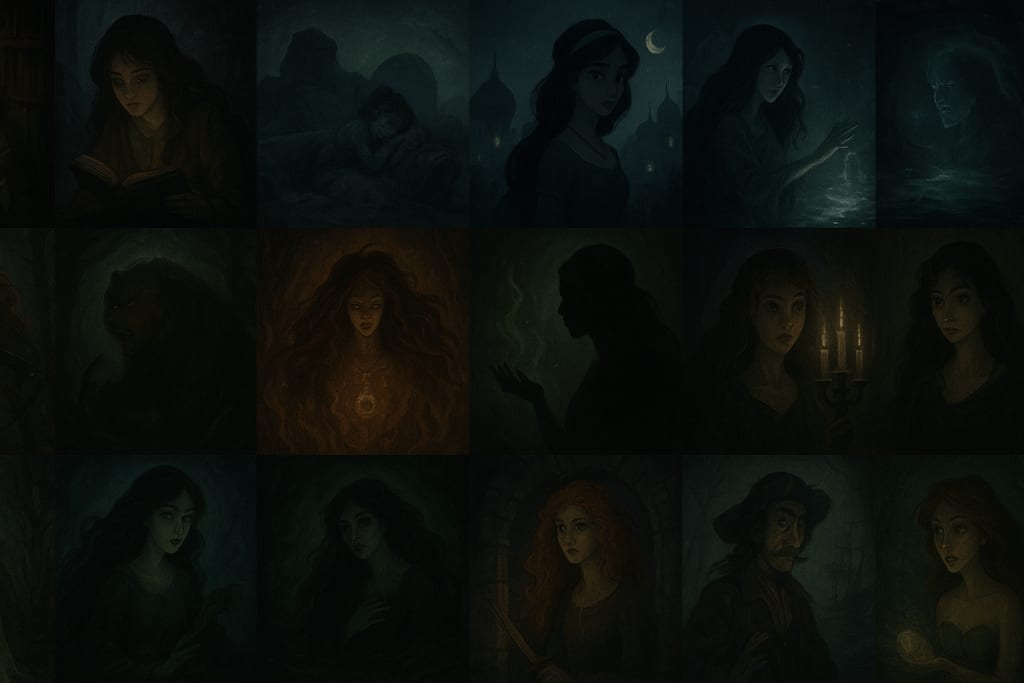
In 1842, Danish newspapers reported the drowning of a nobleman’s daughter off the coast of Helsingør — her name was Arielle Wulffsen.
Her father had arranged her marriage to an aging merchant. But locals claimed she often swam to sea at night, singing.
Fishermen said they’d seen her hair “burning like copper beneath the waves.”
When her body washed ashore, her legs were torn apart — as if something had tried to pull her back into the water.
Hans Christian Andersen, who lived nearby, attended her funeral. He was known for reworking local tragedies into parables. But what he didn’t include in The Little Mermaid was the discovery a week later: the fishermen’s nets brought up a human heart, still beating faintly, covered in salt crystals.
Andersen wrote in his diary that day:
“The sea never gives without taking twice.”
About the Creator
Keep reading
More stories from GoldenSpeech and writers in Chapters and other communities.
Fair Exchange, No Robberies
Dark Memoirs - Index There are at least two kinds of people in the world: those who write this half-arsed kind of intro to a story that looks to separate the rare and the norm, and those who realise it's an overused framing device and don't.
By Paul Stewart11 days ago in Chapters
How to Use Dopamine for Deep Focus and Flow
Introduction For the longest time, I thought dopamine was my enemy. It was the thing pulling me toward endless scrolling, overeating, and wasting hours on apps that gave me nothing back. I blamed my lack of focus on willpower, discipline, or motivation. But what I eventually realized changed how I work, think, and focus entirely.
By Dilip Kumaraabout 2 hours ago in Chapters
Do You have a Support Network?
Life is harder when you’re on your own. Human beings are social creatures, and we usually feel better when we have support from a strong social network around us. For most people, it’s our families that hold us together like glue.
By Elizabeth Woodsabout 5 hours ago in Psyche




Comments
There are no comments for this story
Be the first to respond and start the conversation.