
The Craziest Live Show: Over a Million Viewers Watch Him Steal, and Everyone Calls Him a Hero
Part 3
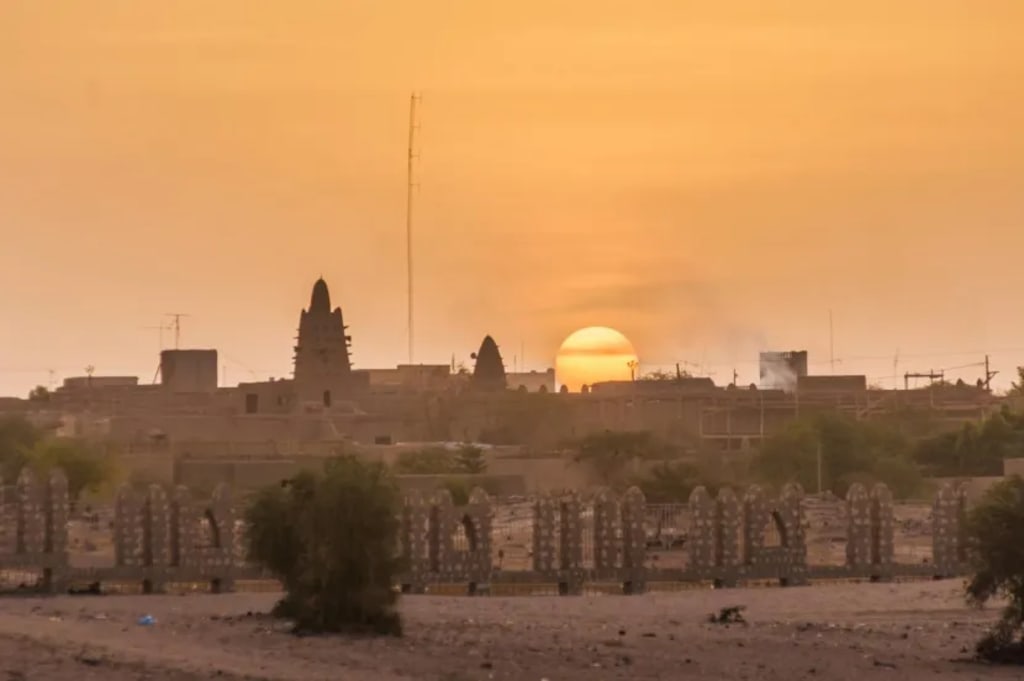
“Salt comes from the north, gold from the south, and silver from the lands of the white man, but the teachings of God and the treasures of wisdom can only be found in Timbuktu.”
Today, when people think of Africa, they often associate it with poverty, backwardness, and ignorance. This long-held prejudice, fueled by colonialists and Eurocentric ideologies, has led many to believe that Africa has no history or civilization—only the history of Europe, and everything else is a dark void.
But few realize that while Europe languished in the Dark Ages, an open society where science and religion coexisted harmoniously had already blossomed in Timbuktu.
The strongest proof of this is the hundreds of thousands of ancient manuscripts that Abdel Kader Haidara and his fellow librarians managed to preserve within the city. Haidara’s first encounter with these priceless texts was as a young boy. His family lived in one of the oldest districts of Timbuktu, where, in the quiet of their courtyard, he would often hear his father whispering about these treasures—so carefully, as if speaking too loudly might reveal an important secret. Haidara sensed these manuscripts were important, though he knew little about them at the time.
Sometimes, his father would rummage through their storage room, pulling out a 13th-century Qur’an inscribed on antelope skin or a 12th-century Bible etched onto fish skin, no bigger than the palm of his hand. As his father gathered students around, Haidara would watch in curiosity, gazing at the gold-leafed, gem-encrusted scrolls, their delicate pages wrinkled with age.
Over time, Haidara learned the history of these ancient texts and how to care for them. He came to view himself, just like the manuscripts, as a part of Timbuktu’s heritage. What he couldn’t have known then was that one day he would have to flee his homeland alongside them.
The afternoon after the rebel forces took control of Timbuktu, the leaders of the terrorist groups Al-Qaeda in the Islamic Maghreb (AQIM) and the Islamic Defenders summoned 50 of the city’s elders. In a dilapidated restaurant, the elders sat around two white tables, the sun casting a harsh light through the pink shutters onto an empty blue bar counter. All items deemed un-Islamic, including alcohol, had been smashed. Dozens of armed militants encircled the room, sitting on benches.
The leader spoke: “People of Timbuktu, we are your new masters. From now on, we will bring Islam to your city.”
One elder tried to protest, “That’s not the Islam we want!” The militants were not bringing faith, but radical ideologies capable of destroying civilization. A whispered warning spread: “Don’t speak like that—they’ll kill you.”
In the days that followed, the city’s radio station was seized. Terrorists inserted an MP3 of the Qur’an into the station’s system, forcibly taking and burning 20 years’ worth of tapes—folk music, interviews, and prayers. Civilization was being erased.
The station had no choice but to play the Qur’an on loop, and the only other broadcasts were impassioned speeches from the militants, who regularly threatened violence. Black flags flew over every government building, while ads from companies like Coca-Cola, Mali Airlines, and France Telecom were torn down. They destroyed every drink warehouse and bar they could find, and appointed a judge to oversee the enforcement of strict moral codes. This judge took great pleasure in his role, personally arresting and intimidating women who were not fully veiled or covered in a long robe. Banks were turned into prisons and interrogation rooms, and ATMs became punishment zones for women who defied the rules, forced to stand in these stifling booths for hours without food or water.
In just a month, one-third of Timbuktu’s population fled, and the city fell silent.
While Haidara struggled to devise a plan to protect the library and its ancient manuscripts, 20 militants had already occupied the government library’s new headquarters, turning it into a weapons depot and dormitory. They ate, slept, read the Qur’an, and prayed surrounded by the greatest treasures of Timbuktu’s golden age. Haidara couldn’t get close, but fortunately, 24,000 manuscripts remained in the old building—hidden, and unknown to the militants.
Haidara called a meeting with the few colleagues still in the city. “These manuscripts are in danger. The government is gone—we have to get them out.”
“We can’t do anything,” his colleagues told him. Some naïvely believed the occupation would be short-lived, while others trusted the militants’ assurances that they wouldn’t harm the manuscripts. One curator said to Haidara, “If the manuscripts disappear after the crisis ends, the director will say we stole them.”
This passive response disappointed Haidara deeply. But as the thought of losing the manuscripts he had painstakingly gathered for 15 years weighed heavily on him, he declared, “I have a plan. Leave it to me. This is my responsibility.”
About the Creator
Search for a Sister, Chapter Two
4-H-N heard not a word about her secret mission around Headquarters over the following days, so had to conclude either Mini-Flash Phytolith hadn’t been listening in after all, or she’d misjudged him. She hoped it was the latter, as she wanted the pair of them to get on, even if he wasn’t going out of his way to make it easy for her.
By Doc Sherwood20 days ago in Chapters




Comments
There are no comments for this story
Be the first to respond and start the conversation.