
The Bermuda Mystery: Unraveling the Enigma of the Devil’s Triangle
Exploring the truth behind disappearances, theories, and the enduring myth of one of the world’s most intriguing ocean mysteries

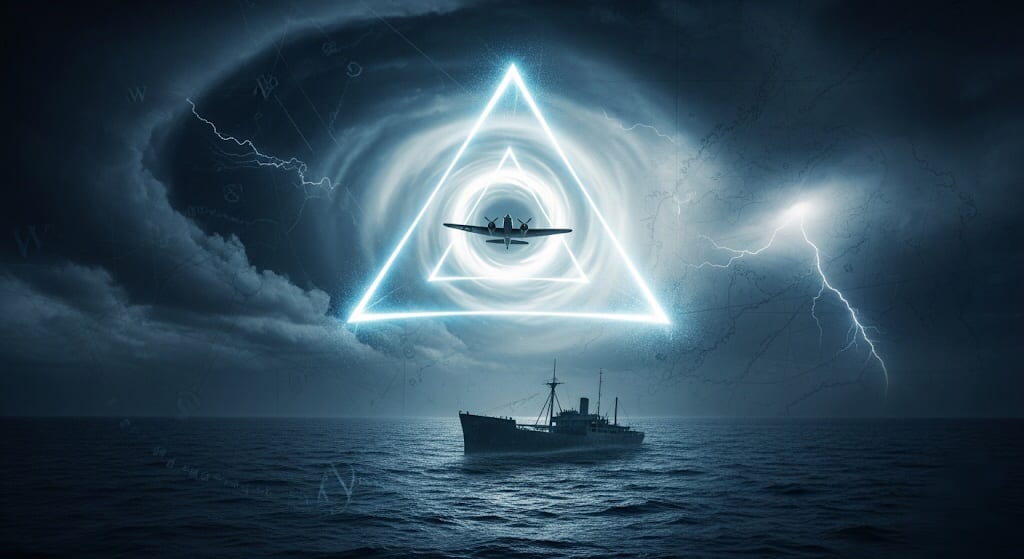
For decades, the Bermuda Triangle — often dramatically referred to as the “Devil’s Triangle” — has captured imaginations with tales of ships and planes vanishing without a trace. This mysterious region, forming a rough triangle between Miami, Florida, Bermuda, and San Juan, Puerto Rico, covers a large stretch of the western North Atlantic Ocean. While some see it as a natural danger zone, others believe it’s a hotspot of supernatural activity. So, what’s really going on in the Bermuda Triangle?
How It All Began
The mystery surrounding the Bermuda Triangle didn’t just appear overnight. Although strange disappearances in the region had been noted earlier, public fascination really took off in the 1950s. In 1950, journalist Edward Van Winkle Jones wrote a piece for the Miami Herald describing unusual incidents in the area. A few years later, writer Vincent Gaddis gave the Triangle its now-famous name in a 1964 Argosy magazine article. He expanded his ideas in the 1965 book Invisible Horizons: True Mysteries of the Sea, which further fueled public curiosity.
Perhaps the most famous case tied to the Bermuda Triangle is the disappearance of Flight 19 in December 1945. Five U.S. Navy bombers, on a routine training mission, became disoriented and were never seen again. Even more chilling, a rescue plane sent to search for them also vanished. That incident, deeply unsettling and highly publicized, cemented the region’s reputation as a place where the normal rules of nature seem to break down.
Mysterious Disappearances That Made Headlines
Over the years, a number of high-profile cases have added to the legend:
USS Cyclops (1918): A U.S. Navy cargo ship carrying more than 300 crew members and a massive load of manganese ore disappeared without sending a distress signal. No wreckage was ever recovered.
Star Tiger and Star Ariel (1948–1949): These two British passenger planes disappeared in good weather while flying near Bermuda. Neither sent out distress calls, and no trace of them was found.
Douglas DC-3 (1948): This commercial aircraft vanished during a flight from San Juan to Miami with 32 people aboard. Communication had been normal — until it suddenly wasn't.
While these cases are undeniably strange, the question remains: Are they part of a bigger pattern, or are they unfortunate accidents that happened to occur in the same general area?
Searching for Answers: Rational Theories
Despite the eerie tales, scientists and skeptics have provided a number of logical explanations for the events linked to the Bermuda Triangle:
1. Unpredictable Weather
The Atlantic Ocean, particularly around the Triangle, is prone to sudden and violent storms. Rogue waves — massive and spontaneous — can rise up without warning and easily sink large ships. Hurricanes and tropical storms, common in this part of the world, also present a significant threat. What’s more, the Gulf Stream — a powerful ocean current — can carry debris far from its original location, making wreckage hard to find.
2. Magnetic Anomalies
Some early theories proposed that the Triangle messes with navigational instruments due to magnetic anomalies. While it’s true that compasses can occasionally behave oddly in the area, modern technology has largely resolved this issue. Still, in earlier times, this could have led to dangerous miscalculations.
3. Human Error
It might not be as exciting as alien abductions or time portals, but human error is likely the most common factor in these disappearances. The ocean is a complex and often unforgiving environment. A single misjudgment by a pilot or ship’s captain can lead to disaster. In the case of Flight 19, transcripts suggest the squadron leader became disoriented, leading his team deeper into the ocean until they likely ran out of fuel.
4. Methane Gas Eruptions
Another lesser-known idea is that methane hydrates beneath the ocean floor can occasionally erupt, releasing gas that lowers water density and causes ships to sink rapidly. While this theory is scientifically plausible, there’s little concrete evidence showing that such eruptions happen frequently in the Triangle.
Myths, Media, and Wild Theories
Let’s be honest — the Bermuda Triangle wouldn’t be nearly as famous without its place in popular culture. From books and documentaries to blockbuster films and mystery shows, the area has inspired all kinds of speculation. Some of the more colorful theories include:
Alien abductions
- Time warps or dimensional rifts
- Ancient, malfunctioning technology from the lost city of Atlantis
- These ideas may be far-fetched, but they’ve certainly helped keep the mystery alive. Programs like In Search Of… and modern History Channel specials continue to present dramatized accounts, often blurring the line between fact and fiction.
What Do Experts Say?
Despite all the hype, the U.S. government doesn’t recognize the Bermuda Triangle as an official geographic area. The U.S. Navy and Coast Guard maintain that there’s nothing unusually dangerous about the region. A 1975 report by the U.S. Board on Geographic Names concluded that the Triangle didn’t warrant any special recognition because the number of incidents there isn’t significantly higher than in other well-traveled parts of the ocean.
In fact, some so-called Triangle disappearances have been shown to occur outside the region’s typical boundaries or were later explained by further investigation. Over time, researchers have found that many incidents were exaggerated, misreported, or simply misunderstood.
Final Thoughts
The Bermuda Triangle remains one of the most enduring and captivating mysteries of the modern era. Whether you see it as a symbol of nature’s unpredictable power or as a doorway to the unknown, the Triangle continues to intrigue and inspire. In a world that often seeks tidy answers and scientific explanations, perhaps part of the Bermuda Triangle’s lasting appeal is that it reminds us — not everything has to be fully explained to be fascinating.
About the Creator
Taimoor Khan
Hi, I’m Taimoor Khan. Writing is my way of capturing the quiet moments of life that often go unnoticed.
Keep reading
More stories from Taimoor Khan and writers in Chapters and other communities.
The Secret Code of Mona Lisa: Unraveling the Hidden Mysteries Behind Leonardo da Vinci’s Masterpiece
More than five centuries ago, a man painted a portrait of a woman that would go on to become the most iconic artwork in history. The man was Leonardo da Vinci—artist, engineer, inventor, and visionary. The painting: Mona Lisa. While many admire it for its enigmatic smile and artistic mastery, the Mona Lisa is far more than just a beautiful painting. It is a puzzle—one layered with hidden meanings, mysterious symbols, and secret knowledge that may have been too dangerous to express openly at the time.
By Taimoor Khan8 months ago in Chapters
What was said about Afghanistan at the UN Security Council meeting?
The United Nations Security Council held a mNew York, Uni, to discuss the situation in Afghanistan. Representatives froGeorg, the head of the United, exchanged views on the situation in Afghanistan.
By Real content6 days ago in Chapters



Comments
There are no comments for this story
Be the first to respond and start the conversation.