
Ted Bundy: The Charismatic Killer – A Full History of His Crimes
Crimes and Psychological Profile

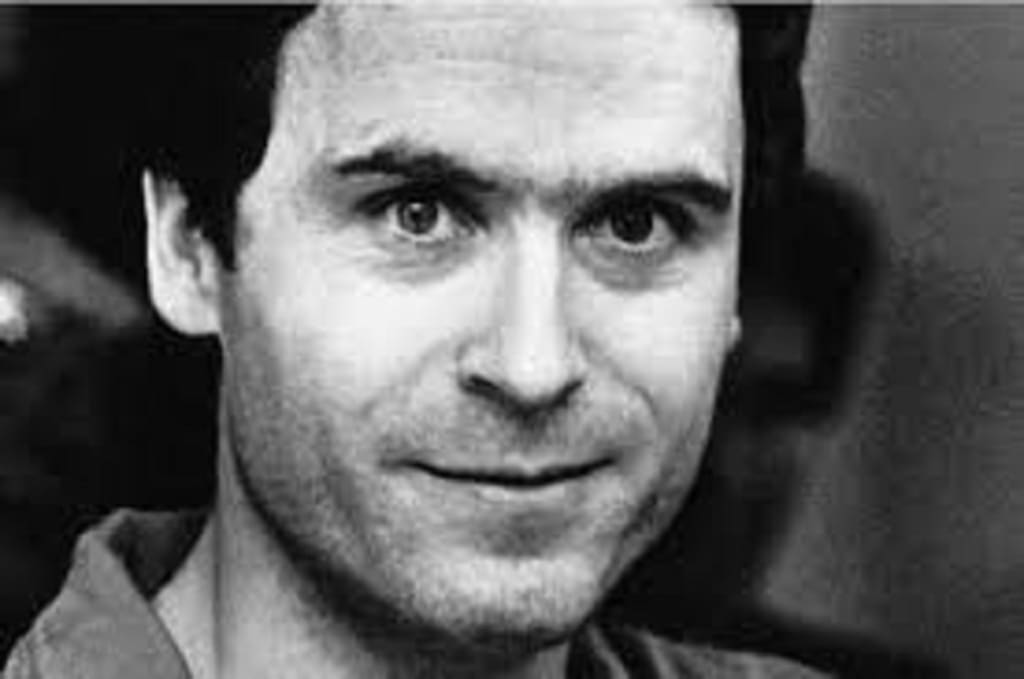
For decades, the public has been fascinated by Ted Bundy, one of the most notorious and infamous serial killers in American history. His charm, intelligence, and seemingly perfect outward persona contrasted sharply with the monstrous crimes he committed. His name is synonymous with deception, manipulation, and cold-blooded murder. The story of Ted Bundy is a dark tale of a man who lived a double life, hiding his monstrous urges behind a mask of civility and charm.
From Ted Bundy's early life and psychological profile to his horrifying killing spree, capture, and eventual execution, this article delves deeply into his entire history. Early Life: A Troubled Upbringing
Ted Bundy's story begins on November 24, 1946, in Burlington, Vermont, where he was born to a single mother named Elizabeth Kloepfer. Ted’s early years were marked by confusion and secrecy. His mother initially raised him to believe that his grandparents were his biological parents and that his mother was his older sister. The truth about his parentage would not be revealed until later in life, adding a layer of psychological complexity to his development.
Bundy’s childhood was far from ideal. His family life was unstable, and his mother struggled to make ends meet. Bundy grew up in a broken home, and his relationship with his stepfather was distant at best. He was a loner in his younger years, struggling to make friends and connect with others. Despite these early difficulties, Bundy was a smart and popular student who did well in school and participated in a variety of activities. However, it wasn't until he was in his teens that the seeds of violence and depravity began to germinate. Bundy’s psychological makeup was complex, and he exhibited several disturbing traits, including a fascination with violence, murder, and sexual assault. This dark side would soon emerge, leading to a series of brutal crimes that shocked the nation.
The First Signs of Violence
Ted Bundy’s descent into murder began in the early 1970s, when he was still a college student at Washington University in Seattle. It is thought that around 1974, Bundy began his killing spree with young women as his targets. His first known victim was Joni Lenz, who survived an attack in January 1974. Bundy had attempted to sexually assault and murder her in her apartment, but she miraculously survived.
Bundy’s pattern of violence followed a ritualistic and methodical approach. His victims were typically young women with long, dark hair, often wearing college uniforms. He would often approach his victims in public places, pretending to be injured or in need of assistance. Once the women approached him, he would knock them unconscious and then take them to a secluded area, where he would rape, strangle, and murder them.
After committing his horrific acts, Bundy would sometimes dispose of the bodies in remote locations, taking souvenirs like clothing or jewelry from his victims. He would also engage in necrophilic acts, returning to his victims’ bodies after their deaths to sexually assault them once again.
Ted Bundy’s Killing Spree: A Year of Terror
Between 1974 and 1978, Bundy is believed to have murdered at least 30 women across several states, including Washington, Utah, Colorado, and Florida. His ability to blend in with society and avoid detection for so long made him particularly dangerous. Bundy’s charm and intelligence allowed him to manipulate and deceive law enforcement, friends, and even his own victims.
What made Bundy even more terrifying was his chameleon-like ability to change his appearance. He would sometimes alter his hairstyle, clothes, and even his voice to avoid recognition. His ability to move across state lines and evade capture was a testament to his cunning and his understanding of law enforcement procedures.
One of Bundy’s most infamous killings occurred in Tallahassee, Florida, in January 1978. He entered a Florida State University sorority house, where he brutally murdered two women and injured two others severely. The attack was especially shocking because Bundy had stalked his victims before launching his brutal assault. After this, his killing spree became even more violent, and law enforcement finally began to close in on him.
Capture and Trial: The Face of Evil
In August 1975, Ted Bundy was arrested in Utah for the kidnapping of a woman named Carol DaRonch, who had been able to escape from Bundy’s clutches. Her testimony helped lead authorities to Bundy’s arrest. Shortly after, evidence began to surface linking Bundy to the murders of several women in the Pacific Northwest, and he was charged with kidnapping and murder.
Bundy’s trial was one of the most high-profile cases in American history. His good looks, charming personality, and intelligent demeanor made him a media sensation. He even represented himself during parts of his trial, which gave him the opportunity to manipulate both the courtroom and the press.
In 1979, Bundy was convicted of the kidnapping and murder of two young women, Lisa Levy and Margaret Bowman, in Florida. His trial in Florida was particularly sensational, as Bundy appeared in front of cameras and continued to present himself as an innocent man. However, the overwhelming evidence, including forensic evidence and eyewitness testimony, led to his conviction.
The Execution Law and the Death Penalty Ted Bundy was sentenced to death for his crimes, and he was placed on death row in Florida’s Raiford Prison. Bundy maintained his innocence throughout his time in prison, but he later admitted to the brutality of his crimes and admitted to killing 30 women. He provided detailed accounts of his killings, including information that only the killer would know, further cementing his guilt.
Using his charm, Bundy also tried to influence the media and law enforcement personnel while he was on death row. In addition, in exchange for a reduced sentence or favorable prison conditions, he offered to assist authorities in the investigation of additional murders that remain unsolved. However, in 1989, Bundy’s appeal was rejected, and his execution was scheduled. On January 24, 1989, Ted Bundy was executed in the electric chair at Florida State Prison. He was 42 years old at the time of his death. His final words before his execution were reportedly a brief expression of regret and the admission that he had victimized many women.
The Legacy of Ted Bundy
Ted Bundy’s case has continued to capture public interest for decades, and his legacy remains one of horror and fascination. His horrific crimes, combined with his ability to deceive and manipulate others, have made him the focus of psychological research, true crime documentaries, and media sensationalism. Bundy’s crimes led to significant changes in the way law enforcement agencies approach serial killers. His ability to cross state lines, adapt his appearance, and elude capture prompted the establishment of national databases and interagency cooperation to track serial criminals across multiple jurisdictions. His case also highlighted the importance of forensic evidence, particularly dental records and hair samples, in identifying serial killers.
Today, Ted Bundy’s story serves as a chilling reminder of the dark side of human nature. His crimes have influenced countless films, documentaries, and books, and his legacy continues to haunt those who study the psychology of serial killers.
Psychological Analysis: The Mind of a Killer
Ted Bundy’s psychological profile remains one of the most analyzed aspects of his case. He was frequently referred to as a highly functioning psychopath who had sociopathic and narcissistic tendencies. His ability to manipulate people and project a sense of normalcy was terrifying, as it allowed him to operate without suspicion for so long.
According to experts, Bundy's crimes were motivated by a strong desire for power and control over his victims. His ability to disassociate from the suffering of others and his lack of empathy made him particularly dangerous. Bundy’s intelligence and manipulative abilities allowed him to successfully evade capture for years, making him one of the most feared and infamous serial killers in American history.
Conclusion
Ted Bundy’s story is one of horror, manipulation, and chilling violence. His ability to deceive and manipulate people, paired with his dark need for control and power, made him a monster in the eyes of those who encountered him. Today, Bundy’s name remains synonymous with serial murder, and his case continues to be studied by criminologists, psychologists, and true crime enthusiasts alike.
Bundy's crimes will forever be etched in the history of America's most notorious serial killers, and his legacy continues to serve as a reminder of the darkness that can hide behind a charming facade.
About the Creator
Keep reading
More stories from Shahadat Hossain and writers in Chapters and other communities.
H.H. Holmes: The Murderer Who Built a House of Horror
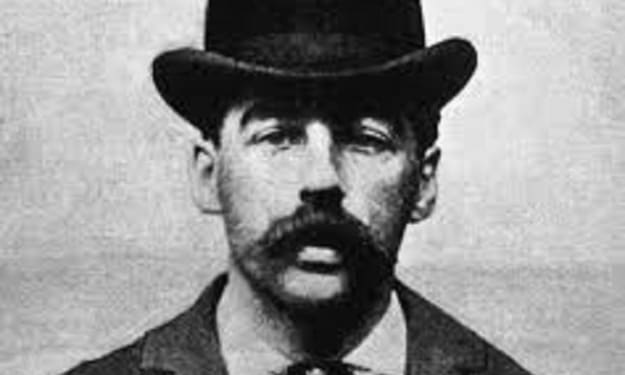
H.H. Holmes, born Herman Webster Mudgett, is considered one of the first modern serial killers. Operating during the late 19th century, Holmes used his charm, intelligence, and cunning to lure victims into his deadly trap. Holmes, who is famous for building the infamous "Murder Castle" in Chicago, is thought to have killed at least twenty people, though some estimates say it could have been much higher. This is the complete story of H.H. Holmes, from his childhood through his crimes, the infamous "Murder Castle," his capture, and one of America's most chilling killers' lasting legacy. Early Life: A Troubled Beginning
By Shahadat Hossain9 months ago in Chapters
Fair Exchange, No Robberies
Dark Memoirs - Index There are at least two kinds of people in the world: those who write this half-arsed kind of intro to a story that looks to separate the rare and the norm, and those who realise it's an overused framing device and don't.
By Paul Stewart12 days ago in Chapters
Hallelujah Hobby Living
Life is always meant to be lived hallelujah! Now that is a catchy phrase isn’t it? It is especially around the holidays where life is so busy and hobbies are sometimes put on the back burner because of all the other things we need to do in life during this time of year. Or are hobbies put on the back burner during this time of year? I guess this all depends on the people who are doing said hobbies and how they live their lives and what they do in their lives. As we all know hobbies are always a part of life they are what makes our lives what they are, in terms of giving our lives variety. The more we put our hobbies in our lives the more we live through them. It so much more fun this way, and there is so much more that comes from your hobbies this way too. When you put your hobbies into the way that you live your life, how do you feel? Do you feel rejuvenated or like Hallelujah things are changing and they are so much more fun? I would say that I feel a little bit of both, this is because I love putting my hobbies and life together and seeing where the two things take me all the time.
By Louise Barraco7 days ago in Chapters



Comments
There are no comments for this story
Be the first to respond and start the conversation.