Science
India to Buy 114 Rafale Jets in $40 Billion Defense Boost Ahead of French President’s Visit
India on Thursday granted initial approval for the purchase of $40 billion (3.6 trillion Indian rupees) worth of defense equipment, including additional French Rafale fighter jets for the Indian Air Force.
By Real content14 days ago in Chapters
Pakistan Launches PRSC-EO2 Satellite: SUPARCO Successfully Sends Second Indigenous Earth Observation Satellite into Orbit
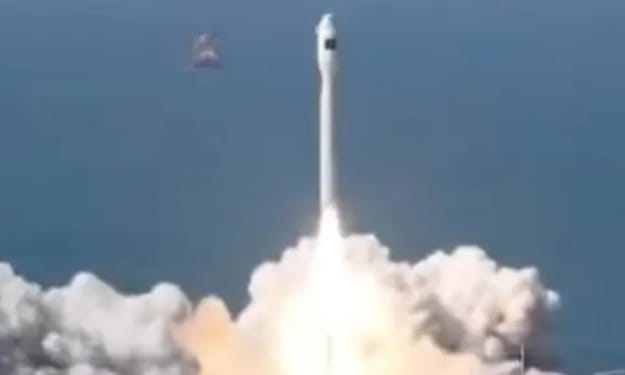
Pakistan has announced another important milestone in its national space program by successfully sending its second indigenous Earth Observation Satellite into space.
By Real content15 days ago in Chapters
AI, Surveillance, and the Fragile Line Between Deterrence and Disaster
AI, Surveillance, and the Fragile Line Between Deterrence and Disaster The next great danger in global conflict is not only missiles or soldiers, but machines that think faster than humans. As artificial intelligence (AI) becomes deeply embedded in military planning, surveillance, and nuclear command systems, the risk of accidental war is growing quietly but dangerously. What once depended on human judgment is now increasingly shaped by algorithms, sensors, and automated decision-making. In this new environment, a single error, misreading, or cyber manipulation could push the world toward catastrophe.
By Wings of Time 15 days ago in Chapters
The Story of the Surgeon Who Operated on Himself
The Story of the Surgeon Who Operated on Himself Normally, whenever a person feels unwell and suffers from a disease ,they immediately go to a doctor for treatment because he knows that doctor will treat me well. But if the doctor himself becomes ill and suffer from such a painful disease and disorder that without surgery can not be recovered and there is no other doctor available to treat him, then he may have no choice but to treat himself,because life is very beautiful and beauty of life based on good and sound health .Treating oneself is understandable to some extent—but a doctor performing surgery on himself might sound unbelievable and a miracle even like an exaggeration. However, in reality, such an extraordinary and marvelous event did take place in the past when a surgeon operated on himself to save his own life.
By Ibrahim Shah 16 days ago in Chapters
Russia-Ukraine War Enters Fourth Year: Can Flamingo, Oreshnik Missiles, F-16 Jets and AI Drones Change the Balance?
On the 24th of this month, four years will be completed since Russia’s invasion of Ukraine. This war has continued without pause for four years, and there are still no visible signs that it will end. Negotiations between Russia and Ukraine are being held in Abu Dhabi under U.S. mediation. On Thursday, another round of these talks ended without any progress. If diplomacy is failing to deliver results, do the two countries possess such advanced weapons that could potentially tilt the balance of war in favor of either side?
By Real content17 days ago in Chapters