
Stonehenge: The Enigmatic Monument of Ancient Britain
Unveiling the Mysteries, History, and Cultural Significance of the World’s Most Famous Megalithic Site
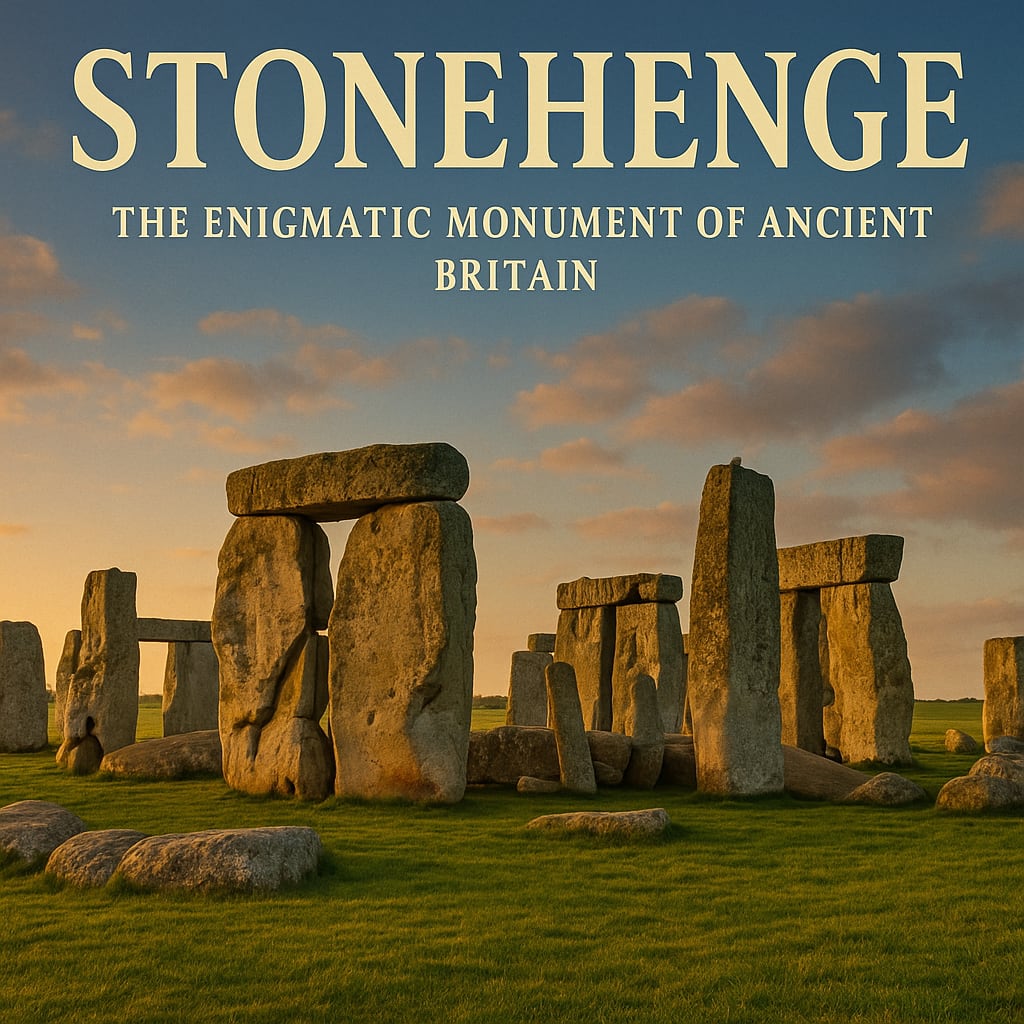
Standing on the windswept Salisbury Plain in southern England, Stonehenge has captivated humanity’s imagination for thousands of years. This prehistoric monument—consisting of massive standing stones arranged in a precise circular formation—has puzzled archaeologists, historians, and visitors alike. Who built Stonehenge? Why was it built? And how did ancient people manage to move and erect these gigantic stones without modern technology?
Despite centuries of research and advances in archaeology, Stonehenge remains shrouded in mystery. Yet its enduring presence continues to connect us with our distant ancestors, their beliefs, their ingenuity, and their desire to understand the world around them.
The Origins and Construction of Stonehenge
Stonehenge was built in several stages, beginning around 3000 BCE during the late Neolithic period, and continuing into the Bronze Age, around 2000 BCE. The construction spanned more than a millennium, reflecting evolving purposes and cultural changes.
The monument consists primarily of two types of stones:
Sarsen stones: Large sandstone blocks weighing up to 25 tons, likely sourced from Marlborough Downs, about 20 miles away.
Bluestones: Smaller stones weighing up to 4 tons, originating from the Preseli Hills in Wales, nearly 150 miles away.
Transporting these stones over such great distances without the wheel or draft animals remains one of the greatest engineering puzzles of the ancient world. Experts believe the builders used a combination of rollers, sledges, and waterways to move the stones.
The exact techniques for erecting the stones remain speculative, but the builders demonstrated remarkable knowledge of engineering and geometry, carefully balancing massive lintels atop upright pillars to form a durable and striking structure.
The Purpose of Stonehenge: Religion, Astronomy, or Social Gathering?
Many theories surround the purpose of Stonehenge, reflecting the complexity of its construction and the culture that created it.
1. Astronomical Calendar
One of the most widely accepted theories is that Stonehenge served as a giant astronomical observatory. The monument’s alignment with the summer solstice sunrise and winter solstice sunset suggests it helped ancient people mark important seasonal events.
This knowledge would have been crucial for agricultural societies, signaling planting and harvesting times and connecting the community to cosmic cycles.
2. Religious and Ceremonial Site
Archaeological evidence indicates Stonehenge was a sacred site, possibly used for religious rituals, ancestor worship, or funerary ceremonies. Excavations revealed human burials around the monument, suggesting it may have been a place to honor the dead or perform rites related to life and death.
The monument’s aura of mystery and grandeur may also have reinforced social cohesion, acting as a gathering place for tribal groups.
3. Healing Center
Some researchers propose Stonehenge was a center of healing. The bluestones were thought to possess magical or medicinal properties, attracting people seeking cures or spiritual cleansing.
Stonehenge in Its Landscape
Stonehenge was not built in isolation. It is part of a vast and complex prehistoric landscape filled with earthworks, barrows (burial mounds), and other stone circles. Nearby sites like Durrington Walls and the Avebury Stone Circle suggest the region was a cultural and ritual heartland.
Recent discoveries using ground-penetrating radar and aerial surveys have revealed ancient roads, settlements, and even a massive “super henge,” indicating that the builders of Stonehenge were part of a sophisticated society with far-reaching social and religious networks.
The Enduring Mystery and Modern Significance
Despite archaeological advances, Stonehenge still holds many secrets. We don’t know who exactly built it, how they organized such a massive project, or all the meanings behind its symbols and alignments.
Stonehenge’s power lies not just in its stones but in the questions it raises about human creativity, spirituality, and our connection to the natural world.
Today, Stonehenge is a UNESCO World Heritage Site and attracts visitors from around the globe. Each year, thousands gather at the site to witness the solstices, continuing a tradition that stretches back millennia.
Conclusion: Stonehenge — A Monument Across Time
Stonehenge stands as a testament to the ingenuity, spirituality, and mystery of our ancestors. Though the full story of its builders and their intentions remains hidden in the mists of time, Stonehenge continues to inspire awe and curiosity.
It reminds us that, from the dawn of civilization, humans have sought to make sense of the universe through monuments, rituals, and community. As we study its stones and the landscape around it, we step into a dialogue across thousands of years—a timeless connection between past and present.
About the Creator
Keep reading
More stories from Anwar Jamil and writers in Chapters and other communities.
Ciphers, Chaos, and Cold Cases: The Zodiac Killer Mystery
In the annals of unsolved crimes, few names stir the same level of dread and fascination as the Zodiac Killer. Between the late 1960s and early 1970s, a mysterious figure terrorized Northern California, claiming responsibility for at least five murders—and possibly more—while taunting police and newspapers with cryptic letters, phone calls, and ciphers.
By Anwar Jamil9 months ago in Chapters
Valentine's Dates Over the Years
Colin grinned as Brooklyn slipped into the living room. “Is it all set?” he asked. The twenty-one year old grinned. She was in her last year of college and Colin knew that Lincoln was proud of her. Although she had been away at college, she’d eagerly helped Colin plan his surprise for Lincoln. “I’m so glad you’re finally doing this,” she said.
By Reb Kreyling28 days ago in Chapters
The B-2 Spirit: Why the U.S. Stealth Bomber Known as “The Bone” Is Considered One of the Most Dangerous Aircraft Ever Built
The arrival of the stealth bomber **Northrop Grumman B‑2 Spirit**—often nicknamed “The Bone”—at a British airbase has once again drawn global attention to one of the most advanced and mysterious aircraft ever created. Designed during the final years of the Cold War, the aircraft remains a cornerstone of the United States’ long-range strike capability. Whenever it is deployed overseas, it signals serious military readiness.
By Irshad Abbasi 6 days ago in Chapters




Comments
There are no comments for this story
Be the first to respond and start the conversation.