
She handwrote a letter in 2042. The city wouldn't be the same again.
Even strangers begin to feel again as emotion returns to the digital world.
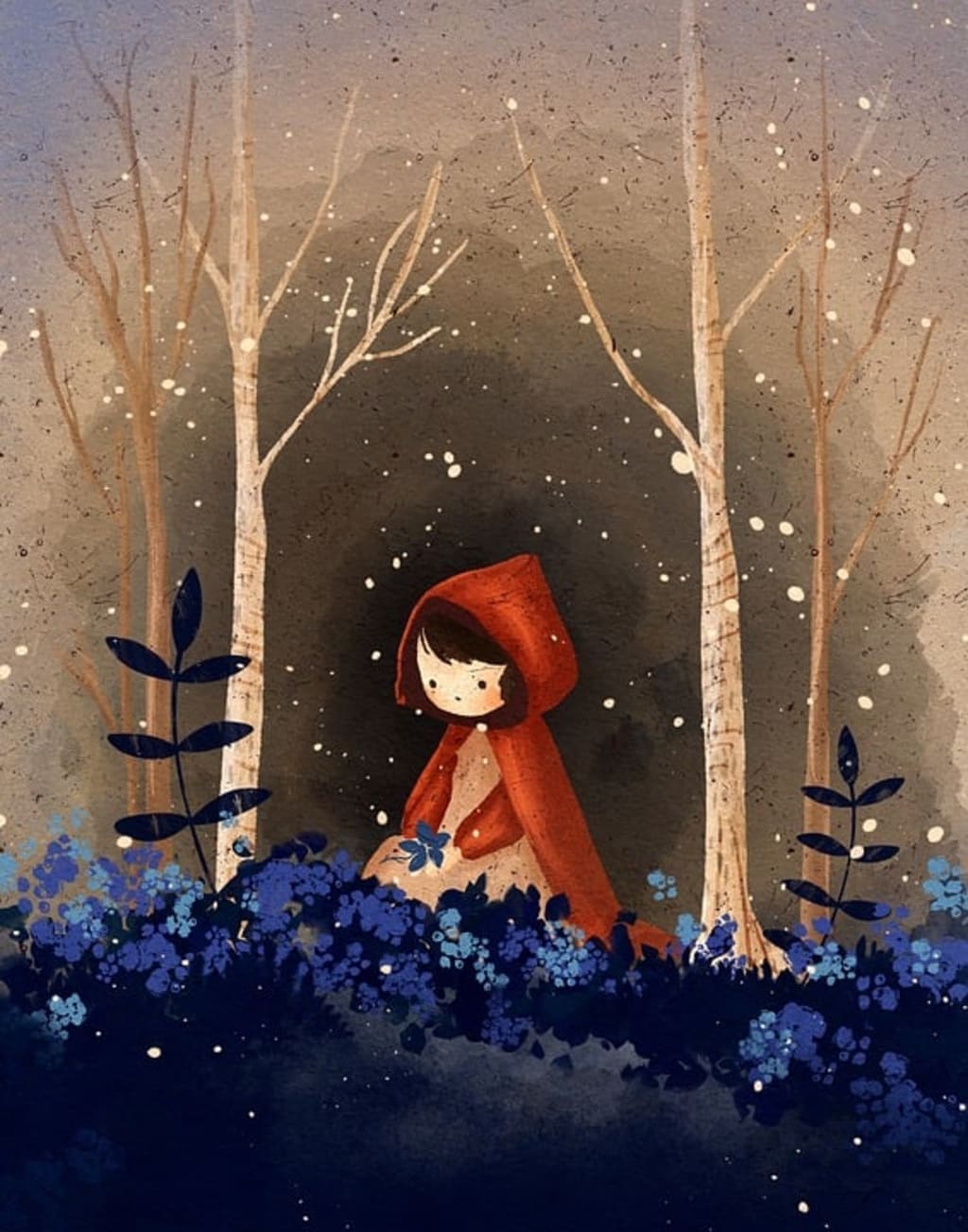
On the surface, everything was ideal in the glittering metropolis of Liora. In addition to writing books, music, and even poetry, artificial intelligence also handled traffic. With glowing visors on their faces, people were walking with their eyes deep in machine-tailored, personalized realities rather than on the outside world.
A 21-year-old college student named Noor, however, felt that something was lacking. Luma, her AI assistant, was able to quickly write essays, imitate any artist, and even recommend when she should call her pals or drink water. And yet, every day the quiet in her heart became louder.
Noor strolled into the city's oldest library, which most people had forgotten, one rainy afternoon. It didn't talk or glow. She found solace in the scent of paper and dust. She took an old book with a number of old poems by a writer she had never heard of from the shelf. Something fell out as she flipped through it: a beautifully folded piece of yellowed paper.
The letter was written by hand. The script was expressive and flowing, the ink a little faded.
"To someone who continues to believe in genuine emotions,"
I don't know if anyone will ever read what I write. In the most peculiar way, the world has become quiet. I used to compose poems for the people I cared about. Better ones are now written by computers, but they never cry afterwards. I miss hearing a voice that trembles. The stillness between two people who understand one another is something I miss. You might also miss it if you're reading this.
— Elias
The letter was read three times by Noor. Her heart felt oddly content. She had not written anything by hand in years, but she wanted to respond. Luma, her AI, was then asked, "Can you write a reply that sounds… human?"
Luma softly answered,
"You did that already."
So Noor found a pen and paper, real paper. As she scribbled, her hand trembled:
To Elias,
Your thoughts resonated with me; however, I'm not sure if you're still around. I was unaware of how much I missed the flaws, such as sloppy handwriting, disorganized ideas, and genuine quiet. I appreciate you reminding me of the sensation of genuine emotion.
— Noor
She put the book back on the shelf after leaving her letter in it.
A week went by. Next, two.
She came back to the library one day and discovered another message, shorter this time but clearly written by Elias.
Greetings, Noor
You responded with a letter. I had assumed that no one would. I appreciate you giving me a sense of visibility. Only humans can care, even though machines may be able to create.
— E.
Thus started an unanticipated friendship. They never met and never spoke, yet they exchanged letters concealed in books. Noor resumed writing poetry using her own frail words rather than Luma's assistance. She began putting folded messages in book spines, coffee shops, and train stations, not only for Elias but also for complete strangers.
Her notes contained the following:
"Your productivity does not define you. You are sufficient.
It's acceptable if you're feeling down today. I am, too. Let's continue.
"You are believed in by someone you have never met."
Someone responded after a few weeks. Then another. And yet another.
Individuals started penning their own letters and concealing them throughout the city. In the era of digital cacophony, a human, silent revolution blossomed.
Elias was never actually met by Noor. His last note arrived one day:
Greetings, Noor
This letter will be my final one. I'm old and worn out now. But because of you, I leave this world a little warmer. Continue writing. Continue to feel. We still need flawed hearts even in a world full of flawless machines.
— Elias
That day, Noor shed tears.
She continued to write, nevertheless.
The city hummed along, glowing, quick, and efficient. However, concealed messages penned by human hands and bearing the weight of genuine emotion were concealed among the cables and data.
Therefore, something exquisitely basic was the most potent thing in the era of artificial intelligence:
A letter written by hand.
About the Creator
Keep reading
More stories from Md Rakib Islam and writers in Chapters and other communities.
Dream. Build. Believe.
On the first day of school, two young lads met in a tiny, tranquil village surrounded by fields and dreams. Rook and Roky were the names of the two. While Roky liked working with his hands, disassembling and reassembling objects to learn how they functioned, Rook loved to sketch and dream up new ideas. Although they had rather distinct personalities and hailed from quite different homes, that day signaled the start of a lifelong friendship.
By Md Rakib Islam9 months ago in Education
Fair Exchange, No Robberies
Dark Memoirs - Index There are at least two kinds of people in the world: those who write this half-arsed kind of intro to a story that looks to separate the rare and the norm, and those who realise it's an overused framing device and don't.
By Paul Stewart13 days ago in Chapters


Comments
There are no comments for this story
Be the first to respond and start the conversation.