
Roots and Roads: A Story of Village and City Life
Exploring the Beauty and Burden of Two Different Worlds
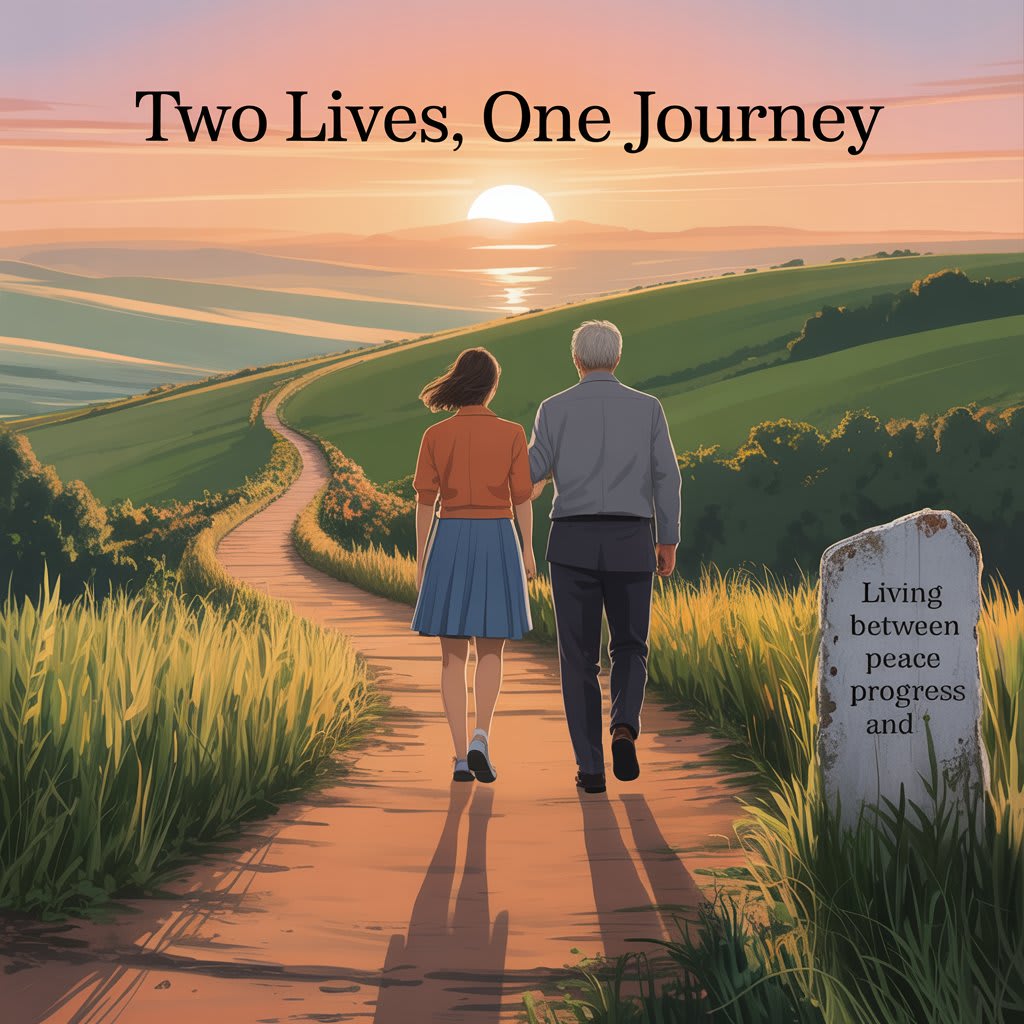
Arjun stood at the edge of the narrow dirt path, the morning mist curling around his feet like a whisper from the past. Before him stretched the village he had called home for the first eighteen years of his life—lush green fields, thatched huts, and the distant hum of cowbells echoing like lullabies from his childhood.
He had returned after five long years in the city.
The village hadn’t changed much. The banyan tree still stood like a wise old guardian beside the well, and the scent of wet earth after the monsoon still held the same magic. Children ran barefoot, laughing freely, and women sat outside their homes weaving baskets, exchanging gossip with the rhythm of old familiarity.
But Arjun had changed.
---
He remembered the day he left. His father had packed him a bag of rice and pickles, slipping a folded prayer into his shirt pocket. “Go to the city, beta. Study hard. Make a life better than this one,” he had said, his eyes proud but moist.
Mumbai had swallowed him whole. The first few weeks were a blur—honking cars, smog-filled air, crowds so dense they swallowed his voice. The city was loud, fast, and unforgiving. Rent was high, time was short, and everyone seemed to be running toward something—no one stopped, not even to smile.
At night, he would lie on a thin mattress in a shared room with three other boys and think of the village—the sound of crickets, the softness of his mother’s hands, the slow pace of life that allowed time for dreams.
---
But slowly, Arjun adapted. He worked in the day and studied at night. The city, though ruthless, taught him resilience. He learned to navigate trains, bargain with landlords, and survive on instant noodles and hope. He earned a degree, then a job, and eventually an apartment of his own with windows that opened not to fields, but to concrete and glass.
He wore polished shoes now, spoke English fluently, and scrolled through emails more often than he looked at the sky. But something always tugged at him—a silent nostalgia buried beneath deadlines and Wi-Fi signals.
When his mother fell ill, the call came. He took the first train home, unsure of what he would find—not just in her health, but in himself.
---
Now, standing on the path, he walked slowly to his house. It was smaller than he remembered. His mother lay on a cot under the neem tree, thinner but still glowing with the strength of a village woman who had raised three children and fed an entire neighborhood. She smiled weakly when she saw him, her eyes filling with tears.
“You’ve grown into a city man,” she whispered.
He sat beside her, holding her hand, and for a moment, the years between disappeared. He told her stories of the city—of skyscrapers taller than trees, of elevators and deadlines, of people who lived stacked one above the other and barely spoke.
“And do you like it?” she asked.
Arjun paused.
“I like what it gave me,” he said slowly. “Opportunity, education, a career. But I miss what it took away—peace, stillness, community.”
She nodded, as if she understood more than his words.
---
Over the next week, Arjun stayed in the village. He woke to the sound of roosters, bathed in the river, and helped the local teacher with village children who sat on the floor with eyes full of curiosity. He ate fresh food, walked barefoot on the earth, and found himself smiling more often—for no reason at all.
He realized something profound: the village gave him roots, while the city gave him wings. One taught him to belong, the other taught him to strive.
Both were parts of him.
---
When it was time to leave, his mother pressed a small cotton bag into his hand. Inside was a packet of soil.
“To remind you where you began,” she said.
Arjun hugged her, his heart heavy but full. He boarded the train, looking out the window as the village slipped away into golden fields and distant hills.
Back in Mumbai, as he unlocked his apartment door, he placed the bag of soil on his windowsill. It sat there like a quiet reminder—of sunrises not rushed, of meals shared without screens, of laughter without agenda.
---
Years later, Arjun would return often—not just for his mother, but for himself. He would eventually build a small school in the village, funded by his city salary, taught by locals trained under his guidance. He would split his time between the two worlds—not choosing one over the other, but embracing both.
Because some lives are not either/or.
They are both.
A quiet field.
A noisy street.
A boy who grew into a man carrying two homes in one heart.
About the Creator
Keep reading
More stories from Muhammad Saeed and writers in Chapters and other communities.
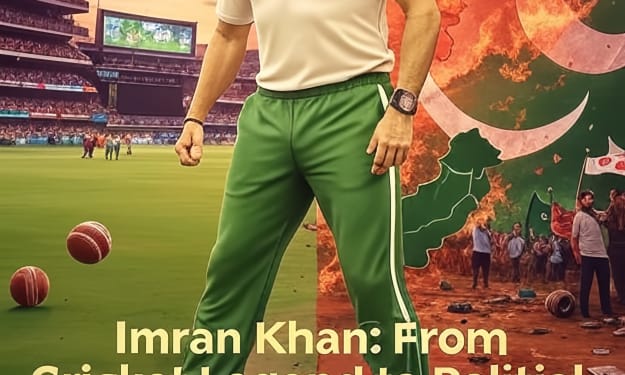
Imran Khan: From Cricket Legend to Political Trailblazer
The sun dipped low over the horizon, casting a golden hue across the sprawling green fields of Lahore’s Gaddafi Stadium. The air buzzed with anticipation as a young Imran Khan stepped onto the pitch, cricket bat in hand, his eyes gleaming with determination. It was the late 1970s, and Pakistan cricket was on the cusp of a revolution. Imran, with his athletic build and unrelenting spirit, was about to etch his name into the annals of sporting history. Little did the world know that this was only the beginning of a journey that would transcend boundaries, blending the roar of the stadium with the clamor of political rallies.The Rise of a Cricket IconImran Khan’s early years were marked by an extraordinary talent that set him apart. Born into a Pashtun family in Lahore on October 5, 1952, he combined raw athleticism with a strategic mind honed at Aitchison College and later at Oxford University. His debut for the Pakistan national team in 1971 was unremarkable, but it was the 1976-77 season that saw him emerge as a force. With his blistering pace and unerring accuracy as a fast bowler, he led Pakistan to numerous victories, culminating in the pinnacle of his cricketing career—the 1992 Cricket World Cup. As captain, he inspired a team of underdogs to defeat England in the final, lifting the trophy with a triumphant roar that echoed across the nation. This victory was more than a sporting triumph; it was a symbol of hope for a country grappling with political instability and economic challenges.Off the field, Imran’s charisma made him a national hero. His good looks and charm earned him a legion of fans, while his philanthropy, particularly the establishment of the Shaukat Khanum Memorial Cancer Hospital in memory of his mother, showcased a compassionate side. Yet, the cricket pitch was only the training ground for a far greater battlefield that awaited him.The Political AwakeningThe transition from cricket legend to political trailblazer was not an abrupt one. Imran’s political aspirations began to take shape in the 1990s when he founded the Pakistan Tehreek-e-Insaf (PTI) in 1996. Disillusioned by the corruption and nepotism that plagued Pakistan’s political landscape, he sought to bring about a “Naya Pakistan”—a vision of a just, prosperous, and self-reliant nation. His early years in politics were fraught with struggle. The PTI struggled to gain traction, and Imran faced ridicule and skepticism. Many saw him as a celebrity dabbling in a realm he didn’t understand, but his resolve remained unshaken.The turning point came in the 2011 general elections, where PTI began to gain momentum, particularly among the youth. Imran’s anti-corruption stance and populist rhetoric resonated with a population tired of dynastic politics. His electrifying rallies, reminiscent of his days rallying cricket teams, drew millions. By 2018, his perseverance paid off when PTI emerged as the largest party, and Imran Khan was sworn in as the 22nd Prime Minister of Pakistan on August 18, 2018. His inauguration was a historic moment, marking the first time a cricketing icon had risen to the country’s highest office.Triumphs and ControversiesImran’s tenure as prime minister was a rollercoaster of achievements and controversies. He launched ambitious initiatives like the Ehsaas program, aimed at alleviating poverty, and pushed for environmental conservation with the “Billion Tree Tsunami.” His foreign policy sought to balance relations with global powers while advocating for the Muslim world, earning him both praise and criticism. However, his government faced economic challenges, including inflation and a ballooning debt, which sparked public discontent.The controversies were equally intense. Allegations of mismanagement and authoritarian tendencies dogged his administration. His vocal criticism of the military establishment, a powerful entity in Pakistan, led to tensions, and his refusal to compromise on principles alienated some allies. The tipping point came in April 2022 when he was ousted through a no-confidence vote, a move he decried as a foreign conspiracy backed by the United States. Despite losing power, Imran’s influence remained undiminished, as he led massive rallies, galvanizing support with cries of “Tabdeeli” (change).Unyielding ResolveThe years following his ouster tested Imran Khan’s resilience like never before. In 2023, he faced legal battles, including arrests on charges ranging from corruption to incitement. Yet, each arrest only seemed to strengthen his resolve and his support base. His dramatic escapes from custody and subsequent speeches from atop containers became iconic images of defiance. On November 26, 2024, a brazen assassination attempt left him injured but alive, further cementing his image as a martyr for his cause.As of June 2025, Imran Khan remains a polarizing figure. Confined to house arrest or intermittent detention, he continues to lead PTI remotely, with his party gaining ground in by-elections. His story is one of unyielding resolve—a man who traded the cricket bat for a political podium, weathering storms of adversity with the same tenacity that once dominated the pitch. Whether viewed as a visionary or a provocateur, Imran Khan’s journey from cricket legend to political trailblazer is a testament to the power of belief in the face of overwhelming odds.The saga continues, with the nation watching as this indomitable spirit shapes its future, one defiant step at a time.
By Muhammad Saeed9 months ago in Chapters
How Transparency and Honesty Drive Sustainable Financial Success
Financial success depends on more than profitability or growth metrics. It is deeply influenced by the principles guiding an organization’s decisions, communication, and long-term strategy. Transparency and honesty are not simply ethical ideals; they are strategic drivers of sustainable performance that strengthen stakeholder trust, reduce risk, and improve organizational resilience.
By Michael Christopher Venturino7 days ago in Chapters
Hottest in the Office
Dear Rafi, You’re very distracting to work around. For the first second I saw you the other day, I thought you were some type of executive. It took a moment to realize no, you were just the new guy, dressed up for the job he wants. Be still, my heart.
By Gabriel Shames6 days ago in Pride



Comments
There are no comments for this story
Be the first to respond and start the conversation.