
Professional Setbacks
Overcoming Professional Setbacks and Challenges

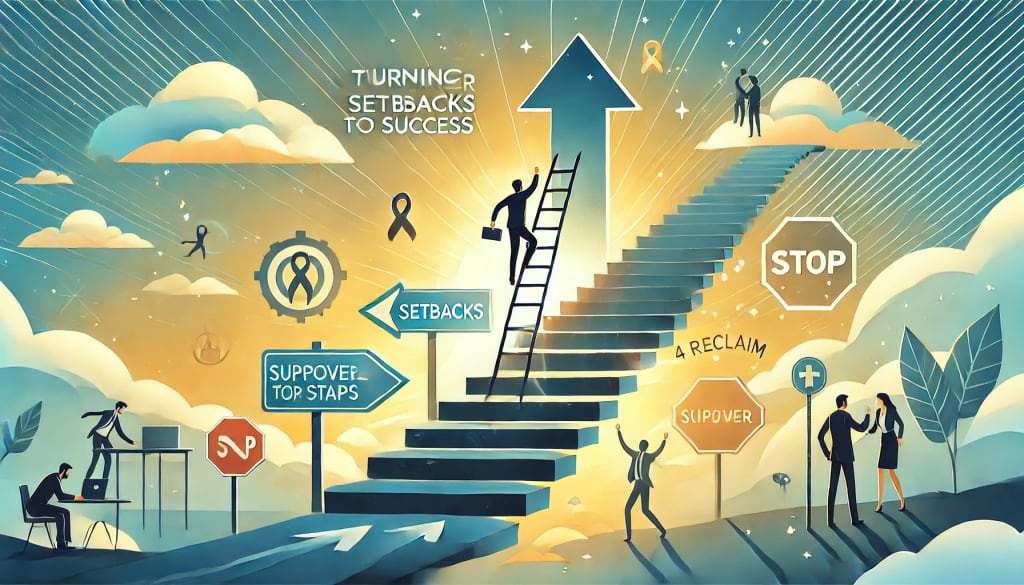
The road to success is rarely linear. For most people, there are multiple roadblocks and detours along the way. These setbacks are particularly poignant when they occur in the professional realm, where one’s ambitions and dreams often intersect with external circumstances, competition, and personal expectations. One of the most challenging and soul-crushing moments in any career is facing rejection—whether in business or in pursuit of a job promotion. This type of professional setback can leave lasting emotional scars but, paradoxically, often provides the greatest opportunities for growth, self-reflection, and eventual success.
For the person who experiences failure in their professional journey, the initial blow can be both overwhelming and devastating. Whether it is a rejection from a highly sought-after job position or the collapse of a business venture, the pain of not meeting expectations can feel insurmountable. It is important to understand that the emotion that comes with failure, especially professional rejection, is deeply tied to personal identity. Many individuals tie their self-worth to their achievements in their careers, which is why a setback in the professional world feels like a personal attack.
The Emotional Impact of Rejection
When someone fails to land a job promotion they’ve worked tirelessly for, or when a business venture doesn’t take off as expected, the immediate response is often one of deep emotional distress. The individual may experience feelings of frustration, helplessness, anger, or even guilt. There is a sense of loss—not just in the opportunity, but also in the belief that hard work and commitment should have guaranteed success. These feelings are compounded by the social pressure to succeed, especially in a world that often prioritizes external markers of achievement such as job titles, financial success, and professional recognition.
Take, for instance, an employee who has invested years of time, effort, and dedication into their work. They have exceeded expectations, demonstrated their capabilities, and put in long hours, but still, when the time comes for a promotion, they are passed over. The emotions that follow this rejection can be intense: shock, disbelief, and a sense of betrayal. In the workplace, where relationships are often built around mutual respect and professional achievements, being passed over can feel like a rejection of one’s value, not just their skills. The individual begins to question their place in the company and wonders if they will ever be able to move forward.
Similarly, for entrepreneurs who pour their heart and soul into starting a business, the failure of that business venture can feel catastrophic. When customers don’t materialize, sales remain stagnant, or market conditions shift unfavorably, the business owner might feel as though their dreams have been dashed. The investment of time, money, and energy into the venture seems wasted, and the entrepreneur may wonder if they made a mistake from the very beginning. This is a profound emotional blow, as it shakes their confidence not just in their business idea, but in their ability to make sound decisions and their place in the entrepreneurial world.
The Internal Struggle and Rebuilding Confidence
However, it is in these moments of rejection and failure that one is presented with an opportunity to rebuild and come out stronger. The emotional toll of professional setbacks, while intense, is not permanent. The key to overcoming these challenges lies in how the individual processes and reframes their experience. The process of self-reflection begins, and the individual starts to ask themselves tough questions: What went wrong? Were there areas in my approach that needed improvement? Did I put enough thought into my strategy, or did I overlook key details?
The first step in this rebuilding process is acknowledging the emotional impact of failure. It is crucial to allow oneself to feel disappointment, frustration, and sadness but to also recognize that these emotions are part of a larger growth process. Ignoring or suppressing feelings of rejection only delays the healing process. By acknowledging failure, the individual can begin to learn from it.
One common mistake is to internalize failure, believing that the rejection means that one is not good enough. The truth is, rejection often has little to do with one’s personal worth and much more to do with timing, external factors, or the sheer competition in a particular field. It is vital for individuals to separate their identity from their failures. A rejection or a setback doesn’t mean they are unqualified, inadequate, or incapable. It simply means that the right opportunity has not yet arrived, or that more preparation is needed.
For the individual seeking a promotion, it is essential to evaluate their professional journey objectively. What skills are still lacking? What can they improve upon in order to make themselves the ideal candidate for future opportunities? Often, it is the realization that rejection is simply a sign of more work to be done that motivates the individual to improve. In many cases, the best professionals are those who fail, learn, and adapt, rather than those who succeed effortlessly. Rejection, therefore, becomes a necessary catalyst for growth.
Similarly, the entrepreneur who experiences a failed business venture must take the time to analyze why the business did not succeed. Was it a lack of market research? Did they misjudge customer needs or overestimate their resources? The failure itself may not be the end of the story, but rather the beginning of a new chapter. By studying their failures, the business owner can refine their strategy, adjust their approach, and perhaps start a new venture that is better informed and more likely to succeed.
Embracing Resilience and Persistence
Perhaps the most important lesson learned through rejection and failure is the ability to persevere. Resilience is the ability to bounce back from adversity, to face challenges head-on, and to continue moving forward even when the future seems uncertain. Professionals who can bounce back after a setback and continue pushing towards their goals are often the ones who eventually achieve success.
In many ways, resilience is built through experiencing setbacks. When individuals encounter failure, they realize that their capacity to overcome challenges is not defined by their success or failure in any one endeavor, but by their determination to keep moving forward. Professionals who face rejection and failure in their career paths often become more adaptable, resourceful, and proactive in future opportunities. Failure no longer seems like the end of the road, but a detour on the path to greater success.
Moreover, the ability to bounce back from failure leads to a greater sense of confidence. By confronting rejection head-on, professionals and entrepreneurs gain a clearer understanding of their own strengths and weaknesses, which can guide them in their future endeavors. For example, someone who is rejected for a job promotion may discover that they were too narrowly focused on a single path for growth. The rejection opens up the possibility for them to explore new roles, acquire new skills, or take on challenges they may not have considered previously. This broadened perspective is what allows individuals to grow into more well-rounded professionals.
The Final Takeaway: Turning Setbacks into Stepping Stones
Professional setbacks, while initially painful, are often the turning points in an individual’s career. Rejection and failure force individuals to confront their weaknesses, assess their strategies, and reconsider their goals. But, more importantly, these setbacks provide the opportunity to grow stronger, more resilient, and more determined than before. In many cases, the most successful professionals are those who have faced failure head-on and used it as the stepping stone to greater achievements. Rejection is not the end of the journey; it is simply a moment in time that propels the individual towards something even better.
In the long run, the pain of rejection fades, and what remains is the valuable lesson that success does not come without struggle. The professional who has faced setbacks, learned from them, and kept moving forward is ultimately the one who will emerge victorious in the end.
About the Creator
DINESH KUMAR SHARMA
i am a writer and a investor
Keep reading
More stories from DINESH KUMAR SHARMA and writers in Chapters and other communities.
Professional Milestones
A professional milestone in an individual's career represents a significant achievement or turning point that not only marks the completion of a particular phase but also propels them to the next level of success. These milestones often reflect a culmination of hard work, perseverance, and the honing of skills over time, creating a foundation for even greater accomplishments. For many individuals, these milestones are not just personal achievements but also moments that define their professional identity and reputation. From landing their first major job to achieving a leadership position or gaining industry-wide recognition, each milestone in a person’s career is a testament to their growth, resilience, and strategic vision.
By DINESH KUMAR SHARMAabout a year ago in Chapters
Andrew Carnegie: From Immigrant to Steel Tycoon
Andrew Carnegie was born on November 25, 1835, in Dunfermline, Scotland, a town that had once been wealthy but was declining by the mid-19th century. His father, William Carnegie, was a handloom weaver, a craft that was rapidly disappearing due to the rise of industrialized steam-powered looms. As a result, the family faced severe poverty, forcing Andrew’s mother, Margaret, to work long hours mending shoes and running a small grocery shop to make ends meet. These early experiences instilled in Carnegie a profound awareness of social inequality and a lifelong determination to rise above hardship. Witnessing the struggles of the working class inspired his later belief that wealth should be used to improve society.
By Haroon Pasha7 days ago in Chapters



Comments
There are no comments for this story
Be the first to respond and start the conversation.