
Probiotic vs Prebiotic Seeds: What's the Difference and How They Boost Gut Health
Learn the difference, how they support gut health, and which seeds fall into each category.
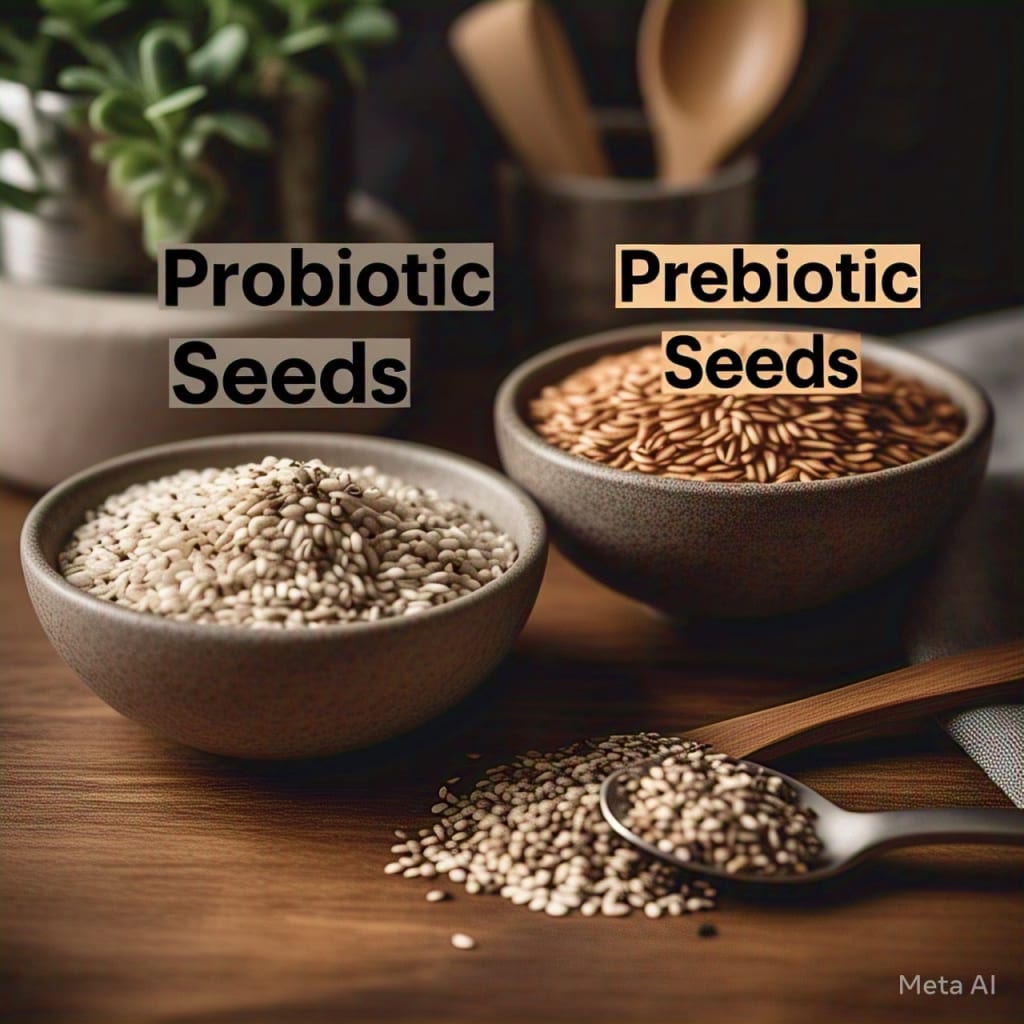
When it comes to gut health, the terms probiotic and prebiotic are often thrown around, but what do they really mean? And how do seeds fit into the picture? Understanding the difference between probiotic and prebiotic seeds can help you make smarter choices for your digestive health. In this blog, we’ll break down the roles of probiotic and prebiotic seeds, explore which seeds fall into each category, and share tips on how to incorporate them into your diet for a healthier gut.
What Are Probiotics and Prebiotics?
Before diving into seeds, let’s clarify the basics:
-Probiotics: These are live beneficial bacteria that help maintain a healthy balance in your gut microbiome. They’re found in fermented foods like yogurt, kefir, and sauerkraut.
-Prebiotics: These are non-digestible fibers that act as food for the good bacteria in your gut. They help probiotics thrive and support overall gut health.
While seeds themselves are not probiotics, some seeds can be fermented to create probiotic-rich foods. On the other hand, many seeds are excellent sources of prebiotics.
Prebiotic Seeds: Fuel for Your Gut Bacteria
Prebiotic seeds are rich in fiber, which feeds the good bacteria in your gut. Here are some of the best prebiotic seeds:
1. Chia Seeds
Why They’re Great: Chia seeds are packed with soluble fiber, which forms a gel-like substance in the gut and acts as a prebiotic.
How to Use: Add to smoothies, yogurt, or oatmeal, or make chia pudding.
2. Flaxseeds
Why They’re Great: Flaxseeds are high in both soluble and insoluble fiber, making them a powerhouse for gut health.
How to Use: Sprinkle ground flaxseeds on salads, oatmeal, or baked goods.
3. Pumpkin Seeds
Why They’re Great: Pumpkin seeds contain fiber and zinc, which support gut lining health and immune function.
How to Use: Enjoy as a snack or add to salads and trail mix.
4. Sunflower Seeds
Why They’re Great: Sunflower seeds are rich in fiber and vitamin E, which help reduce inflammation in the gut.
How to Use: Sprinkle on salads or blend into nut butter.
Probiotic Seeds: A Misconception?
Seeds themselves are not probiotics, but they can be used to create probiotic-rich foods through fermentation. For example:
•Fermented Seed Sauces: Seeds like mustard or flax can be used in fermented condiments.
•Sprouted Seeds: Sprouting seeds can enhance their nutrient profile and make them easier to digest, though they don’t contain live probiotics.
If you’re looking for probiotics, focus on fermented foods like yogurt, kefir, kimchi, and sauerkraut, which contain live beneficial bacteria.
How Probiotics and Prebiotics Work Together
Probiotics and prebiotics have a symbiotic relationship. Prebiotics act as food for probiotics, helping them thrive and multiply in your gut. Together, they:
:Improve digestion and nutrient absorption.
:Boost immune function.
:Reduce inflammation in the gut.
:Support mental health through the gut-brain connection.
How to Incorporate Prebiotic Seeds into Your Diet
•Smoothies: Blend chia or flaxseeds into your favorite smoothie.
•Yogurt or Oatmeal: Sprinkle seeds on top for added fiber and crunch.
•Baking: Add seeds to muffins, bread, or energy bars.
•Salads: Toss seeds into salads for extra texture and nutrition.
•Snacks: Enjoy pumpkin or sunflower seeds as a healthy snack.
FAQs About Probiotic and Prebiotic Seeds
1. Can seeds be probiotics?
No, seeds themselves are not probiotics, but they can be used in fermented foods that contain probiotics.
2. Which seeds are the best prebiotics?
Chia seeds, flaxseeds, pumpkin seeds, and sunflower seeds are excellent sources of prebiotic fiber.
3. How do prebiotic seeds help gut health?
Prebiotic seeds feed the good bacteria in your gut, promoting a healthy microbiome and improving digestion.
4. Can I eat prebiotic seeds every day?
Yes, prebiotic seeds are safe to eat daily. Aim for 1-2 tablespoons per day.
5. Do I need to take probiotics if I eat prebiotic seeds?
While prebiotic seeds support gut health, incorporating probiotic-rich foods or supplements can provide additional benefits.
About the Creator
Anu Singh
I am an engineer converted to a content writer.
I love to write on Life skills, motivational topics, teens wellbeing, Art & Style, Good health , Interview Skills, Finance, AI Tools , Astrology Calculators
How Reading Affects the Brain
Reading is more than just a way to pass time or absorb information — it’s a workout for the brain that can shape how we think, feel, and understand the world. Scientists have long studied the effects of reading on the brain, and the findings reveal that this simple act can have profound neurological, emotional, and cognitive benefits. Here’s a closer look at how reading influences the brain.
By Gustavo Woltmanna day ago in Chapters
A System That Isn’t Working Challenge Winners
Systems promise order. They organize behavior, distribute opportunity, and suggest that if everyone follows the rules, things will work. The entries in A System That Isn’t Working look closely at what happens when that promise begins to slip.
By Vocal Curation Team4 days ago in Resources




Comments
There are no comments for this story
Be the first to respond and start the conversation.