
Political Turmoil in France: Macron’s Hunt for a New Prime Minister
New prime minister

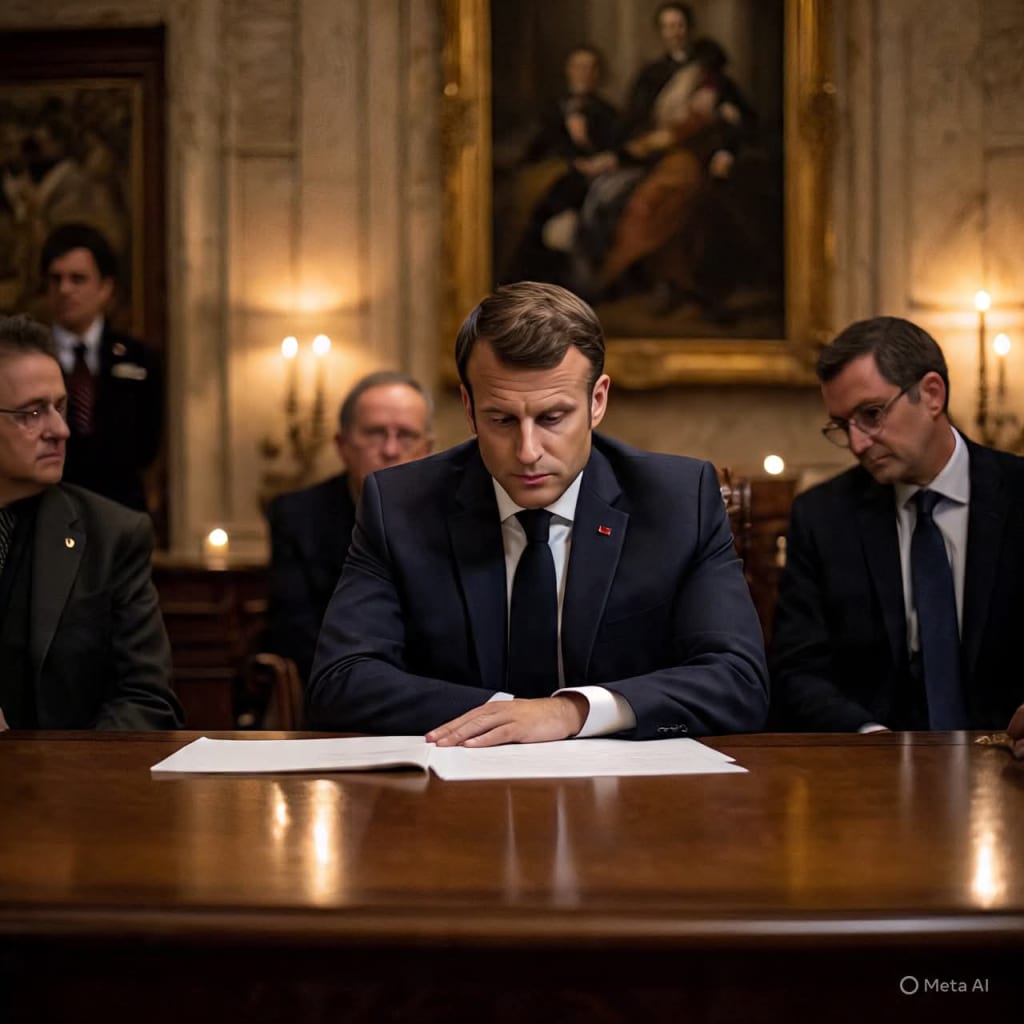
France has entered yet another phase of political instability after Prime Minister François Bayrou was forced to resign on September 8, 2025, following a devastating defeat in a confidence vote. The vote, which saw 364 lawmakers reject his government compared to just 194 in support, reflects the deep divisions in France’s National Assembly and raises urgent questions about the future of President Emmanuel Macron’s second term.
This marks the third prime ministerial collapse in a single year, underscoring the fragility of Macron’s centrist project and his increasingly limited ability to govern effectively.
Bayrou’s Downfall
Bayrou had only been in office for nine months, but his administration quickly ran into turbulence. His defining policy proposal—a controversial €44 billion austerity package—was meant to address France’s mounting public debt crisis. The package included spending freezes, reduced subsidies, and even proposals to cut back on public holidays.
While the measures were designed to restore fiscal credibility, they sparked backlash across the political spectrum:
The left-wing parties denounced the plan as an assault on workers and social protections.
The far-right National Rally (RN) led by Marine Le Pen seized the opportunity to portray the government as detached from ordinary French citizens.
Even many centrists and moderates balked at the severity of the cuts.
Bayrou’s government simply could not assemble the votes needed to survive, and the failure of the confidence motion sealed his fate.
A Fractured Parliament
France’s National Assembly is more divided than ever. Macron’s centrist alliance does not hold a majority, leaving him dependent on fragile coalitions or temporary deals. The political landscape is split into three major blocs:
The Left (NUPES and allies) – pushing for more public spending and social protections.
The Center (Macron’s Renaissance and allies) – advocating fiscal discipline but increasingly weakened.
The Far Right (National Rally) – now the largest single parliamentary faction, calling for nationalist and populist policies.
This fragmentation has made stable governance nearly impossible. Any prime minister who steps into Bayrou’s shoes will face the same challenge: how to secure enough parliamentary support to pass essential legislation.
Macron’s Difficult Choices
President Macron now has to appoint his fifth prime minister since 2022, an extraordinary turnover rate for the Fifth Republic. His options are limited and politically risky:
Forming a Minority Government with Socialist Support: Macron could attempt to bring moderate Socialists on board to pass a budget and avoid collapse. However, their economic agenda is very different—particularly on pensions, wages, and public spending—making cooperation shaky at best.
Calling Snap Elections: A bold but risky move would be to dissolve parliament and call early elections. The danger here is obvious: Marine Le Pen’s National Rally is currently leading in the polls and could emerge even stronger, potentially giving her decisive influence over French politics.
Technocratic or Unity Government: Macron could appoint a technocratic figure with cross-party credibility, someone seen more as a “problem solver” than a partisan leader. However, in such a polarized atmosphere, even a neutral figure may struggle to survive.
The Economic Stakes
At the core of this crisis is France’s public debt, which has surged to more than 114% of GDP. Debt servicing alone now consumes nearly 7% of the national budget, a level that economists warn is unsustainable. International credit agencies are closely watching whether France can adopt credible fiscal reforms.
Failure to pass a budget for 2026 could not only destabilize France domestically but also shake confidence within the European Union, where France plays a pivotal role in shaping economic and defense policies.
Broader Implications
The political turmoil comes at a delicate moment for France internationally. Macron has positioned himself as a leading European voice on issues such as the war in Ukraine, instability in the Middle East, and EU-wide defense integration. However, repeated domestic crises weaken his authority abroad and distract his government from pressing global challenges.
Domestically, street protests and strikes are intensifying, with unions and grassroots movements mobilizing against austerity and political gridlock. Public frustration with Macron’s leadership is growing, creating fertile ground for populist alternatives.
Conclusion
France is at a crossroads. The fall of François Bayrou highlights not just the weakness of one prime minister but the systemic paralysis of French politics under Macron’s second term. With a fractured parliament, high debt, and growing public anger, the president’s choices are limited and fraught with risk.
Whoever Macron appoints next will face enormous challenges: stabilizing the government, passing a credible budget, and restoring public trust. If he fails to find a workable solution, France could slide deeper into instability—and Marine Le Pen’s far right may stand to benefit most.
About the Creator
Abdullah Bacha
youngest writer 👑
Keep reading
More stories from Abdullah Bacha and writers in Chapters and other communities.
Norway’s Labour Party Secures a Narrow but Historic Victory
Norway’s Labour Party Secures a Narrow but Historic Victory Norway has just witnessed a significant political event: the Labour Party, led by Prime Minister Jonas Gahr Støre, has claimed victory in the general election. While the margin was narrow, the win is symbolically and politically important, as it secures Støre’s mandate to continue leading the country at a time when Norway is grappling with critical debates over taxation, economic policy, and the future of its welfare model.
By Abdullah Bacha4 months ago in Chapters
Fair Exchange, No Robberies
Dark Memoirs - Index There are at least two kinds of people in the world: those who write this half-arsed kind of intro to a story that looks to separate the rare and the norm, and those who realise it's an overused framing device and don't.
By Paul Stewart15 days ago in Chapters


Comments
There are no comments for this story
Be the first to respond and start the conversation.