
Norway’s Labour Party Secures a Narrow but Historic Victory
Norway’s Labour Party Secures a Narrow but Historic Victory

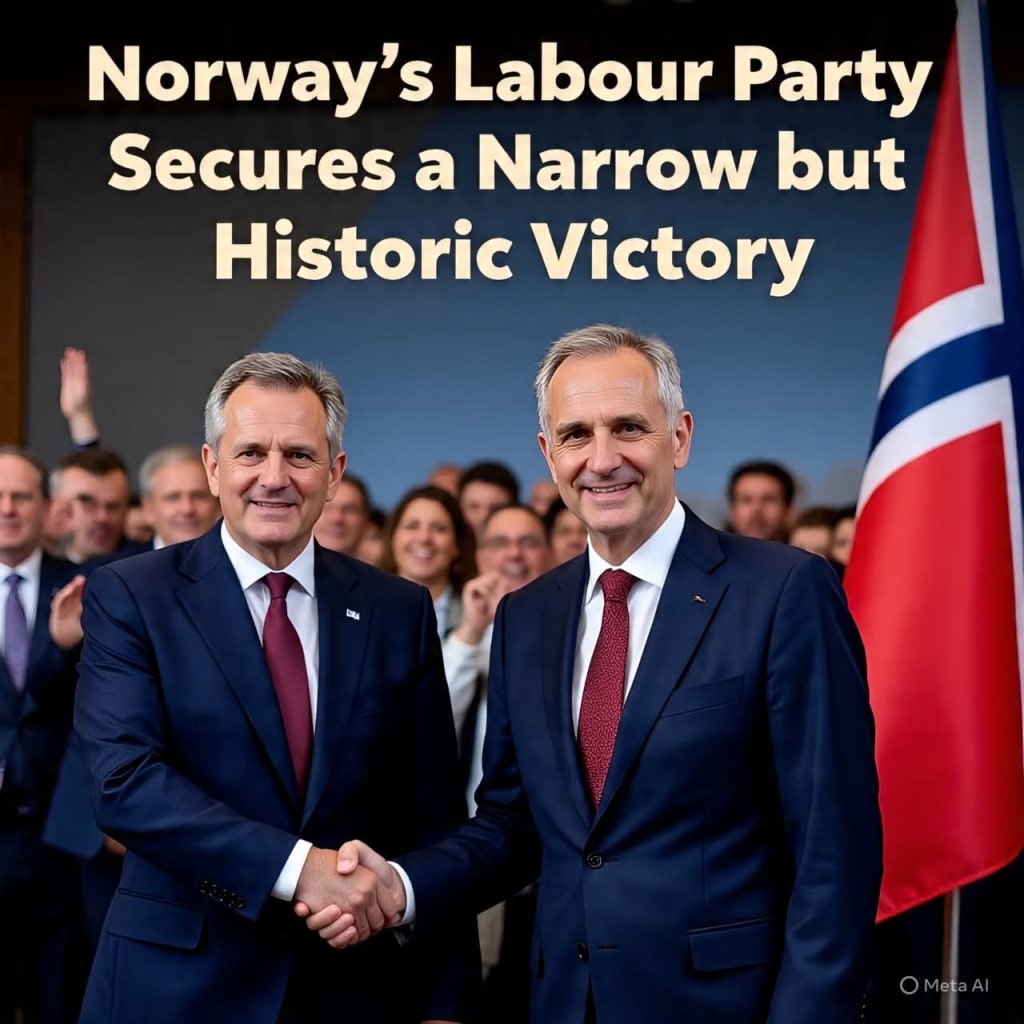
Norway’s Labour Party Secures a Narrow but Historic Victory
Norway has just witnessed a significant political event: the Labour Party, led by Prime Minister Jonas Gahr Støre, has claimed victory in the general election. While the margin was narrow, the win is symbolically and politically important, as it secures Støre’s mandate to continue leading the country at a time when Norway is grappling with critical debates over taxation, economic policy, and the future of its welfare model.
The Central Issue: Norway’s Wealth Tax
The most heated subject of this election was Norway’s wealth tax, one of the oldest in the world. Introduced in the late 19th century, this tax requires wealthy individuals to pay a portion of their net wealth to the state. For decades, it has been a cornerstone of Norway’s approach to equality and redistribution.
Supporters’ View: The Labour Party, trade unions, and progressive voters argue that the wealth tax is essential for maintaining the country’s high-quality social welfare system, which includes universal healthcare, free education, and strong public infrastructure. They believe that without it, the state would struggle to finance key services that make Norwegian society more equal and fair.
Critics’ View: On the other hand, opposition parties and business groups insist that the tax is outdated and harmful. They claim that it drives wealthy Norwegians—and their investments—abroad. Over the past decade, several high-net-worth individuals have moved to Switzerland and other tax-friendly nations to avoid the burden, a trend critics say threatens the competitiveness of Norway’s economy.
This sharp divide made the election more than just a political contest; it became a referendum on the country’s economic philosophy and long-term direction.
Election Outcome
Although the Labour Party’s margin of victory was not overwhelming, it was decisive enough to allow Jonas Gahr Støre to remain prime minister. His party will likely need to strengthen alliances with other left-leaning groups in parliament to ensure stable governance, given the fragmented nature of Norwegian politics.
When the results were announced, Labour supporters celebrated in Oslo, waving red flags and chanting slogans in favor of equality and solidarity. For many, this was not just about a party winning an election—it was about protecting the very identity of Norway as a welfare-oriented, egalitarian society.
Broader Economic Implications
The outcome of this election has both domestic and international consequences:
For Norway’s Economy:
The continuation of the wealth tax means that wealthy citizens and companies will still shoulder a significant financial burden.
This policy reassures ordinary Norwegians who rely on the country’s welfare programs, but it also risks further capital flight if more businesses relocate abroad.
Foreign investors are watching carefully, as Norway is one of the world’s richest countries per capita, thanks largely to its oil and gas resources.
For Energy and Climate Policy:
Norway is a major oil and gas exporter, and the Labour Party has long walked a fine line between supporting the industry and promoting green energy.
A strengthened Labour mandate means the government is likely to continue investing in renewable energy while still maintaining oil production for global markets.
For Europe:
Norway is not a member of the EU but is closely tied to it through the European Economic Area (EEA).
Støre’s government will continue balancing domestic demands for sovereignty with the realities of deep economic integration with Europe.
Political Challenges Ahead
Despite the victory, Jonas Gahr Støre faces multiple challenges:
Managing Parliament: With a slim majority, passing legislation will require building coalitions and negotiating with smaller left-wing and centrist parties.
Addressing Inequality: While Norway is among the world’s wealthiest nations, income inequality has slowly been growing. Støre must demonstrate that the wealth tax is not just symbolic but genuinely effective in reducing the gap.
Global Pressures: As the world transitions toward renewable energy, Norway must prepare for a post-oil future. This transition will test the resilience of its welfare state and the creativity of its policymakers.
Conclusion
Norway’s 2025 general election will be remembered as a battle over values as much as over politics. The Labour Party’s victory represents a reaffirmation of the Norwegian model: high taxes, robust welfare, and a strong commitment to social equality. Yet it also underscores deep divisions in society about how to balance fairness with competitiveness in a globalized economy.
Jonas Gahr Støre now has the difficult task of proving that his vision can hold the country together—protecting its traditions of solidarity while preparing for an uncertain economic future. If he succeeds, Norway may continue to serve as a global example of how a modern welfare state can thrive in the 21st century.
About the Creator
Abdullah Bacha
youngest writer 👑
Keep reading
More stories from Abdullah Bacha and writers in Chapters and other communities.
India and Pakistan boom blast today
Background: The Pahalgam Attack In April 2025, a terrorist attack in Pahalgam, Kashmir, resulted in the deaths of 26 people, primarily Indian Hindu tourists. India attributed the attack to Pakistan-based militant groups, specifically Jaish-e-Mohammed (JeM) and Lashkar-e-Taiba (LeT), both designated as terrorist organisations by the United Nations. Pakistan denied any involvement, asserting that it does not support cross-border terrorism.
By Abdullah Bacha10 months ago in Chapters
How Iran Attacks Are Affecting Pakistani Workers in Dubai and the Gulf
Until a few days ago my work was going very well, but now several days pass without getting any work. Over the past five years I manageid to pay off the debts that were on me and my family. Now my goal was to build my own house. But if the situation continues like this, it may even become difficult to earn a living in Dubai.”
By Real content7 days ago in Chapters
Top tipple tricks
Been thinking a lot about drinking, lately. Not least because of a recent episode of over-indulgence and the inevitable after effects. Some readers may recall the earlier articles I wrote about beating the booze. Here I set out an experiment in techniques for cutting down on my alcohol intake. The experiment was successful, the techniques worked, and I have armed myself with an arsenal of weapons in the war against the demon drink. I have yet to fire the first round however. It's all a question of timing (perhaps procrastination).
By Raymond G. Taylor7 days ago in Psyche



Comments
There are no comments for this story
Be the first to respond and start the conversation.