
Over 400 lives saved with NASA's search and rescue tech in 2024
NASA

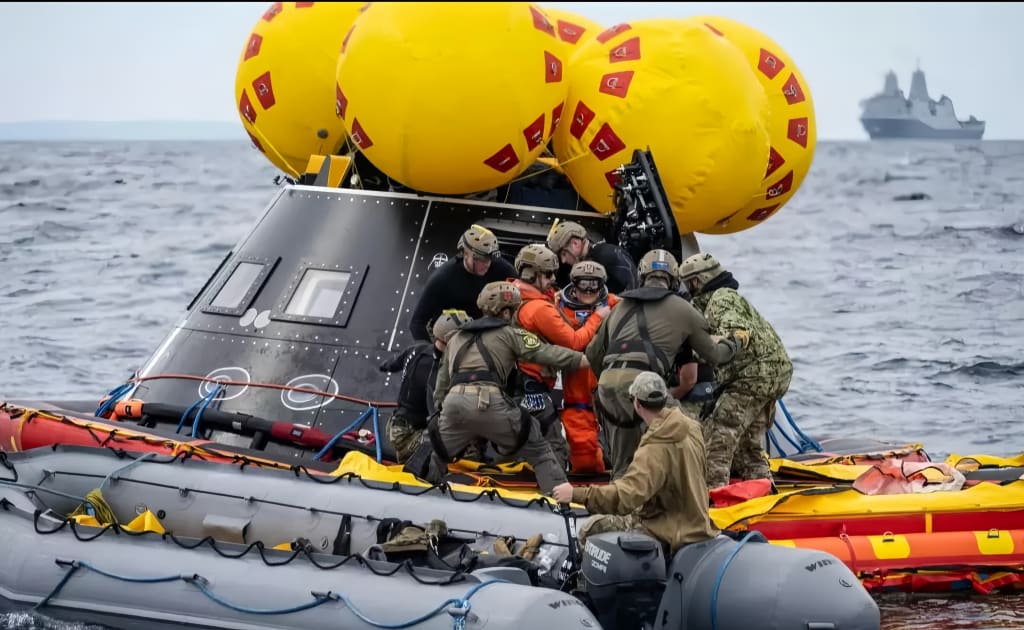
More than 400 lives were saved in the United States in 2024 using NASA’s advanced search and rescue technologies. According to a report by the National Oceanic and Atmospheric Administration (NOAA), these life-saving rescues were possible due to three key emergency beacon systems. Personal Locator Beacons (PLBs) were responsible for 52 rescues, allowing individuals to send emergency signals for immediate help. Emergency Position-Indicating Radio Beacons (EPIRBs), commonly used in maritime situations, contributed to 314 rescues by automatically activating when submerged. Additionally, Emergency Locator Transmitters (ELTs), installed in aircraft, facilitated 41 rescues by sending distress signals upon impact.
NASA’s Role in Search and Rescue
NASA has been instrumental in developing search and rescue technologies that enhance emergency response efficiency. By utilizing a network of satellites equipped with advanced sensors, the agency ensures that distress signals from remote or extreme locations are detected quickly. These satellites relay crucial location data to ground-based rescue teams, allowing them to act with precision.
How These Technologies Save Lives
Search and rescue beacons operate by transmitting distress signals to satellites, which then forward the data to emergency responders. This system ensures rapid intervention, significantly increasing survival chances. The integration of GPS technology has further refined the accuracy of these systems, reducing response times drastically. Faster response times mean victims receive aid sooner, while global satellite coverage ensures even those in the most isolated areas can be rescued. The combination of these factors has contributed to the high success rate of NASA’s technology in real-life emergencies.
Real-Life Impact: Stories of Survival
Several real-life cases highlight the importance of NASA’s search and rescue innovations. In one instance, a group of hikers lost deep in a dense forest activated their Personal Locator Beacon, allowing rescue teams to track and extract them within hours. Similarly, a solo sailor stranded in the Pacific Ocean was saved after his EPIRB automatically transmitted his location to emergency services when his boat capsized. Such incidents demonstrate how these technologies act as a lifeline in critical situations.
Future of Search and Rescue Technology
NASA and NOAA are continuously working to enhance these life-saving systems. Future advancements may include artificial intelligence-powered distress signal analysis, which would reduce false alarms and prioritize urgent cases. Enhanced satellite networks will provide even faster and more accurate location tracking, ensuring that response times are further minimized. Additionally, the development of smart wearable emergency devices could revolutionize personal safety, making it easier for individuals to send distress signals without the need for manual activation.
Key Takeaways
NASA’s search and rescue technology saved over 400 lives in 2024, demonstrating the effectiveness of advanced emergency response systems. Personal Locator Beacons, Emergency Position-Indicating Radio Beacons, and Emergency Locator Transmitters played a crucial role in these rescues. With satellite-based networks and GPS integration, distress signals are detected and responded to swiftly. As technology continues to evolve, the potential for even more efficient and life-saving advancements remains promising.
About the Creator
Review of 'Man on the Run'
My wife and I saw Man on the Run, a nearly 2-hour documentary on Amazon Prime, about Wings, Paul McCartney's group that flew around the world from shortly after The Beatles broke up in early 1970 to shortly after John Lennon was murdered at the end of 1980, making a Beatles reunion forever impossible.
By Paul Levinson6 days ago in Beat




Comments
There are no comments for this story
Be the first to respond and start the conversation.