
Mindsets of Money
What the Rich Teach Their Kids That the Poor Do Not
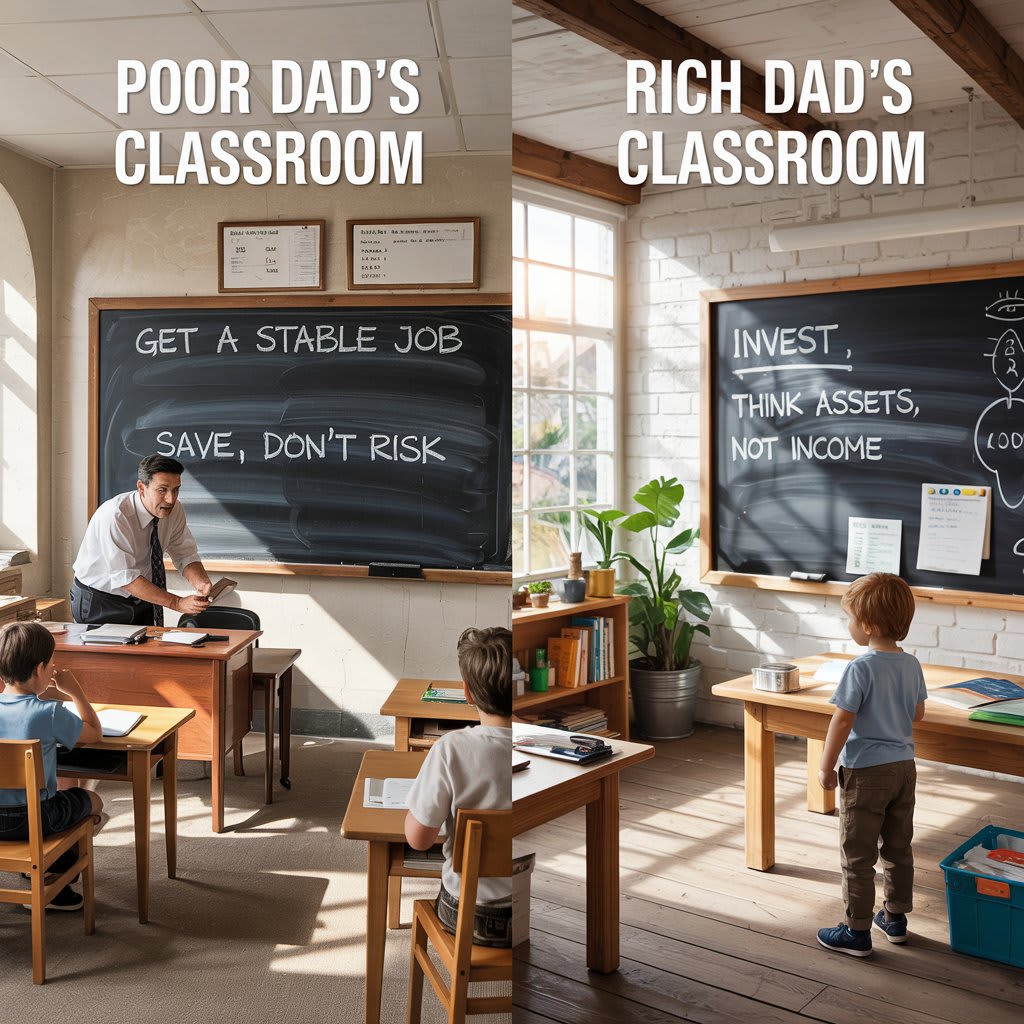
In the bustling city of Glenridge, two boys—Jason and Malik—grew up just blocks away from each other. Their homes, however, might as well have been on different planets.
Jason lived in a spacious house in a gated community, his father a successful entrepreneur and his mother a financial analyst. Their family spoke in terms of investments, assets, and passive income. Dinner conversations often sounded like boardroom meetings, yet somehow always felt warm and exciting.
Malik, on the other hand, lived with his mother and younger sister in a small apartment in the heart of the city. His mom worked two jobs—day shifts as a cashier and night shifts cleaning offices. Their conversations centered on survival: bills, groceries, keeping the lights on. Love filled their home, but so did stress.
The two boys met in middle school and clicked over a shared love of video games and basketball. But as they grew older, the differences in their upbringing became more apparent.
One day, while walking home, Jason said, “My dad’s taking me to one of his meetings tomorrow. He says I should start learning how to ‘make money work for me.’”
Malik furrowed his brow. “Make money work for you? You mean, like… a job?”
Jason shook his head. “No, not like a job. More like… owning things that make money, even when you’re not working. Like stocks, real estate, or businesses.”
That night, Malik couldn’t sleep. His mind buzzed with questions. What did Jason mean? Is that something only rich people can do? He felt a strange mix of curiosity and frustration.
The next day, Malik asked his mom, “Do we own anything that makes money for us?”
She paused, exhausted from her shift. “No, sweetheart. We work for money, we don’t have money working for us. That’s just not how things are for people like us.”
That stuck with Malik. People like us.
Years passed. Jason went to business school, while Malik took a job straight out of high school to support his family. Still, the question haunted him. He began to read books at night—free PDFs and borrowed library copies. “Rich Dad Poor Dad,” “Think and Grow Rich,” “The Millionaire Next Door.” He scribbled notes, tracked his spending, and slowly started saving.
Jason, meanwhile, was being groomed to take over part of his father's investment firm. He already had a stock portfolio and was learning the ropes of real estate deals.
But then something unexpected happened. Jason reached out to Malik.
“Hey, man. Remember when we were kids? You always asked questions. You ever figure out the answer?”
Malik laughed. “Not all of them. But I’m working on it. Got my first rental property last month. It’s small, but it’s something.”
Jason grinned. “That’s huge. Want to grab coffee? My dad’s looking to mentor someone outside the family. I mentioned you.”
Over steaming cups of coffee in a corner café, the two young men talked business, mindset, and the power of early education.
Jason said, “You know what the biggest difference is? My parents taught me to think like an owner, not a worker. That money is a tool, not just a paycheck. They taught me about risk, not just savings.”
Malik nodded. “Yeah. My mom taught me how to survive, not how to grow. But I don’t blame her—she did her best with what she had.”
Jason raised his cup. “To rewriting the script.”
Malik clinked his. “To teaching the next generation something different.”
Moral of the Story:
It’s not about how much money you have, but the mindset you grow up with. Wealthy families often teach their children about assets, investing, and financial independence. Poor families, constrained by survival, focus on hard work and security. The real power comes when someone breaks the cycle—when knowledge bridges the gap.
About the Creator
Keep reading
More stories from writers in Chapters and other communities.
Fair Exchange, No Robberies
Dark Memoirs - Index There are at least two kinds of people in the world: those who write this half-arsed kind of intro to a story that looks to separate the rare and the norm, and those who realise it's an overused framing device and don't.
By Paul Stewart15 days ago in Chapters
The Future of Computing
In the ever-evolving world of technology, quantum computing stands as one of the most promising frontiers. Traditional computers, which rely on bits as the fundamental unit of data, are reaching the limits of their processing power. Quantum computers, on the other hand, leverage the principles of quantum mechanics to process information in ways that were once thought impossible. This article explores the fundamentals of quantum computing, its potential applications, and the challenges that must be overcome to unlock its full potential.
By Gustavo Woltmann3 days ago in Chapters
Center Stage with Paul Stewart
*** I'm keen to republish the interviews I did for my series with Vocal creators. It's been a few years and I thought it might be nice to revisit these wonderful conversations. I'll be releasing them one at a time for a few weeks/months.
By Heather Hubler5 days ago in Interview



Comments
There are no comments for this story
Be the first to respond and start the conversation.