
Little Hearts, Big Feelings: Helping Children Understand Their Emotions
A Journey into the Emotional World of Children and How We Can Guide Them with Love and Patience

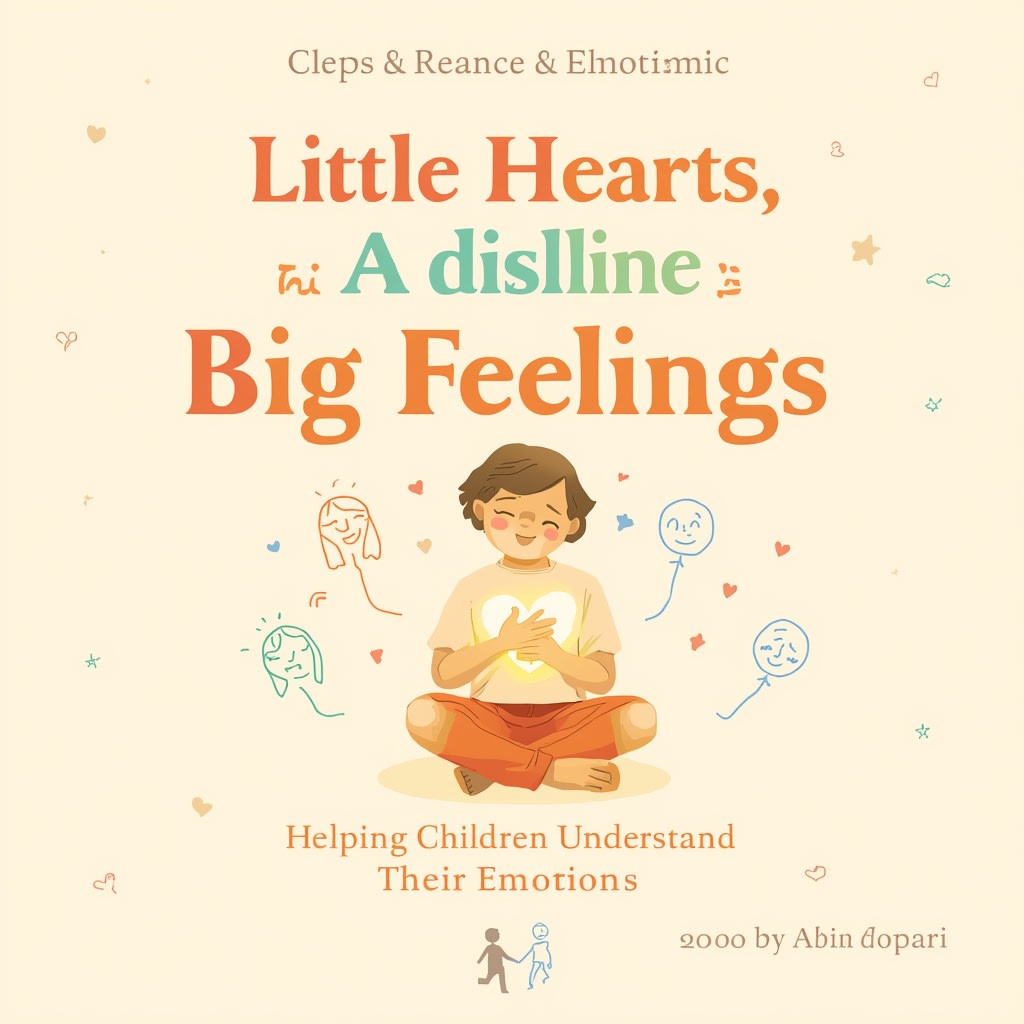
The Language of Little Hearts
Children experience the world in colors brighter and emotions deeper than adults often realize. To a child, a lost toy isn’t just a missing object — it’s the end of a friendship. A parent’s raised voice isn’t a moment of frustration — it’s a thunderstorm in their tiny emotional world.
Every feeling they experience — joy, sadness, anger, fear — is new, raw, and intense. Unlike adults, they haven’t yet learned the art of balance, of saying, “It’s okay, this will pass.” For them, every emotion is the world at that moment.
Helping children understand and manage these emotions is one of the most powerful gifts we can give them. It shapes their confidence, builds empathy, and prepares them to face life’s challenges with strength and understanding.
The First Step: Seeing Through Their Eyes
Imagine you are five years old again. You drop your ice cream cone on the ground, and your parents say, “It’s okay, we’ll get another one.”
But to you, this was the ice cream you chose — the one you waited for, dreamed about all day. The disappointment feels enormous. You don’t know yet that you can simply get another one. To you, that moment is pure sadness.
Adults often forget what it feels like to be small in a big world. But the key to helping children manage emotions begins with empathy — stepping into their shoes and remembering that what seems small to us might be huge to them.
When a child cries, instead of rushing to fix the problem or dismiss the tears, pause and see what they see. Ask yourself: “What does this mean to them?” That single question can change how you respond.
Naming the Feelings: The Power of Words
Children often act out simply because they don’t have the words to express what’s happening inside them.
A toddler might scream when frustrated, throw a toy when angry, or hide under the bed when scared. It’s not misbehavior — it’s communication without language.
Helping children name their feelings is like handing them a map to their emotional world. When they can say, “I’m sad,” or “I feel angry,” they begin to understand that emotions are not monsters — they’re messages.
You can start early. For example:
“You look disappointed because your block tower fell down. That must feel frustrating.”
“You seem worried. Are you scared of the dark?”
“You’re smiling so big! You look really proud of your drawing.”
By connecting emotions to words, you’re teaching them to process rather than suppress. They learn: I can feel something, and I can talk about it.
The Magic of Listening
Children crave to be heard — truly heard. When adults listen without judgment or hurry, it gives children a safe space to explore their emotions.
A simple rule: Listen first, teach second.
If a child says, “I hate school,” the instinct might be to correct them: “Don’t say that! School is good for you.”
But that shuts the door on understanding. Instead, try:
“You hate school? That sounds serious. What makes you feel that way?”
You may find out that someone teased them, or a test made them nervous. Once you understand, then you can guide.
Listening tells a child, “Your feelings matter.” And when they know their feelings matter, they begin to believe they matter.
Modeling Calm: Children Learn What They See
Emotional control isn’t taught by words — it’s learned through example.
If a parent shouts in anger, a child learns shouting is how you deal with frustration.
If a parent takes a deep breath and speaks calmly, a child learns calm is possible even in chaos.
It’s okay for adults to show emotion — sadness, anger, disappointment — but how we handle those emotions becomes a powerful lesson. Saying things like, “I’m feeling frustrated, so I’m going to take a short break,” shows them that emotions are normal and can be managed.
Children watch us constantly. Our reactions become their blueprints.
The Role of Routine and Safety
Children thrive in environments where they feel secure. Emotional stability grows from predictability. When a child knows what to expect — when bedtime is, who picks them up, or that home is a safe space — it helps them manage stress and fear.
If life brings change — a move, a divorce, a new school — talk about it openly. Children fear the unknown. Explaining what’s happening in simple words reduces anxiety.
“We’re moving to a new house, and that might feel strange at first, but you’ll still have your favorite toys and your own room.”
Safety isn’t just physical; it’s emotional. When children know they can trust you with their feelings, their hearts stay open.
Helping Them Cope: Healthy Emotional Tools
Once a child can name and share feelings, the next step is coping strategies. These can be simple and fun:
Deep Breathing Games: Pretend to blow up a big balloon. Inhale deeply, then slowly exhale. This helps them calm down without realizing it’s a “technique.”
Drawing Feelings: Ask them to draw what anger looks like or what makes them happy. Art gives emotions a safe outlet.
Emotion Cards or Jars: Write different feelings on cards or slips of paper — happy, sad, worried, proud — and talk about one each day.
Gratitude Moments: Before bed, share one thing that made them smile. This nurtures positivity and reflection.
Teaching coping tools early helps children face stress with resilience rather than fear.
Stories and Play: The Emotional Classroom
Children learn through play — it’s their natural language. Dolls, blocks, or pretend games are often reflections of their emotional world. When a child says, “The teddy is sad because no one played with him,” they may be expressing their own loneliness.
Books and stories are also powerful tools. Stories let children see characters who feel the same things they do — anger, sadness, fear — and learn that emotions can lead to understanding and growth.
For example:
“The Color Monster” teaches about identifying emotions.
“The Invisible String” helps with separation anxiety.
Even classics like Inside Out show that sadness has a purpose.
Use stories to start conversations:
“Have you ever felt like the monster in the story?”
“What helped them feel better?”
This turns learning into empathy and self-awareness.
When Big Feelings Take Over
Sometimes, emotions are too big for a child to handle alone — constant sadness, frequent anger, or withdrawal can be signs of deeper struggles.
In such cases, professional help like counseling can make a huge difference. Emotional health is just as important as physical health, and asking for help shows strength, not failure.
Parents and teachers working together can spot early signs and create supportive environments. A kind word from a teacher or a patient hug from a parent can change everything for a struggling child.
Love Is the Bridge
At the heart of emotional growth is one simple truth: Children need to feel loved, no matter what they feel.
When a child throws a tantrum, screams, or cries — and you respond with understanding rather than anger — they learn that love is steady and unconditional.
Say things like:
“I still love you even when you’re mad.”
“Everyone feels sad sometimes, and that’s okay.”
“You don’t have to be perfect to be loved.”
Love gives children the courage to feel — and the strength to heal.
Conclusion: Building Emotionally Strong Futures
Helping children manage emotions is not about stopping them from feeling. It’s about teaching them that emotions are part of being human — signals that guide us, not storms that destroy us.
When children learn emotional intelligence early, they grow into adults who can handle conflict, build strong relationships, and show compassion to others.
So next time your child cries over a broken crayon or a forgotten toy, pause and see the world through their eyes. Listen, name, and guide. You’re not just teaching them to manage emotions — you’re shaping a kind, confident, emotionally wise person who will one day make the world gentler for others.
Because in the end, the smallest hearts often hold the biggest feelings — and the greatest potential.
About the Creator
Keep reading
More stories from Muhammad Azeemullah and writers in Chapters and other communities.
"How to Get Kids to Love Reading":
How to Get Kids to Love Reading: A Journey into the World of Books It was a quiet Saturday morning in the Parker household. The sun streamed through the window, casting a warm glow across the living room, where the family was gathered. Dad was sipping his coffee, and Mom was sorting through the mail. Their son, Ethan, was sitting on the couch, staring blankly at the TV.
By Muhammad Azeemullah3 months ago in Chapters
Sparrow on a Plank Chapter 11: From Surf to Turf
Once the ship hit the deep sea, Captain Taylor felt better. It’s not that he hated the towns, necessarily, it was more that it always felt like a compromise of some sort, and he hated compromise. In the port he was just another businessman, and was afforded the respect any other businessman was afforded. In most ports he was treated as a necessary evil, but in Coldport he was treated as a sign of times past, times that would be better forgotten.
By Jamais Jochim7 days ago in Chapters



Comments
There are no comments for this story
Be the first to respond and start the conversation.