
Is the future of solid-state batteries 3D printed?
3D solid battery
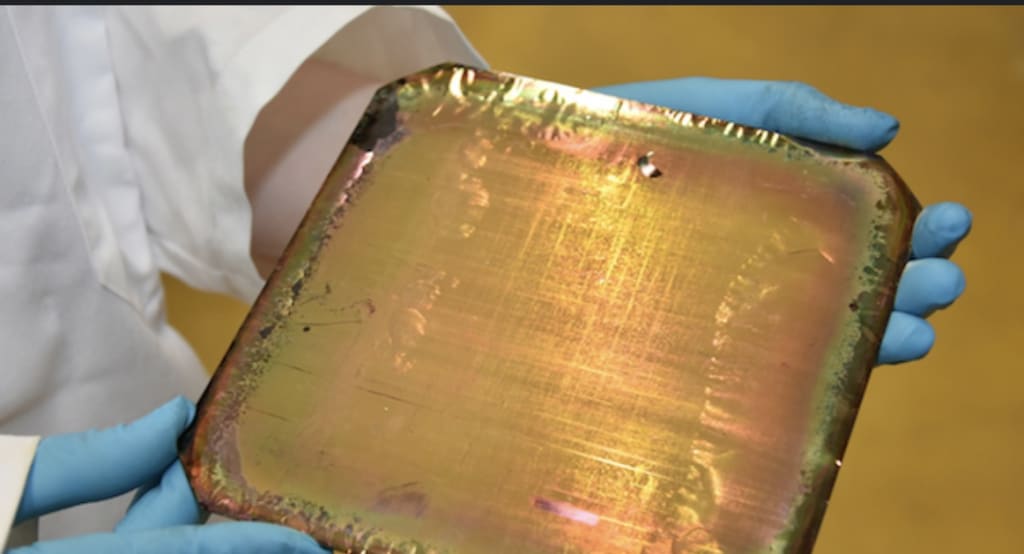
This may represent the future of rechargeable batteries. It offers enhanced power, improved safety, quicker charging times, and an extended lifespan. Theoretically, it could also be designed in any shape desired. Private enterprises and research institutions are competing to develop a battery that could eventually replace the ubiquitous lithium-ion variety. One company is pushing the boundaries further by exploring the concept of 3D printing batteries, thereby transforming our perception of their appearance. To understand the fundamentals, let us define what a battery is. A standard battery operates by converting chemical energy into electrical energy. It requires a positive terminal, known as the cathode, exemplified here by a zinc-coated nail, and a negative terminal, or anode, represented by a copper penny. Additionally, an electrolyte is necessary to connect these two components, which in this demonstration is provided by a potato. I will place one here and another here. The chemical reaction between each terminal and the potato facilitates the release of electrons from the anode, which then travel through the wire back to the cathode. This movement of electrons is what transforms the chemical reaction into electrical energy. Although the initial setup did not yield any results, adding a few more potatoes should enable the light to function. Thank you. These clips are quite challenging. Now, if we could have the lights, please. That was quite effective. This illustrates the basic principle behind any chemical battery. Lithium-ion batteries are among the most successful iterations of this technology. However, there is potential for enhancement, and startups are focusing on two critical aspects of the design: the electrolyte and the anode. Currently, nearly all commercially available batteries utilize a liquid electrolyte. We refer to them as lithium-ion batteries because the electrolyte is saturated with lithium ions that facilitate charge movement. While liquid electrolytes are excellent conductors, they are also volatile, especially when compromised or exposed to high temperatures. If you have been following the news, you may have encountered reports of incidents such as this.
About the Creator
Keep reading
More stories from writers in Chapters and other communities.
“Boots” — The Hidden History of Gay Soldiers in the U.S. Military
For much of American history, gay men and women have worn the uniform of the United States with courage and distinction — yet in silence. Their stories, often erased or deliberately concealed, form a powerful and complex chapter in the evolution of both the U.S. military and LGBTQ+ civil rights. From criminalization and dishonorable discharges to the controversial “Don’t Ask, Don’t Tell” policy and eventual full inclusion, the hidden history of gay service members reflects a broader struggle for dignity, recognition, and equality.
By Irshad Abbasi 2 days ago in Chapters




Comments
There are no comments for this story
Be the first to respond and start the conversation.