

there's a specific likelihood that a certain event occurs, and it will be in a universe where we observe that event taking place, or there’s a specific likelihood that an alternative event occurs, which will be in a universe where we observe that event occurring. what if I were to tell you that you are already deceased and you are completely unaware of it? this isn’t a riddle or a philosophical dilemma; according to a radical theory rooted in quantum mechanics, what you perceive as death might not exist in the manner you have been led to think. the notion is referred to as Quantum immortality, and it questions everything we comprehend regarding life, death, and consciousness. at the core of this concept is Hugh Everett III's many-worlds interpretation, which posits that for each possible outcome of a quantum event, a new universe is formed. if this is accurate, it implies that your consciousness may never truly encounter death; instead, it transitions into a timeline where you persist, indefinitely evading what appears to be unavoidable. the ramifications are significant and disturbing; while you exist here and now, innumerable other versions of yourself might already be deceased in parallel realities. the evidence supporting this isn’t concealed; it’s ubiquitous. let’s explore the reality. the many-worlds interpretation of quantum mechanics, proposed by physicist Hugh Everett III, stands as one of the most bewildering theories in contemporary science. envision this: every decision you make, every event in your life, and every potential outcome that could arise doesn’t merely occur or fail to occur; it divides reality into countless parallel universes. in one universe, you may be engaging with this script, and in another, you might have never clicked on it at all. this is not science fiction; it’s a serious interpretation of quantum theory that aims to elucidate the peculiar probabilistic behavior of particles at the quantum level. fundamentally, the many-worlds interpretation suggests that when a quantum event transpires, reality does not select one outcome over another; rather, all possible outcomes take place.
simultaneously each in its own separate universe. What does this signify for you? It signifies that every moment of your life has spawned countless alternate versions of reality. In some, you've succeeded brilliantly; in others, you've failed; and in some, you've died. But here's where it becomes fascinating and unsettling. According to quantum immortality, your consciousness doesn't experience the universes where you die; instead, it shifts to a reality where you continue to exist. In other words, you may already be dead in other universes, but to you, it feels like you've survived every close call. This is where quantum mechanics stops being just theoretical and starts to feel deeply personal. Think about Schrödinger's famous cat experiment. In this thought experiment, a cat in a box is simultaneously alive and dead until someone opens the box and observes it. Everett's many worlds interpretation suggests that the act of observation doesn't collapse these possibilities into a single outcome but instead creates two separate realities—one where the cat lives and one where it dies. Now replace the cat with yourself. Quantum immortality argues that your consciousness is the observer, and it always continues in the reality where you survive. Consider what this means for your everyday life. Those near misses—a car swerving just in time, a disease you were lucky to recover from, or a situation that seemed impossible to escape—might not be luck at all. They could be evidence of your consciousness jumping to another reality every time death should have claimed you. It didn't happen because of chance but because of the way reality itself works. The implications are both liberating and
Terrifying on one hand, it implies that you will never undergo your own death, at least not in the way we generally comprehend it. On the other hand, it prompts profound inquiries about what it signifies to live if you cannot truly die. Does life lose its urgency, or does it acquire a new type of significance because you are always moving toward survival? These are inquiries that Quantum immortality compels us to address, and the answers are far from straightforward. Some of the most astonishing truths regarding this Theory are too delicate to discuss here. For exclusive insights, subscribe to our free Insights Academy newsletter; link in the description. You will also receive a free copy of the Calion, available for a limited time only. But let's return to the implications of this theory. If quantum immortality is genuine, it is not merely a scientific curiosity; it is a transformation in how we perceive existence. Death, as we understand it, may be nothing more than a viewpoint—an obstacle that our consciousness surpasses without even being aware of it. The Multiverse, if it exists, would render our lives infinitely intricate and interconnected, with each version of reality unfolding simultaneously. In this perspective, life is not linear; it is a network of possibilities with consciousness navigating through the strands where it persists. And that leads us to a crucial point: the evidence isn't obscured; if we examine closely, there are clues all around us indicating that reality is much stranger and more infinite than we ever envisioned. Let's examine them. Quantum immortality is one of the most disconcerting ramifications of Hugh Everett III's many worlds interpretation; it expands the concept of the Multiverse.
Concept and adds a deeply personal twist that you as an individual Consciousness may never face death; instead, you shift to another timeline where survival is still achievable. To the external observer in one Universe, you might have perished, but for you, the experience of death never arrives. It’s as though your existence is an unbroken thread traversing realities where life persists. Let’s break this down: envision a hypothetical scenario. You’re in a perilous situation, say, a car accident. In one timeline, the collision occurs, and your body doesn’t survive. But in another, perhaps the brakes function just in time, or a slight change in circumstances allows you to escape unharmed. Quantum immortality posits that your Consciousness, the aspect of you that perceives reality, consistently aligns with the timeline where you endure. In practical terms, it feels as if you’re perpetually evading death, even though in many parallel universes, you don’t. But what does this indicate for the idea of death itself? Traditionally, we perceive death as the conclusion, a definitive point where Consciousness halts. Quantum immortality dismantles this concept, supplanting it with an endless series of continuations. From your viewpoint, you never cease experiencing life, regardless of how many times death may claim you in alternative realities. To others, you may die, but to yourself, there’s always another path, another survival, another world. The ramifications of this theory are significant. First, it questions how we perceive mortality; if death is never genuinely encountered, does it even exist in the manner we believe? Secondly, it compels us to address our comprehension of selfhood and identity.
Are you still the same person if your Consciousness persists in a slightly different reality, or do these changes generate entirely new versions of you? These inquiries probe deeply into the essence of existence, and they don't come with simple answers. Reflect on this: every choice you make, every moment you experience, adds to this ongoing thread of survival. The tiniest actions—a turn of the wheel, a moment of hesitation, or even an unconscious decision—can decide which timeline your Consciousness synchronizes with. It’s as if you’re maneuvering through a vast, interconnected web of possibilities, always advancing toward the paths where life continues. Let’s explore further: imagine an individual surviving a terminal illness against all odds. Doctors refer to it as a miracle; others might label it fate. However, from the standpoint of quantum immortality, it could be that their Consciousness has transitioned into a timeline where the illness wasn't lethal. To the outside observer, it appears improbable—or even impossible. Yet to the individual experiencing it, it seems like nothing more than the natural progression of their life. This theory doesn’t merely shift our perspective on death; it alters our comprehension of life itself. If you are constantly transitioning towards survival, how does that influence the significance of the choices you make? Does life become less meaningful because it never genuinely concludes, or does it become infinitely more precious since every moment adds to the trajectory of your Consciousness? Quantum immortality also poses eerie and disconcerting questions: if your Consciousness is perpetually evading death, does that imply you’re leaving behind versions of yourself that don’t?
there are innumerable universes where you’ve already perished, existing solely as memories within the minds of others, and what occurs to those alternate selves? do they come to an end, or do they persist in their own threads separate from your experience? these inquiries challenge the limits of what we deem as possible; they question not only our comprehension of reality but also the very essence of our identity. if quantum immortality holds true, it implies that we’ve been living under a false impression of finality, a misinterpretation of death that has influenced everything from our fears to our ambitions. as unsettling as it may be, quantum immortality is not merely a theory regarding death; it’s a concept concerning continuity, resilience, and the profound essence of existence. it compels us to face the possibility that our consciousness is far more adaptable and significantly less constrained by physical limitations than we have ever envisioned. so what implications does this pose for the world around us? if quantum immortality is genuine, it suggests that survival transcends being solely a biological process; it is a fundamental element of how reality functions, and if that holds true, it transforms everything. let’s delve even deeper into what it signifies to be already dead; the answers might be nearer and stranger than you assume. what does it genuinely mean to be already deceased? it’s a disconcerting expression, yet within the framework of quantum immortality, it uncovers a reality about existence that most of us seldom reflect on. if the many-worlds interpretation is accurate, then for each timeline where you live, there are innumerable others where you do not. each decision, each event, each moment of your life generates alternate versions of Reality exists where you continue to live and others where your consciousness is no longer present. In these alternate timelines, from the viewpoint of those left behind, you are already deceased. Consider this every time you escaped a close call, avoided an accident, narrowly evaded danger, or survived a life-threatening illness—there might be a version of reality where you didn’t. Yet, your consciousness remains firmly anchored in the timelines where survival is feasible. To you, it feels as though you are still alive, but to someone in another timeline, your story may have already concluded. This duality compels us to face a peculiar yet profound truth: in countless alternate realities, versions of you no longer exist, rendering you simultaneously alive here and dead in other places. Let’s delve into this through a thought experiment. Picture a person who survives a plane crash, walking away from the wreckage. While most others aboard perish in their reality, they are the miraculous survivors who defy the odds. However, in another timeline, one where their seat was mere inches closer to the impact, their consciousness would not continue in that reality. Their loved ones grieve their absence; their life story reaches an end, and they are commemorated as one of the victims of the tragedy. To their own consciousness, nonetheless, that timeline is never realized; they transition to the version of events where they live, oblivious to the fact that they’ve died elsewhere. Now, expand this concept to include every moment of your life. For every version of reality where you exist, there are others where you don’t. In this manner, you are already deceased in countless universes, your consciousness navigating only the
threads of survival it’s a chilling thought but it also presents a completely new perspective on life and death from the viewpoint of quantum immortality. death isn’t a singular definitive event; instead, it’s an endless branching of possibilities with your awareness consistently aligned to the timelines where you persist. but what does it signify to be alive in this context? if your consciousness is perpetually shifting towards survival, does it imply that life is an unending journey through the multiverse, or does it suggest that life as we perceive it is merely a series of perspectives, none of which are absolute? these questions hit at the core of what it means to exist. if death is an illusion, then so too might be our comprehension of life itself. consider the philosophical implications: if death is only a boundary that consciousness transcends, does it even carry the significance we’ve attributed to it? religions, traditions, and even laws have been constructed based on the notion that death is the ultimate endpoint. but if quantum immortality holds true, then death resembles more a horizon; a line you can never truly reach. this could clarify why so many cultures have historically believed in concepts like reincarnation or eternal life. perhaps these ideas weren’t merely metaphorical; perhaps they were intuitive insights into a more profound truth. on a more personal level, quantum immortality provokes profound inquiries about identity. if you are alive in one timeline but dead in another, which version of you is the genuine one? are you a singular consciousness navigating through a web of possibilities, or are you an infinite assortment of selves, each existing in its own parallel reality? and if the latter is true, does your sense of self may become fragmented or is it unified by the thread of your experiences. These questions don’t have straightforward answers, but they compel us to confront the limitations of our current understanding. Most of us perceive life as linear, a single thread that begins with birth and concludes with death. However, Quantum immortality proposes that life is significantly more intricate; it’s not a straight line but a constantly branching tree, with each branch representing a different version of reality. In some branches, you prosper; in others, you stumble; and in many, you are already absent. Yet, this isn’t merely a theory for contemplation; it acts as a lens through which to view the choices we make and the lives we lead. If you are already deceased in countless universes, then the life you are living at this moment assumes a unique and profound significance. It is the thread you are presently pursuing, the timeline where your consciousness resides. If that’s the case, then each moment matters, not because it’s your only life, but because it’s the one you’re experiencing now. So how do we reconcile this paradox? How do we comprehend a reality where we are both alive and dead depending on the timeline? The answers reside not only in science but also in philosophy, spirituality, and the manner in which we choose to lead our lives. Let’s continue to peel back the layers of this mystery by examining the evidence surrounding us. As strange as it sounds, the clues exist in plain sight. Quantum immortality may seem like an abstract theory confined to the realms of quantum physics, but its implications relate to real-world phenomena that many of us have experienced or at least heard about, from miraculous survivals to eerie shifts in
your sense of self may become fragmented or is it unified by the thread of your experiences. These questions don’t have straightforward answers, but they compel us to confront the limitations of our current understanding. Most of us perceive life as linear, a single thread that begins with birth and concludes with death. However, Quantum immortality proposes that life is significantly more intricate; it’s not a straight line but a constantly branching tree, with each branch representing a different version of reality. In some branches, you prosper; in others, you stumble; and in many, you are already absent. Yet, this isn’t merely a theory for contemplation; it acts as a lens through which to view the choices we make and the lives we lead. If you are already deceased in countless universes, then the life you are living at this moment assumes a unique and profound significance. It is the thread you are presently pursuing, the timeline where your consciousness resides. If that’s the case, then each moment matters, not because it’s your only life, but because it’s the one you’re experiencing now. So how do we reconcile this paradox? How do we comprehend a reality where we are both alive and dead depending on the timeline? The answers reside not only in science but also in philosophy, spirituality, and the manner in which we choose to lead our lives. Let’s continue to peel back the layers of this mystery by examining the evidence surrounding us. As strange as it sounds, the clues exist in plain sight. Quantum immortality may seem like an abstract theory confined to the realms of quantum physics, but its implications relate to real-world phenomena that many of us have experienced or at least heard about, from miraculous survivals to eerie shifts in
there countless universeswhere you've already died existing onlyas memories in the minds of others andwhat happens to those other selves dothey cease to exist or do they continuein their own threads independent of yourexperience these questions push theboundaries of what we think is possiblethey challenge not only ourunderstanding of reality but also thevery foundations of our identity ifquantum immortality is true it meanswe've been living with a false sense offinality a misunderstanding of deaththat has shaped everything from ourfears to our Ambitions as unsettling asit sounds Quantum immortality isn't justa theory about death it's a theory aboutcontinuity resilience and the profoundnature of existence it forces us toconfront the possibility that ourConsciousness is far more adaptable andfar less Bound by physical limits thanwe've ever imagined so what does thismean for the world around us if quantumimmortality is real it means thatsurvival is not just a biologicalprocess but a fundamental aspect of howreality operates and if that's true itchanges everything let's dig even deeperinto what it means to be already deadthe answers might be closer and StrangerThan YouThink what does it really mean to bealready dead it's an unsettling phrasebut in the context of quantumimmortality it reveals a truth aboutexistence that most of us never considerif you ever the THS many world'sinterpretation is correct then for everytimeline where you survive there arecountless others where you don't everydecision every event every moment of your life creates alternate versions of
reality somewhere you continue to liveand others where your Consciousness isno longer present in these othertimelines from the perspective of thoseleft behind you are already dead thinkabout it every time you avoided a closecall dodged an accident narrowly escapeddanger or overcame a life-threateningillness there could be a version ofreality where you didn't yet yourConsciousness remains firmly rooted inthe timelines where survival is possibleto you it feels as though you're stillalive but to someone in another timelineyou're story may have already ended thisDuality forces us to confront a strangebut profound truth in countlessalternate realities versions of you nolonger exist making you simultaneouslyalive here and dead elsewhere let'sexplore this through a thoughtexperiment imagine a person who survivesa plane crash walking away from thewreckage While most others on boardperish in their reality they are themiraculous survivors defying the oddsbut in another timeline one where theirseat was just inches closer to theimpact their Consciousness would nolonger persist in that reality theirloved ones mourn their loss their lifestory is complete and they areremembered as one of the casualties ofthe tragedy to their own Consciousnesshowever that timeline is neverexperienced they shift to the version ofevents where they liveunaware that they've died elsewhere nowexpand this idea to Encompass everymoment of your life for every version ofreality where you exist there are others where you don't in this sense you'realready dead in countless universes yourConsciousness navigating only the
Collective memory: the proof of this unsettling idea may be concealed in plain sight. Let’s begin with near-death experiences. Have you ever heard someone say, “I should have died, but somehow I didn’t”? These are the types of instances where life appears to contradict logic. A person narrowly avoids a car accident, surviving a scenario that seemed impossible to escape from. A patient diagnosed with a terminal illness suddenly heals, defying all odds, leaving doctors baffled and their loved ones speechless. In these instances, we frequently attribute it to luck, fate, or divine intervention. But what if there is something more profound at work? Quantum immortality offers an explanation that resonates with these unlikely occurrences; the individual’s consciousness merely continues in a timeline where survival was still feasible. Consider the example of a hiker who falls from a cliff, tumbling down what should have been a fatal drop, only to land in a way that leaves them bruised yet alive, or the person who misses their flight at the last moment, only to find out later that the plane crashed with no survivors. These events aren’t merely extraordinary; they connect with something essential within us — a sense that life has somehow altered the rules to benefit them. Quantum immortality proposes that this is not mere coincidence, but rather the mechanics of reality itself directing consciousness into survivable timelines. Another intriguing phenomenon that may suggest quantum immortality is the Mandela effect. This is the collective misremembering of historical events or cultural details, such as people firmly believing Nelson Mandela died in prison when he, in fact, did not, or insisting that certain
About the Creator
Maleshoane Motaung
learn something new everyday helps us being productive
Keep reading
More stories from Maleshoane Motaung and writers in Chapters and other communities.
18 FACTS ABOUT EVERYDAY THINGS NEVER KNEW ABOUT
If you observe it on the street, you’ll perceive a fire hydrant as being approximately 3 feet in height, but the true size of the apparatus used to supply water to firefighters globally is twice that height, assuming you include the part of the hydrant that is buried underground. They are predominantly red, and this is not merely a matter of urban design; for starters, they must be painted in bright, easily noticeable colors so that firefighters can quickly locate them when necessary. The color choice is contingent on the amount of water the hydrant can deliver, which can sometimes differ based on the area, but here’s the breakdown: a red fire hydrant can discharge 500 gallons of water per minute, while an orange one can provide at least 1,000 gallons. Green hydrants generally manage 1,500 gallons of water per minute, and the most common ones, which are blue, can typically hold over 1,500 gallons. Hey bowling enthusiasts, isn’t it incredibly frustrating when your bowling ball gets cracked? It turns out that many of them sustain damage due to improper storage or temperature fluctuations. Now let’s be honest, since it’s already got a crack, are you curious about what’s actually inside the bowling ball? Because I surely am; let’s take a look.
By Maleshoane Motaung12 months ago in Chapters
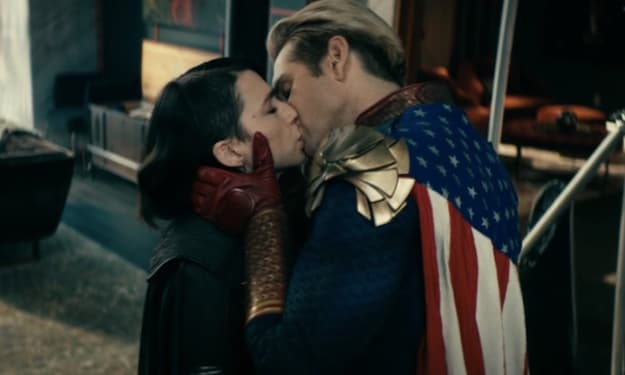
The Boys: Butcher’s Powers in Comics and TV show Explained
In Short The Boys Comics does feature Butcher with superpowers. In The Boys Comics, Butcher took a government recreation of Compound V, which gave him superstrength, enhanced agility, and endurance. In the show, he got his powers from a tumor he developed after abusing Temp V.
By Dena Falken Esq3 days ago in Chapters
Affection and Healing for Yourself
During the night of the last quarter moon, I gathered my ritual supplies. I carefully handled the chunk of black tourmaline that would protect me from your overall negative and narcissistic energy. I carefully walked the house with my stick of selenite in hand, asking the universe to cleanse our working space.
By Alisha Wilkins ✒️🦋🖋️4 days ago in Fiction



Comments
There are no comments for this story
Be the first to respond and start the conversation.