
India-Pakistan Crisis 2025: A Comprehensive Political, Economic, and Global Analysis
Diplomacy or Destruction: The Choice Facing India and Pakistan

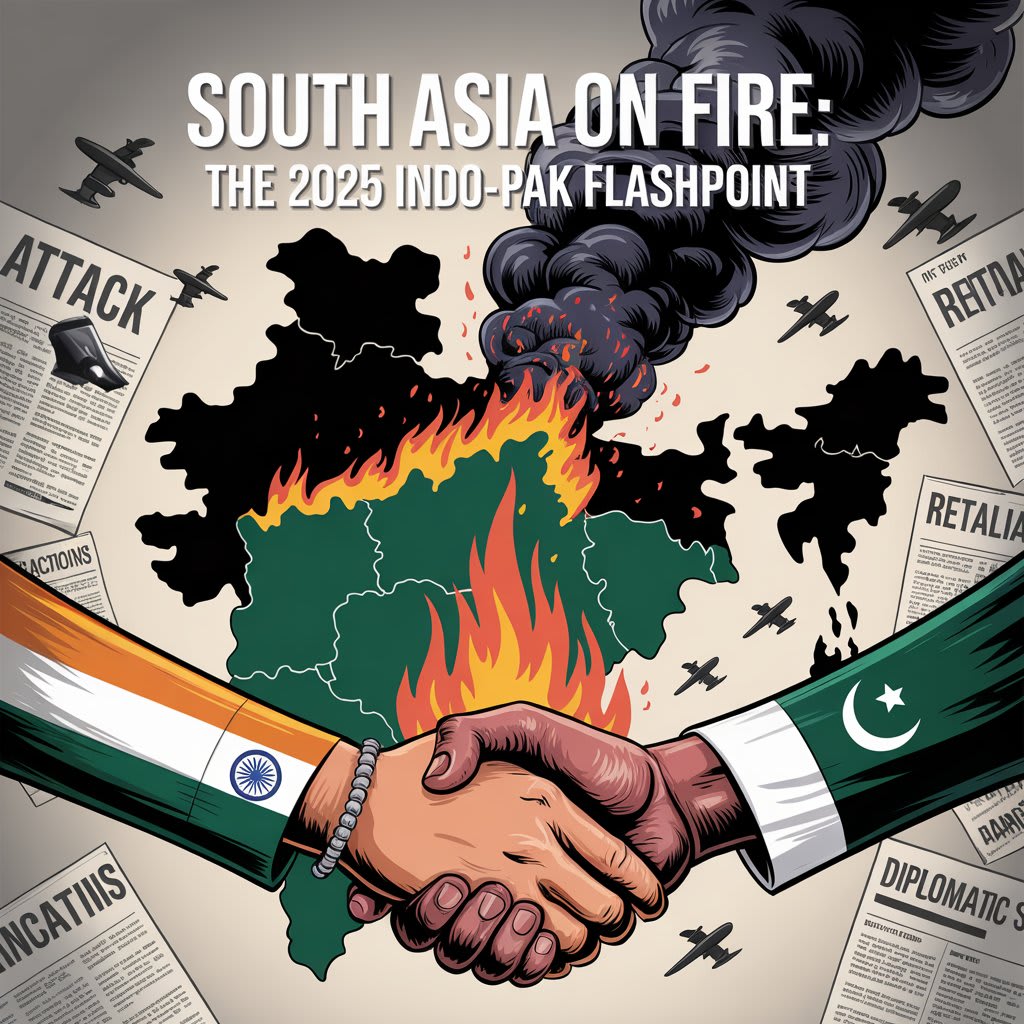
The April 2025 terrorist attack in Pahalgam, Kashmir, which killed 26 people—mostly Indian tourists—has triggered the most significant escalation in India-Pakistan tensions in recent years. Both nations, equipped with nuclear capabilities and a long history of conflict, have responded strongly, leading to an increasingly volatile situation. This column analyzes the crisis in political, economic, and international contexts, with an emphasis on fresh developments, stakeholder positions, and global perspectives.
Recent Developments
On April 22, 2025, a terrorist attack struck Pahalgam in Indian-administered Kashmir. India quickly blamed Pakistan, citing recovered IDs of two attackers allegedly linked to Pakistani soil. Pakistan denied involvement and called for an impartial international investigation. Key developments since then include:
India suspended the Indus Waters Treaty, a long-standing water-sharing agreement between the two countries.
Pakistan shut its airspace to Indian carriers.
Both countries downgraded diplomatic ties, expelling each other’s diplomats and halting visa services.
These moves mark one of the lowest points in bilateral relations since the 2019 Pulwama-Balakot standoff.
Political Perspective
India’s Stance
Indian Prime Minister Narendra Modi has taken a hardline stance, calling the attack “an act of war” and vowing retaliation. The Indian government has:
Deployed more troops to Kashmir.
Launched a crackdown on suspected militant hideouts.
Temporarily shut down 48 tourist destinations in Kashmir for security.
New Delhi’s narrative emphasizes Pakistan’s continued support for cross-border terrorism and calls for global action.
Pakistan’s Stance
Islamabad has categorically denied the allegations and demanded an independent UN-led investigation. Pakistani Defense Minister Khawaja Muhammad Asif warned that any Indian military incursion would be met with “full-spectrum retaliation.”
Pakistan, in turn, accuses India of using the incident to escalate repression in Kashmir and distract from domestic issues.
Economic Implications
The current crisis has begun to take a toll on both nations’ economies:
Trade Halted: Pakistan has suspended all trade with India. Informal cross-border commerce has also ceased.
Tourism Collapse: Tourist bookings in Kashmir have dropped sharply. Local businesses are reporting major losses.
Water Conflict: India’s suspension of the Indus Waters Treaty raises concerns about Pakistan’s agricultural vulnerability. Analysts warn this could become a new front of hybrid warfare.
Foreign investors are also showing signs of nervousness, with regional stock markets experiencing volatility.
Global Reactions
United Nations
The UN has called for both nations to exercise restraint and resume diplomatic dialogue. However, no resolution has been passed due to geopolitical divisions within the Security Council.
United States
Washington has reaffirmed its support for India’s counterterrorism efforts but has also urged both sides to de-escalate. Diplomatic channels remain open, with quiet back-channel negotiations reportedly underway.
China
Beijing, a close ally of Pakistan and a major economic player in South Asia, has urged both countries to avoid escalation. China has also offered to mediate, though India has traditionally rejected third-party involvement.
Iran and Russia
Iran has offered to mediate, while Russia has called for a return to the Simla Agreement framework. Both countries fear regional destabilization that could impact energy routes and trade.
Military and Border Status
Since April 24, minor skirmishes have been reported along the Line of Control (LoC). Both nations have put forward commands on high alert. Indian media reports indicate targeted strikes across the LoC, although these claims are unverified.
Pakistan has conducted nationwide defense drills and relocated air assets to strategic locations. The risk of miscalculation or accidental escalation remains high.
Possible Future Scenarios
Limited Military Conflict: Continued provocations could lead to a short but intense border conflict similar to the Kargil War.
Diplomatic Mediation: International actors might succeed in brokering talks to restore normalcy.
Escalation to Broader War: A worst-case scenario involves full-scale war, including missile exchanges and economic embargoes.
Internal Political Shifts: Rising domestic pressure in either country could lead to policy changes or leadership shifts.
Conclusion
The 2025 India-Pakistan crisis reflects deeply entrenched historical hostilities, complicated by terrorism, geopolitics, and strategic rivalry. The involvement of major powers adds layers of complexity, making resolution difficult but urgent. Both nations stand to lose from war, and the only rational path forward is sustained, good-faith diplomacy. The world watches with concern, hoping that wisdom will prevail over nationalism and that peace will return to South Asia.
About the Creator
Umair Ali Shah
Writer exploring life, truth, and human nature through words. I craft stories, essays, and reflections that aim to inspire, challenge, and connect. Every piece is a step on a shared journey of thought and emotion.
Keep reading
More stories from Umair Ali Shah and writers in Chapters and other communities.
The Age of War Must End — The Age of Humanity Must Begin
In a world boasting technological marvels, soaring skyscrapers, and instant communication, it remains a cruel irony that humanity continues to drown in the blood of senseless wars. Across continents and cultures, the cries of the innocent — children, women, and the elderly — echo louder than ever, shattering the very illusion of progress. The Ukraine-Russia war, the burning hostility between Pakistan and India, and the relentless agony of the Palestinians under Israeli occupation stand as damning evidence of international failure to protect human dignity.
By Umair Ali Shah 9 months ago in Chapters


Comments
There are no comments for this story
Be the first to respond and start the conversation.