
India and Pakistan on the Brink
Rising Tensions Signal a Dangerous New Phase in South Asia

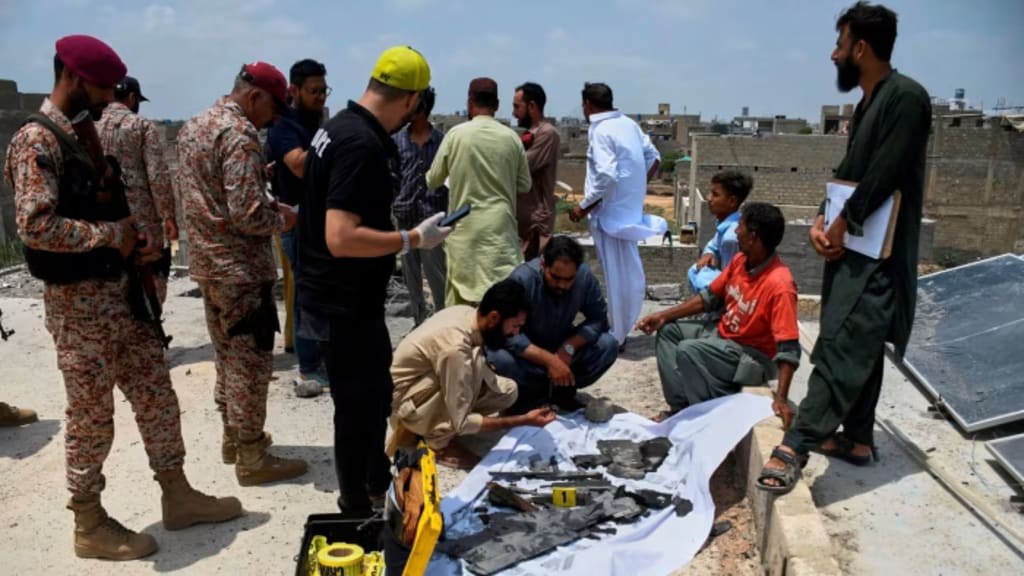
The longstanding hostility between India and Pakistan has flared into one of the most intense military confrontations in decades, igniting fears of a full-blown conflict between the two nuclear-armed neighbors. A militant attack that killed 26 people in the disputed region of Kashmir, a flashpoint that has historically been the epicenter of Indo-Pakistani conflicts, is the source of the most recent escalation.
India attributed the attack to Pakistani-based militant groups, though Islamabad has denied any involvement. The Indian military responded by carrying out a series of air strikes against Pakistani targets. Indian officials said the strikes were targeting "terrorist infrastructure," but they quickly turned into a larger firefight that included missiles, drones, and advanced air defense systems.
An Alarming Military Exchange
India’s Ministry of Defence reported that its forces neutralized multiple incoming threats, including Pakistani drone and missile attacks targeting military installations in northern and western India. In a rare move, India also conducted strikes on Pakistani air defense systems, including one situated in the city of Lahore — an aggressive maneuver not commonly seen in previous skirmishes between the two countries.
Pakistan, on the other hand, claimed to have shot down 25 Indian drones near important cities like Rawalpindi and Karachi. The Pakistani military also alleged that it shot down five Indian fighter jets, including French-made Rafales. India, however, has not confirmed any such aircraft losses and has cautioned the public and media against falling for misinformation, emphasizing the need for verified reporting during times of heightened tensions.
Humanitarian Toll and Civilian Casualties
The conflict has already taken a significant human toll. At least 32 Pakistani civilians and 16 Indian civilians have been killed in the latest round of violence, with dozens more injured on both sides. The border towns and densely populated areas that were hit by missile or drone debris saw the most casualties.
The intensifying attacks on civilian areas mark a grim departure from previous patterns of engagement. Historically, military actions between India and Pakistan have been relatively contained along the Line of Control (LoC) in Kashmir. This time, the conflict has gotten out of the country and into cities, raising the possibility of a bigger, more unpredictable escalation.
The Erosion of Norms and Strategic Restraint
One of the most concerning aspects of the current escalation is the apparent breakdown of traditional conflict management norms. For decades, both countries followed an unspoken set of protocols designed to prevent uncontrolled military escalation. Drone attacks on cities represent an unprecedented and highly destabilizing shift in strategy, according to University at Albany expert Christopher Clary.
“The old rules have been thrown out the window,” Clary remarked. “There are no new rules to guide behavior yet. That’s the most dangerous moment.”
Calls for de-escalation and global reaction
The international community has reacted with deep concern. The United States, European Union, and United Nations have all issued urgent calls for de-escalation, warning that any further deterioration could have catastrophic consequences for the region — and potentially the world — given the nuclear capabilities of both nations.
Diplomatic channels are reportedly active behind the scenes, with several world powers attempting to broker a cooling-off period. However, a formidable obstacle to a quick resolution is the depth of mistrust between India and Pakistan and the ferocity of recent engagements.
Conclusion
The current standoff between India and Pakistan is more than just another skirmish; it also suggests a possible shift in the fragile power balance in South Asia. The introduction of urban drone warfare, combined with the erosion of longstanding military norms, has created a volatile and unpredictable security environment.

If diplomacy fails, the consequences could be devastating not just for the subcontinent but for global stability. The entire world is keeping a watchful eye, hoping that sanity, restraint, and a rekindled dialogue will be enough to save both countries from the brink.
About the Creator
Minhaj Ul Hasan
Author and storyteller who uses words to explore life, creativity, and connection. From fiction to real-life reflections—always chasing meaning, one story at a time.
Keep reading
More stories from Minhaj Ul Hasan and writers in Chapters and other communities.
Liam Payne's Ex Cheryl Named Administrator of His $32.2 Million Estate After He Died with No Will
Cheryl, the former Girls Aloud singer and ex-partner of late pop star Liam Payne, has been named as one of the administrators of Payne’s multimillion-dollar estate following his sudden death in October 2024. The singer, who rose to fame as a member of the worldwide boy band One Direction, tragically fell from a hotel balcony while staying in Buenos Aires, Argentina, at the age of 31. His fans were devastated, as were his family and closest friends, particularly his ex-partner Cheryl and their young son, Bear. His untimely death left them devastated as well.
By Minhaj Ul Hasan10 months ago in 01
The Future of Coding and AI
In the ever-evolving world of technology, the future of coding is undergoing a profound transformation driven by the rapid rise of artificial intelligence (AI). What was once the exclusive domain of human programmers is now becoming a dynamic partnership between humans and intelligent machines. As AI continues to advance, it’s not replacing coders, it’s redefining what it means to code.
By Gus Woltmann5 days ago in Chapters



Comments
There are no comments for this story
Be the first to respond and start the conversation.