
The Future of Coding and AI
A New Era of Creativity and Collaboaration

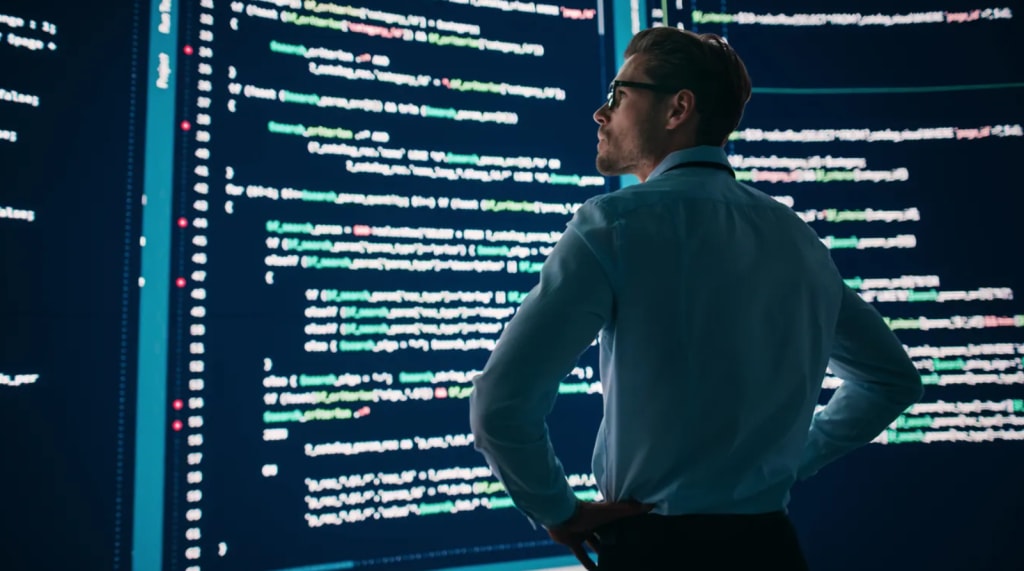
In the ever-evolving world of technology, the future of coding is undergoing a profound transformation driven by the rapid rise of artificial intelligence (AI). What was once the exclusive domain of human programmers is now becoming a dynamic partnership between humans and intelligent machines. As AI continues to advance, it’s not replacing coders, it’s redefining what it means to code.
AI as a Coding Companion
One of the most impactful changes AI has brought to coding is the emergence of AI-powered development tools. Systems like GitHub Copilot, Amazon CodeWhisperer, and OpenAI’s Codex are capable of understanding natural language prompts and generating entire blocks of functional code. These tools aren’t just for automation — they serve as intelligent collaborators, offering suggestions, detecting bugs, and even helping developers learn new programming languages faster.
For beginners, this means a gentler learning curve. Instead of wrestling with syntax and obscure error messages, they can focus on solving problems and building creative solutions. For experienced developers, AI accelerates workflows, reduces repetitive tasks, and frees up time for high-level design and innovation.
No-Code and Low-Code Platforms: Empowering the Masses
AI is also fueling the rise of no-code and low-code platforms, which allow people with minimal technical knowledge to build applications using visual interfaces. Tools like Bubble, Webflow, and Microsoft Power Apps are democratizing software creation, enabling entrepreneurs, small businesses, and even students to build solutions tailored to their needs — without writing a single line of traditional code.
While traditional coding remains essential for complex systems, the barrier to entry is lower than ever. The future may not require everyone to be a programmer, but everyone will be empowered to create with code.
Shifting Skillsets for Future Developers
As AI takes over routine coding tasks, the skillset for developers is evolving. Future coders will need to excel in:
1. Problem-solving and system design: Understanding what to build and how systems interact remains uniquely human.
2. AI literacy: Knowing how to effectively use, guide, and debug AI tools will be crucial.
3. Ethics and responsibility: As AI becomes more embedded in software, developers must ensure transparency, fairness, and accountability in their creations.
4. Creativity and adaptability: With AI handling the mundane, human developers are freed to explore bold, creative ideas and solutions.
AI-Generated Code: Risks and Responsibilities
Despite the benefits, AI in coding brings challenges. Generated code can sometimes be insecure, inefficient, or difficult to understand. There’s also the risk of over-reliance on AI, where developers accept code without fully grasping how it works. Additionally, questions around intellectual property, bias in training data, and the environmental impact of large AI models need careful consideration.
To navigate these concerns, the industry must develop new standards, guidelines, and best practices for AI-assisted development.
A Collaborative Future
The future of coding won’t be about humans versus AI — it will be about humans working with AI. Just as calculators didn’t eliminate math, AI won’t eliminate coding. Instead, it will expand what’s possible, inviting more people into the creative process and empowering developers to focus on innovation rather than repetition.
We’re entering a new era where coding becomes more accessible, more powerful, and more human-centric than ever before. Whether you’re a seasoned software engineer or a curious newcomer, the future of coding with AI is bright, exciting, and full of possibility.
About the Creator
Keep reading
More stories from Gus Woltmann and writers in Chapters and other communities.
The Ahnenerbe
The Ahnenerbe — short for Deutsches Ahnenerbe — Studiengesellschaft für Geistesurgeschichte, Deutsches Erbe (“Ancestral Heritage Research and Teaching Society”) — was one of Nazi Germany’s most mysterious and controversial institutions. Founded in 1935 under the auspices of Heinrich Himmler, the powerful head of the SS, the Ahnenerbe was a pseudo-scientific organization aimed at uncovering the ancient roots of the so-called “Aryan race.” It blended archaeology, anthropology, mythology, and mysticism in an effort to validate the Nazis’ racial ideology and to craft a glorious, mythical past for the German people.
By Gus Woltmann9 days ago in Chapters
Valentine's Dates Over the Years
Colin grinned as Brooklyn slipped into the living room. “Is it all set?” he asked. The twenty-one year old grinned. She was in her last year of college and Colin knew that Lincoln was proud of her. Although she had been away at college, she’d eagerly helped Colin plan his surprise for Lincoln. “I’m so glad you’re finally doing this,” she said.
By Reb Kreyling17 days ago in Chapters




Comments
There are no comments for this story
Be the first to respond and start the conversation.