
I Was Never Stupid
The Beginning of an Intellectual Journey

Every story starts with a normal boy or a normal girl living their normal life. It makes sense—most people are normal. Most people fall neatly between the lines of what’s considered “normal.” Those characters were meant to be relatable. But they never were to me. I always found them... kind of dumb.
“Why did they make that basic mistake? Why did they make the same mistake twice? Why? Why? Why?” Eventually, every story became predictable. “He’s going to die. She’s going to die. He’s the killer. She’s the killer.”
Everything felt bland and boring. So I started imagining what I would do if I were in their shoes. What was the obviously right path? That’s when I began to enjoy watching movies and shows—not because I liked the stories, but because I liked imagining myself as the main character, reacting differently. No one was relatable. And for a long time, when I was younger, I thought everyone felt that way. That no one was truly relatable. Well, except maybe my family.
I’m not normal. I never was. I used to think I was average—or at least, I should be. But I wasn’t. Whenever I deviated from the norm and people praised me, I felt... uncomfortable. That was just me. Don’t praise me for being myself. And whenever I broke from the norm and someone got mad, it hurt. I wasn’t trying to be difficult—I was being me. Honest. Right.
People don’t realize how often I have to dumb down my words just to be understood. They don’t realize how much I fight against my instincts to appear “normal” to them.
I learned later that this constant “fight” had a name: masking. But to me, it felt more like trying to communicate with a group of children whose only goal was to be cruel and obtuse, mean and dumb.
I was homeschooled most of my life, so I learned how to mask later than most. Surrounded by people like me, I never had to pretend. But I couldn’t always stay in that space. When I entered high school, I learned quickly. I had to. And I did.
On the first day of school, my mother pulled me aside. “Remember,” she said, “you need to look people in the eyes when you talk to them—or when they talk to you. You need to smile. Show emotion on your face. Remember, remember, remember.”
I don’t remember well. But I learn fast.
One of my first conversations at school ended like this: “Can you stop staring into my eyes so intensely?” “Oh! Sorry, I didn’t mean to...”
I stopped listening after that—too busy trying to figure out what I’d done wrong. I can’t recall exactly how I decided to fix that mistake, but I didn’t stay with that friend group for long.
They weren’t interesting to me. Basic. Boring. Dumb.
I couldn’t even tell if they were mean or not—because meanness was such a foreign concept to me. In my mind, there was only truth and lies. If they were lying, they were stupid. If they were telling the truth, well... then it was just the truth. What was I supposed to say?
Eventually, I found a group of people who intrigued me. They were unique, each in their own way—still not relatable to me, but interesting. Friendly. Not basic.
There was a guy who called himself a Nazi—though in truth, he was anything but. I chalked it up to a childish phase, something he’d grow out of. I was right. When I saw him again after graduation, he was clearly ashamed of that part of his past. It didn’t faze me. Human stupidity is everywhere—especially among teens.
I don’t remember everyone in that group, but I do remember this: we were mostly LGBT, and we were loners. A group of loners... ironic, I know.
If memory serves, I was the eldest in the group—another irony, because I was actually one of the youngest in my school year. Had I arrived earlier—before the middle of the school year—I might’ve been the one guiding them. But as it was, they were more helpful to me than I ever was to them. They helped me learn the layout, the customs, the unspoken codes. I wonder how much I really contributed.
I didn’t speak much. Not because I didn’t have anything to say, but because everyone had different rules for talking—and it was hard to find a space to slip my voice into theirs.
I’ve always been a silent observer.
I felt detached from most people. They were too unrelatable, too distant for me to ever feel like I belonged in their world. So I spent most of my time in a world of my own—a world that may have first formed out of the neglect of my parents.
As I mentioned earlier, we were homeschooled. Our mother would teach us for a few hours, sometimes letting us play educational games on the computer. Then, for the rest of the day, we were forced outside to play on our own.
Now, you might think, “What’s wrong with that? Playing outside sounds great.” And you’d be right—playing outside wasn’t the bad part. In fact, we loved being out there far more than enduring the rigid torture of her teaching methods. It was freedom, a breath of air, a chance to forget all the little burdens of life.
“So what’s the problem?” you might ask.
Well… it wasn’t just that we HAD to stay out for hours. It was that we were alone. No adult watching us. No one making sure we were safe. We had a big plot of land to roam, which sounds like a dream—until one of my baby brothers wandered to the road, completely unnoticed.
That moment changed something in me. It carved out a new kind of unease. I realized that nowhere was truly safe.
So I left that reality. I built new ones inside my mind—worlds I could escape to, shaped by imagination, not fear. It’s honestly a miracle we’re all alive.
Sometimes, I still wonder—what if one of us didn’t make it? What if the trauma’s hiding somewhere deep in me, twisting memories? What if one of them did die, and I’ve buried the truth so deeply that I now believe they’re still alive... or worse, that they never even existed?
Probably not true. But the thought lingers.
Sometimes I wonder if those with the richest imaginations are also the ones carrying the heaviest traumas. I can’t measure my imagination—but could I measure my trauma?
Feeling like I belonged nowhere. The neglect from my parents. The spankings when we broke the rules—though I rarely got them myself. I learned fast. My big sister’s violent outbursts under the crushing pressure placed on her. Running away with my siblings. All the things I forget until they come rushing back... and when they do, I understand why I buried them in the first place.
The story with the strawberry. Almost dying—at least twice. Accidentally hitting my brother in the head with a rock while we tried to skip stones across the water.
Maybe some memories are better left untouched.
If I were to categorize the trauma, I suppose it would look something like this: Violence. Neglect. Autism. High intellect. Lack of resources and proper guidance—which, really, is just more neglect.
Oh—and to top it off, we were poor. Not “sleeping on the streets” poor. But with the number of people in my family and the little money we had, it came out to about $5,000 per person per year. We had a house, thankfully—bought around the time I was born. But the mortgage still loomed. Try surviving on that budget, with only a roof as your one certainty.
So go ahead and add financial and food insecurity to the trauma list.
Honestly, I’m just relieved that none of us were kicked out when we came out as LGBTQ+. Our parents never said much. But the quiet judgment hung heavy—subtle, covert homophobia and transphobia. They didn’t need to say it out loud. We felt it anyway, hidden in layers of subtext.
Speaking of LGBT... I remember the first time my big sister told us—me and my siblings—that she was bi. I didn’t know what that meant at the time, but when she explained it, it hit me: “Isn’t that true for everyone?”
I accepted it instantly. It just made sense. I’d always believed that we could love anyone, but that marriage was something reserved for opposite-sex couples—because marriage was supposed to be about making babies.
Even now, I still see marriage less as a romantic gesture and more like a... sex contract. Which is probably why I’ve never understood why people cry at weddings.
Since we're on the subject, the lack of sexual education is so deeply wrong—dangerous, even. And I’m not just talking about LGBT topics, but the basics: consent, boundaries, sexual safety. We didn’t get any of that. It could’ve gone so badly.
We made a few mistakes along the way. But honestly... it could have been so much worse.
Yeah—this belongs on the trauma list too.
All that trauma isn’t because of my intelligence—but my intelligence lets me see it clearly. See how wrong it was. How broken my childhood really was.
And still—I have to admit, I’m lucky. Not just because of the dozens of four-leaf clovers I’ve found. Not just because I somehow survived (though I’m not sure that should count as luck). But because I’ve never lost someone truly important. Because I’ve never lived through something I couldn’t survive. Because I was given high intelligence—though sometimes, it feels more like a curse than a gift.
I know I’m lucky. But sometimes luck feels like a cosmic joke, like a curse.
For most of my life, I thought I was just a little above average. Then I learned I might be among the top one percent of intelligence. And that realization… changed things.
First: I might never meet someone who truly understands me. Second: This world is probably doomed. Third: I should use my intelligence to help people. And fourth: everyone is stupid.
If I am supposedly among the most intelligent people on Earth—and even I feel stupid sometimes—then no one is exempt. No one is completely intelligent. We are all stupid, sometimes.
My “stupid” moments come from lacking the automatic social instincts that neurotypical people take for granted. I had to learn everything the hard way. That doesn’t make me stupid. So, I'm not stupid.
And most of the other things that looked like “stupid” in me? They were shaped by trauma. Which means they weren’t really me.
So no—I was never stupid. Not truly. Even now, when I feel unsure of myself, it’s more about unlearning damage than lacking ability.
I am intelligent. But I still hesitate to claim that identity. There’s so much I need to work on. So much I don’t know how to begin fixing.
But at least I know that. And that’s something.
This is the beginning of my journey. The journey of someone who’s not quite normal.
About the Creator
Keep reading
More stories from Calie Judy Brooks and writers in Chapters and other communities.
Everybody know what I am, but I don't
Everytime I go somewhere new, everyone look at me with terror in their eyes. The see something in me, maybe my appearance, maybe my smell, maybe the way I talk or walk, maybe the way I act, no matter what it is, everyone is scared of me. What do they see that I can't? When I see in a miror, I don't find myself to be any different than anyone else. I speak their language, I do as they do, and I make sure to stay clean and even use their parfumes. But even with all that, they are still scared of me. I don't know what I do wrong, I don't know what I say wrong, but I do and I'm driving them away.
By Calie Judy Brooks11 months ago in Humans
Valentine's Dates Over the Years
Colin grinned as Brooklyn slipped into the living room. “Is it all set?” he asked. The twenty-one year old grinned. She was in her last year of college and Colin knew that Lincoln was proud of her. Although she had been away at college, she’d eagerly helped Colin plan his surprise for Lincoln. “I’m so glad you’re finally doing this,” she said.
By Reb Kreyling17 days ago in Chapters
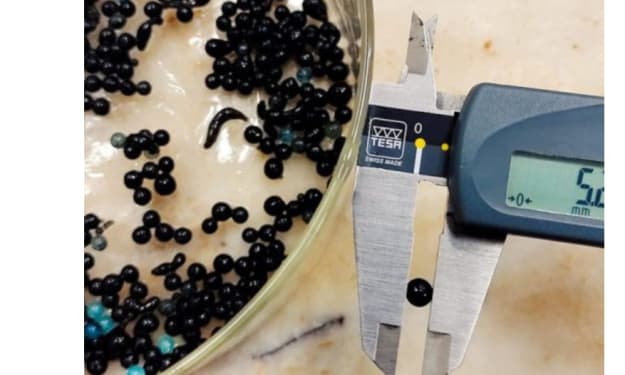
Thousands of gallons of arsenic-contaminated water are treated by an electricity-free water system.
Laboratory tests have shown that a modified carbon filter material can lower the amount of arsenic in contaminated water to below the suggested safety limit. For households and small groups that depend on faulty wells, that outcome brings a low-cost, electricity-free alternative closer.
By Francis Dami5 days ago in Chapters
I was in a Toxic Relationship, with my Workplace
“You got that?” My ex yelled. His hands were balled into fists at his side. At six foot three, he towered over me. A normal person would have been afraid, but I looked up a video of George Lopez repeatedly saying, “I got this,” and showed it to him. I had grown used to this treatment, so much so that I didn’t blink when he ripped the phone from my hand and threw it across the room.
By Jade M.3 days ago in Confessions


Comments
There are no comments for this story
Be the first to respond and start the conversation.