
How Power Structures Protect Themselves
George Orwell Famous novel Nineteen Eighty-Four

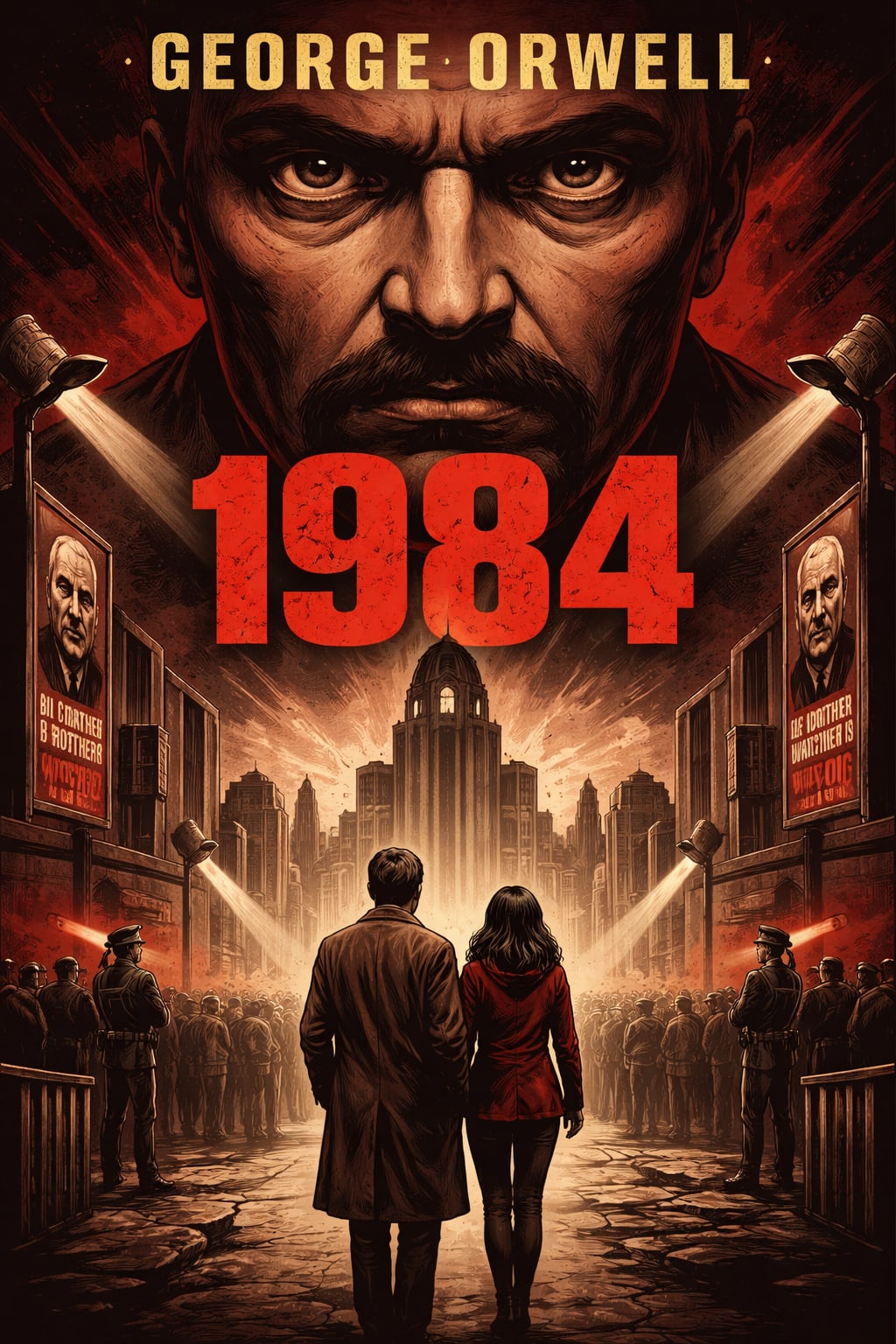
In 1949, a book was written titled Nineteen Eighty-Four, in which George Orwell fictionally explained how, in the future, systems and governments would become so powerful that they would prioritize their own power struggles over people’s well-being. And remember, we’re talking about the West, where democracy is considered very mature. According to Orwell, such states never truly end conflicts or wars; one way or another, they keep fear alive among people. If fear remains intact, people stay obedient.
If we look at Orwell’s concept of power structure and then examine today’s Epstein files, we see who’s involved: politicians, billionaires, academics, and business leaders. A clear pattern of overlapping circles emerges. And here’s the real question: how did one person quietly operate in elite spaces for years without serious consequences? The answer is obvious — the state was protecting its structure at the highest levels. It’s not about party lines or political slogans; it’s about access, influence, and mutual protection.
This billionaire club follows one principle: you protect me, I protect you. Imagine a handful of powerful people who sit on boards, decision-making committees, fund the same institutions, host events, and exchange donations. Why would accountability ever catch up with them? Simple — they have to protect each other because everyone has something to lose.
This is what elite capture looks like. On paper, democracy seems intact, and the constitution remains in place. But in practice, the decisions you see are made in closed rooms, and they don’t benefit ordinary citizens — they serve the elite, for the elite. Governments may rotate, but the networks remain the same.
This isn’t a conspiracy theory. Political thinkers like Orwell understood these structures long ago: it’s all about power. Once you understand the structure, you stop being surprised by the outcomes. — George Orwell.
Nineteen Eighty-Four – Summary
Nineteen Eighty-Four by George Orwell is a dystopian novel set in a totalitarian future where the government exercises absolute control over every aspect of life. The story takes place in the superstate of Oceania, which is ruled by the Party under the watchful eye of Big Brother.
Setting and Society
Oceania is constantly at war with either Eurasia or Eastasia. The government uses war as a tool to maintain fear and unity among the population. Society is strictly divided into three classes: the Inner Party (elite rulers), the Outer Party (bureaucrats and workers), and the Proles (the working-class majority). The Party controls information, rewrites history, and monitors citizens through telescreens and informants. Independent thought is considered a crime known as "thoughtcrime."
The Party also manipulates language through “Newspeak,” a simplified language designed to limit free thought. Slogans such as “War is Peace,” “Freedom is Slavery,” and “Ignorance is Strength” reflect the regime’s use of doublethink — the ability to accept contradictory beliefs.
Main Character: Winston Smith
The protagonist, Winston Smith, is a member of the Outer Party who works at the Ministry of Truth, where he alters historical records to match the Party’s current version of events. Despite outward conformity, Winston secretly hates the Party and dreams of rebellion.
He begins keeping a forbidden diary, an act of defiance against the regime. Winston also starts a secret love affair with Julia, a fellow Party member who shares his rebellious feelings. Their relationship represents a personal attempt to reclaim freedom and individuality.
Rebellion and Betrayal
Winston and Julia believe they have found hope in O’Brien, a powerful Inner Party member who appears to oppose the regime. However, O’Brien betrays them. They are arrested by the Thought Police and taken to the Ministry of Love, where they are tortured and psychologically manipulated.
Under intense torture, Winston is forced to betray Julia. In the infamous Room 101, he confronts his worst fear — rats — and ultimately submits completely to the Party.
Ending and Themes
By the end of the novel, Winston is broken. He no longer resists the Party and has come to genuinely love Big Brother. The story ends on a bleak note, emphasizing the terrifying power of totalitarian control.
Major Themes
Totalitarianism and Surveillance
Control of Truth and History
Psychological Manipulation
Loss of Individual Freedom
Language as a Tool of Power
Overall Message
Orwell’s novel serves as a warning about oppressive governments and the dangers of absolute power. It highlights how manipulation of truth, language, and fear can destroy not only freedom but also human identity itself.
About the Creator
Ibrahim Shah
I am an Assistant Professor with a strong commitment to teaching,and academic service. My work focuses on fostering critical thinking, encouraging interdisciplinary learning, and supporting student development.
Keep reading
More stories from Ibrahim Shah and writers in Chapters and other communities.
Valentine's Dates Over the Years
Colin grinned as Brooklyn slipped into the living room. “Is it all set?” he asked. The twenty-one year old grinned. She was in her last year of college and Colin knew that Lincoln was proud of her. Although she had been away at college, she’d eagerly helped Colin plan his surprise for Lincoln. “I’m so glad you’re finally doing this,” she said.
By Reb Kreyling15 days ago in Chapters
India vs Vietnam: Will 2026 Free Trade Agreements Transform India’s Export Economy?
From a commercial perspective, the year 2026 is likely to be considered historic for India. March has not even begun yet, and New Delhi has already concluded what is being called the “mother of all trade deals” with the European Union. At the same time, it has signed an agreement with the United States that is now being described as the “father of all trade deals.”
By Real content7 days ago in Chapters



Comments
There are no comments for this story
Be the first to respond and start the conversation.