
How ELISA Assay Kits Aid in Cancer Research?
Tracking Biomarkers for Early Detection

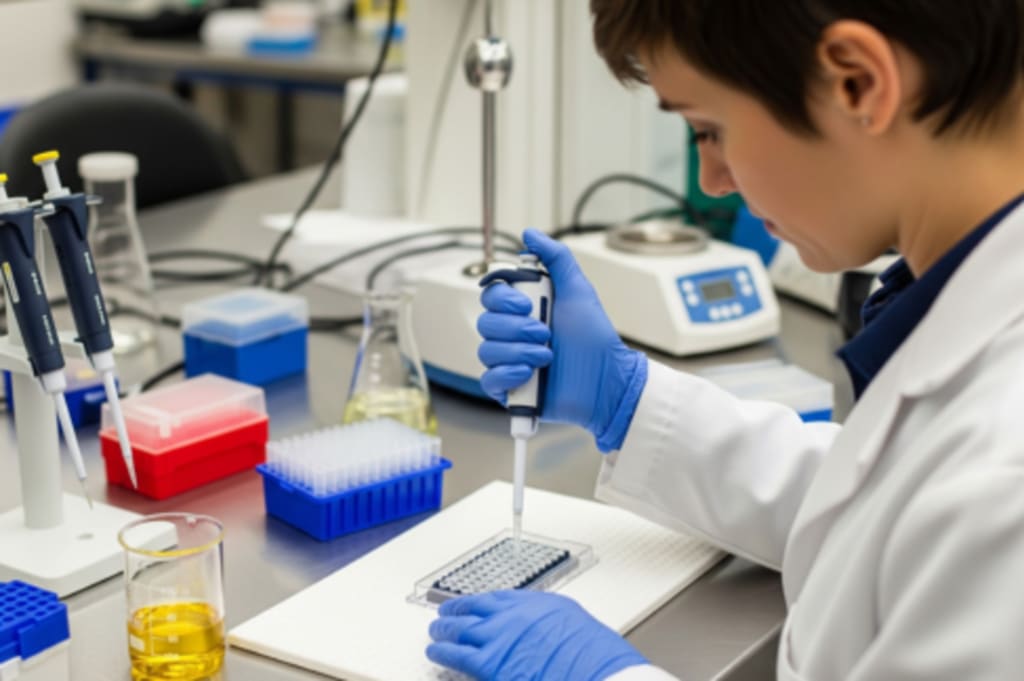
Did you know that around 9.7 million people died due to cancer in 2022 alone? Cancer is a life-threatening disease. However, it can be treated, especially if diagnosed at an early stage. Here is where the ELISA assay kit comes into play.
What is ELISA?
ELISA stands for Enzyme-Linked Immunosorbent Assay. It is a plate-based technique that is used to identify biomarkers, antibodies, proteins, and other substances in a biological sample. It relies on antigen-antibody interactions.
ELISA is categorized into 4 formats:
- Direct ELISA
- Indirect ELISA
- Sandwich ELISA
- Competitive ELISA
ELISA is known for its high:
- Sensitivity and specificity
- Scalability
- Versatility
- Cost-effectiveness
Role of ELISA in Cancer Detection
During cancer, our body releases cancer biomarkers, such as proteins, antigens, or genetic material. These biomarkers can be found in blood, urine, saliva, or tissue samples.
Some common cancer biomarkers are:
- CA-125
- PSA
- HER2/neu
- CEA
These biomarkers help identify:
- Cancer at an early stage
- Tumor type and progression
- Risk of recurrence after treatment
ELISA kits help find cancer biomarkers. They also measure their levels.
What are the Applications of ELISA in Cancer Research?
Early Detection of Cancer
Early detection can significantly improve survival rates. ELISA kits allow scientists to identify concentrations of tumor-associated antigens or proteins in blood samples, even if they are present in a very low amount.
For example, researchers use ELISA kits to measure the levels of prostate-specific antigen (PSA) for prostate cancer and carcinoembryonic antigen (CEA) for colorectal and pancreatic cancers.
Early detection of such markers helps start treatment at a lower stage and improves the patient’s condition.
Monitor Tumor Progression
ELISA kits help researchers track biomarker levels over time. This provides researchers a valuable data that can be analyzed to understand how aggressive a tumor is and how it evolves. Based on the results, the clinicians can adapt the right treatment plans.
Evaluate Therapy Effectiveness
During clinical trials and patient treatment, ELISA kits measure biomarkers before, during, and after therapy. A decrease in biomarker levels often suggests that the treatment is working, while stable or rising levels may indicate resistance or relapse.
Drug Development and Clinical Trials
Pharmaceutical companies use ELISA kits to test how a patient responds to a new cancer therapy. ELISA kits can effectively measure changes in protein expression. Based on the results, researchers can discover and develop new drugs.
Immunotherapy Research
With the rise of cancer immunotherapies, ELISA is widely applied to study cytokines, antibodies, and other immune molecules. This helps researchers understand how the immune system interacts with tumors and how therapies can improve this response.
Personalized Treatment and Precision Oncology
Cancer treatment is no longer “one size fits all.” Today, physicians are moving toward personalized medicine, where therapies are tailored to the genetic and molecular makeup of each patient’s tumor.
At times, ELISA kits help identify specific biomarker patterns in each patient. Based on that, the clinicians can decide the ideal treatment for each individual.
For example, overexpression of HER2/neu detected through ELISA can guide the use of targeted therapies like trastuzumab.
In addition, measuring biomarker panels helps doctors predict how a patient will respond to chemotherapy, radiation, or immunotherapy.
By enabling this individualized approach, ELISA contributes directly to more effective and safer treatment strategies.
Study Cancer Metastasis
One of the most dangerous aspects of cancer is metastasis, where cancer cells spread to other organs. Researchers use ELISA kits to study molecules involved in this process, such as:
Matrix metalloproteinases (MMPs): This helps cancer cells invade tissues.
Vascular endothelial growth factor (VEGF): It promotes new blood vessel growth to support tumor spread.
By quantifying these proteins, scientists gain insights into how cancer metastasizes, paving the way for new therapies to block or slow down this process.
The Bottom Line
Now that you know how ELISA kits aid in cancer biomarker research, what are you waiting for? Find a reliable supplier to buy high-quality ELISA test kits for your experiment and start detecting cancer biomarkers accurately. Using the right kits will help you get precise results, save time, and support your research in making important discoveries.
About the Creator
James Smith
I'm James Smith, a seasoned writer specializing in marketing and technology. With a decade of experience, I thrive on crafting insightful articles that decode industry trends and innovations.
Keep reading
More stories from James Smith and writers in Chapters and other communities.
What Makes P11 Real Estate Advertising Agency Different From Others
In today’s highly competitive real estate market, effective marketing is crucial to capturing attention, building trust, and driving sales. However, not all real estate advertising agencies are created equal.
By James Smith5 months ago in Journal
The Lighthouse That Refused to Warn
Unlike other lighthouses, this one did not flash urgently. Its beam moved slowly, calmly, indifferent to storms. Ships that relied on panic missed it. Ships that trusted rhythm found their way safely. Sailors later understood that guidance offered without fear is often more reliable than alarms shouted into chaos.
By GoldenSpeech6 days ago in Chapters




Comments