
Hidden Hands: The Real Drivers of India-Pakistan Tensions
Unveiling the Powers, Politics, and Proxies Shaping the Subcontinent's Strife

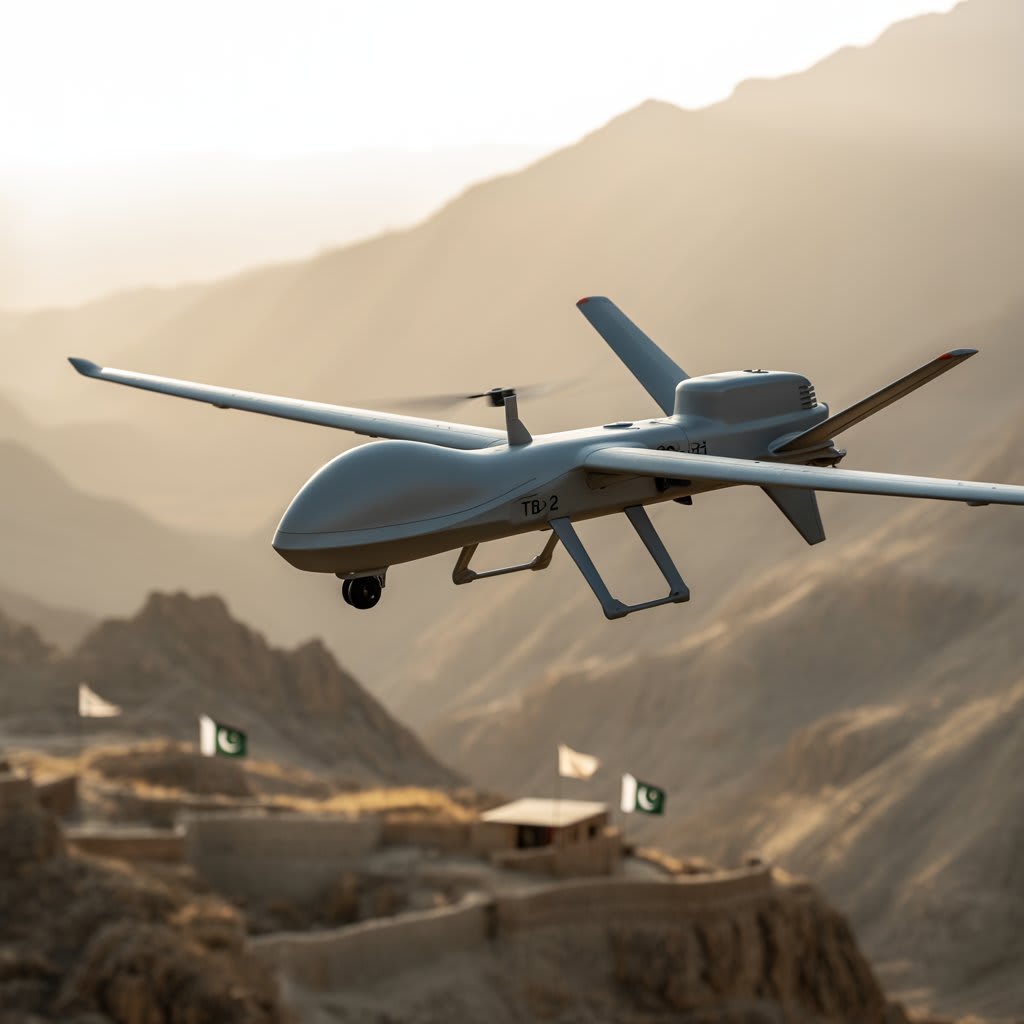
The ongoing tensions between India and Pakistan have long been shaped by a complex web of political, military, and geopolitical factors. Recently, the introduction of advanced drone technology into the equation has brought new dimensions to this already volatile relationship. While the reasons behind the escalating conflict are multifaceted, one factor that has gained increasing attention is the strategic influence of foreign powers, particularly Israel and China. These nations have played pivotal roles in supporting India and Pakistan, respectively, supplying both countries with advanced military technology that has had a profound impact on the balance of power in South Asia.
Israel’s Drone Support to India
Israel has been a long-time ally of India, providing cutting-edge military technology to strengthen India’s defense capabilities. One of the key components of this partnership is Israel's advanced drone technology. Israel is renowned for its expertise in unmanned aerial vehicles (UAVs), which have become a critical part of modern warfare due to their ability to conduct surveillance, gather intelligence, and carry out precision strikes with minimal risk to human life.
India has been receiving drones like the Heron TP and Searcher MKII from Israel. These drones are specifically designed for intelligence, surveillance, reconnaissance (ISR), and tactical operations. The Heron TP, in particular, is one of the most advanced UAVs in India’s arsenal. It has an impressive operational range of over 1,000 kilometers and can remain airborne for over 36 hours. This drone is capable of carrying out high-altitude surveillance over vast stretches of terrain, making it an invaluable tool for monitoring activities along the India-Pakistan border.
Another Israeli drone, the Searcher MKII, has a range of around 250 kilometers and is primarily used for surveillance and reconnaissance missions. These drones enable India to monitor Pakistan's military movements in real time, helping to maintain a strategic advantage in the region. By providing India with this advanced technology, Israel not only strengthens India's military capabilities but also ensures that Pakistan's military remains constantly engaged in countermeasures, which may divert attention from potential fronts of conflict.
The Strategic Role of Drones in the India-Pakistan Conflict
The use of drones in the India-Pakistan conflict has served as a force multiplier for India. These UAVs can carry out surveillance missions without crossing international borders, reducing the risk of direct confrontation. By equipping India with drones that can monitor Pakistan's movements and keep its military on high alert, Israel is effectively playing a role in maintaining the status quo, where both countries are continually engaged in a form of low-intensity conflict.
While Israel's drones give India a technological advantage, China has been providing Pakistan with its own set of advanced weapons systems, including the PL-15 missile system, further fueling the arms race. The PL-15 is a state-of-the-art air-to-air missile, known for its extended range and precision. It significantly enhances Pakistan’s air defense capabilities, helping to counter India's superiority in the air. By arming Pakistan with such advanced technology, China is ensuring that Pakistan remains a formidable military power, capable of challenging India’s dominance in the region.
Pakistan's Drone Capabilities: The Buraq and Turkish Drones
On the other side of the equation, Pakistan is not without its own drone capabilities. While it may not possess the same technological edge as India, Pakistan has been working to strengthen its drone arsenal. One of the most notable drones in Pakistan's inventory is the Buraq UAV, a domestically developed drone that has been used for both surveillance and targeted strikes. The Buraq, while not as advanced as Israel's Heron TP, represents a significant step in Pakistan’s efforts to develop indigenous drone technology. It is believed to have a range of around 100 kilometers and is used primarily for reconnaissance and precision strikes on militant groups along the border regions.
In addition to its domestic developments, Pakistan has also turned to international partners for drone technology. One key ally is Turkey, which has become a prominent supplier of drones to Pakistan. Turkey's Bayraktar TB2 drones, known for their advanced targeting capabilities, have been of particular interest to Pakistan. The Bayraktar TB2 is a medium-altitude, long-endurance UAV with a range of over 150 kilometers and an endurance of around 24 hours. These drones are equipped with high-resolution cameras, radar systems, and precision-guided missiles, making them highly effective in surveillance, reconnaissance, and strike missions.
Turkey’s growing influence in Pakistan's defense sector is seen as part of a broader geopolitical shift in the region. By supplying drones to Pakistan, Turkey is not only strengthening its relationship with Islamabad but also providing it with a valuable tool to counter India’s technological superiority in drone warfare. With the increasing deployment of these drones along the India-Pakistan border, the role of UAVs in future conflicts is likely to be even more significant.
China’s Growing Influence
Alongside these developments, China’s role in helping Pakistan cannot be ignored. With the PL-15 missile system, JF-17 fighter jets, and various other defense technologies, China is ensuring that Pakistan remains a formidable military power in the region. China's support for Pakistan extends beyond just hardware; it includes strategic partnerships and economic investments, further strengthening the alliance between the two nations.
By bolstering Pakistan's military capabilities, particularly in the air and missile defense sectors, China is playing a crucial role in maintaining the balance of power in South Asia. This support challenges India’s technological superiority and raises concerns about the future trajectory of the conflict between the two nuclear-armed nations.
Conclusion
The India-Pakistan conflict is increasingly being shaped by the use of advanced drone technology and strategic foreign support. Israel’s role in supplying drones to India and China’s support for Pakistan’s military, including the provision of the PL-15 missile system, underscores the importance of foreign influence in this regional conflict. As the geopolitical dynamics continue to evolve, drones and advanced weapons systems are becoming essential tools in the ongoing struggle for dominance in the region. While drones may not be the ultimate solution to the tensions between India and Pakistan, they certainly add a new dimension to an already complex and dangerous situation, one that is shaped by the interests of multiple global powers.
About the Creator
ZALAN KHAN
Sharing insights on education, tech, science, news, health, and motivation. I aim to inform, inspire, and empower through practical tips and thoughtful content.
Keep reading
More stories from ZALAN KHAN and writers in Chapters and other communities.
Magic vs. Science: The Battle of Belief and Reality
A journey through myth, logic, and the human quest to understand the unknown. Since the dawn of human civilization, people have looked to the skies, the earth, and the mysterious forces of nature for answers. In doing so, two powerful forces emerged in our quest to explain the unknown: magic and science. Though they often appear to be opposing forces—one based on wonder and the supernatural, the other rooted in logic and evidence—they share a common purpose: to make sense of the world around us.
By ZALAN KHAN9 months ago in Chapters




Comments
There are no comments for this story
Be the first to respond and start the conversation.