
Four foods to buy in bulk before tariffs go into effect
On March 4, President Donald Trump has announced that import duties from Canada and Mexico will apply.

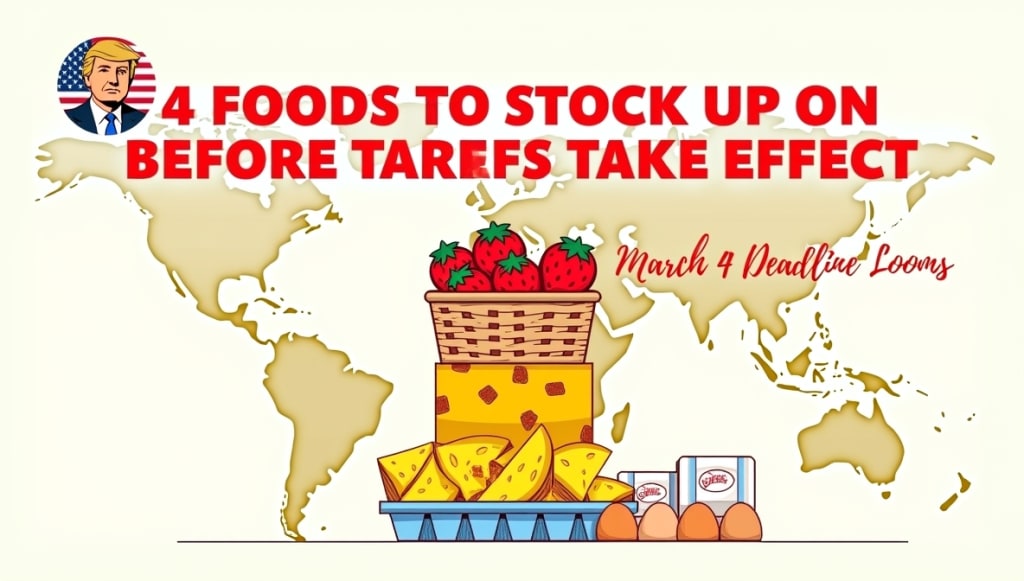
Due to COVID-19 and inflation, food prices have been rising steadily over the past few years. Additionally, President Donald Trump has stated that the United States will impose tariffs on Canada and Mexico "as scheduled" on March 4. In a post on the social media platform Truth Social, the president announced this.
After the two countries reached an agreement with the United States, the 25% tariffs against Canada and Mexico were put on hold. However, now that they are back on, your grocery budget is likely to be affected because those two countries are the top two suppliers of food and beverages to the United States.1 With more food price hikes possibly on the horizon, here is what you need to know and what you might want to stock up on.
What will tariffs look like?
In accordance with the Agreement between the United States, Mexico, and Canada, fresh vegetables traded in the North American market move largely without tariffs. This mutually beneficial system led to an increase in the volume of food imported, including bell peppers, cucumbers, squash, and snap beans2. When tariffs do become effective, consumers can anticipate that prices will change fairly quickly.
There may also be some disruptions in the supply chain after tariffs become law. Since importers of record are responsible for paying the newly imposed fees, supply may decrease even though demand for groceries will remain the same.
Smaller importers are more likely to encounter this scenario, but larger businesses will almost certainly bear the costs. Smaller importers will be required to pay the fees for any goods they import, but they may reduce their imports to avoid the additional expense. Companies of all sizes won't be able to make up for the losses, at least not completely. Instead, they will raise the prices of their products, and customers will have to pay the difference at the checkout.
Which foods will be more expensive?
Beef and seafood, cereals, legumes, and maple products are among the foods that will see an increase in price in the weeks following the implementation of tariffs against Canada. Regarding the impact of Mexico's tariffs, Americans can expect price increases for a wide range of fruits and vegetables, such as avocados, tomatoes, peppers, berries, cucumbers, and greens, as well as for sugar, orange juice products, and some meat cuts.
Should I Start Buying More?
Even though some people may already be heading to the stores to get supplies, it's important to think about what happened during the COVID era before buying foods that could end up going to waste, like those 50-pound bags of flour. Whether or not there are tariffs, buying foods in bulk is a smart way to save money when done correctly.
Related: I'm a dietitian and this is my favorite Costco-purchase that doesn't break the bank.
How to Purchase Foods and Store Them
Seafood and Meat According to the Department of Agriculture3, Canada supplies more than half of the fresh red meat imported into the United States. Canada is also a significant supplier of poultry and prepared meats, such as smoked sausage and cured ham. Additionally, Canada is the largest exporter of seafood to the United States, particularly shellfish.
Meat and seafood can be stored for three to six months in airtight food storage bags in the back of the freezer if you want to stock up on your favorite cuts. If you buy products that are vacuum-sealed, you might be able to store them for even longer. Additionally, some cuts of meat keep better in the freezer than others. You might find this guide to freezing chicken helpful, and we don't recommend freezing whole beef cuts for more than a year. Also, according to the USDA, you can safely freeze ground beef for an unlimited amount of time—just be aware that the quality may decrease after six months.
Nuts
Although Mexico is the second-largest exporter of nuts to the United States, price increases are not out of the question. Additionally, ground nuts are primarily exported to the United States from Mexico, which may be bad news for consumers of gluten-free flour substitutes.3 Nuts can be stored for up to a year in airtight freezer bags or unopened product bags.
Canning Vegetables The Observatory of Economic Complexity reports that Guatemala, Mexico, Peru, and Canada are the nation's largest suppliers of legumes.4 As of 2022, the United States ranked first as an importer of legumes.
About the Creator
Keep reading
More stories from Kajal Devi and writers in Chapters and other communities.
20 Easy Healthy Snacks for Anytime of the Day
Looking for quick and nutritious snacks that fit into your busy schedule? Whether you're a student, a working professional, or just someone who loves tasty yet healthy bites, we've got you covered! In this guide, we’ll explore 20 easy, healthy snacks that you can enjoy at any time of the day. These options are nutrient-dense, easy to prepare, and perfect for maintaining energy levels throughout the day.
By Kajal Deviabout a year ago in Chapters


Comments
There are no comments for this story
Be the first to respond and start the conversation.