
Dark Oxygen: The Hidden Mystery of the Deep Ocean
Scientists discover oxygen made without sunlight—raising big questions about life and mining.

A Strange Discovery in the Deep
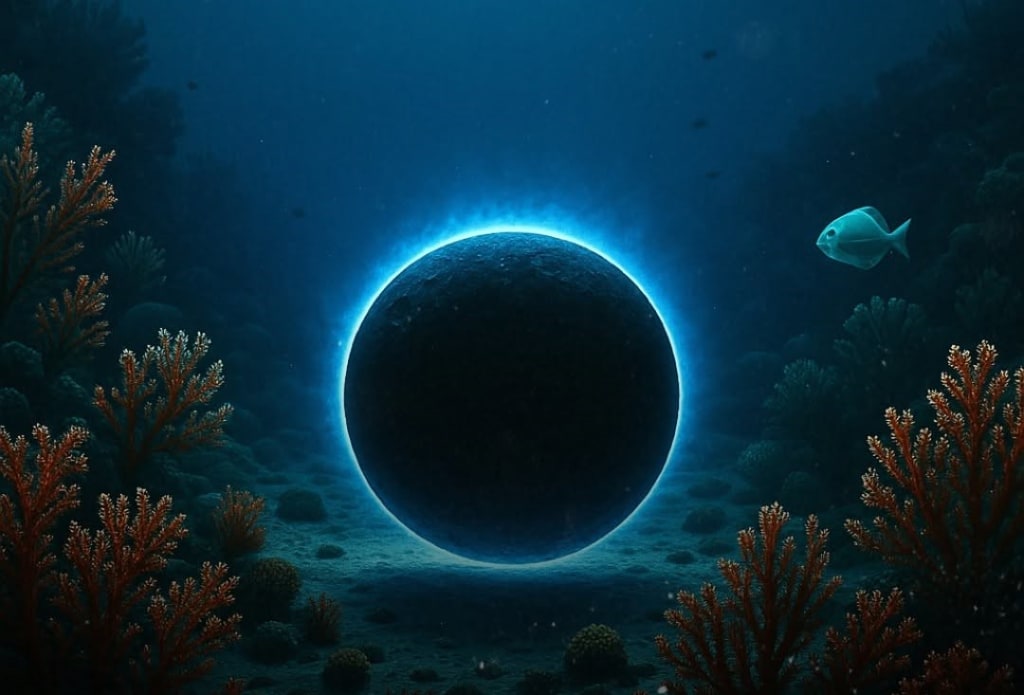
Deep in the Pacific Ocean, in a place called the Clarion-Clipperton Zone (CCZ), scientists have found something unbelievable—oxygen being made without sunlight. This goes against what we’ve always been taught: that plants and sunlight are needed to create oxygen. But here, nearly 4,000 meters underwater, oxygen is forming in complete darkness.
So, how is this happening? The answer lies in strange, potato-shaped lumps called polymetallic nodules. These nodules contain valuable metals like nickel and cobalt, but they also act like natural "geobatteries." They produce a tiny electric charge (about 0.95 volts), which splits seawater into hydrogen and oxygen. Scientists are calling this mysterious process "dark oxygen."
Why This Changes Everything
This discovery is a big deal for two reasons:
Life May Have Started Differently Than We Thought
Scientists believe that early Earth had very little oxygen until photosynthesis evolved. But if oxygen can form without sunlight, it means there could have been other sources of oxygen long before plants existed.
This might explain how some of the earliest oxygen-breathing creatures survived.
Deep-Sea Mining Could Disrupt This Process
The CCZ is full of valuable metals, and companies want to mine them for things like electric car batteries.
But if mining destroys these nodules, it could stop the dark oxygen process—and we don’t yet know how this affects deep-sea life.
The Danger of Disturbing the Deep
The deep ocean is one of the least understood places on Earth. We’re only just learning how important these polymetallic nodules might be.
Unknown Ecosystems: Tiny creatures and microbes might rely on this dark oxygen. Removing the nodules could wipe them out before we even study them.
Chain Reactions: If mining changes oxygen levels, it could affect everything from deep-sea fish to global ocean chemistry.
Scientists are now urging caution. Before we start digging up the seafloor, we need to know more about how these hidden processes work.
What Happens Next?
This discovery opens up new mysteries:
Could dark oxygen exist on other planets? If oxygen can form without sunlight, maybe other worlds have hidden oxygen sources too.
Should we rethink deep-sea mining? With so much at stake, governments and companies may need to slow down and study the risks first.
One thing is clear: the deep ocean still holds many secrets, and some of them could change the way we see life on Earth.
Final Thoughts
The finding of dark oxygen is a reminder of how much we still don’t know about our planet. As technology pushes us deeper into the ocean—and further into space—discoveries like this show that nature is full of surprises.
Before we rush to mine the seafloor, we should ask: What else are we disrupting? And is the price of these metals worth the cost to the hidden wonders of the deep?
What do you think—should we mine the ocean floor, or protect it? Let us know in the comments!
About the Creator
yousaf shah
Just for humanity I respect and love humanity
Keep reading
More stories from yousaf shah and writers in Chapters and other communities.
Astronomers Find a Massive Water Cloud in Space – 140 Trillion Times Earth’s Oceans!
A Watery Giant in Space Imagine all the water in Earth’s oceans. Now multiply that by 140 trillion! That’s how much water astronomers have found floating around a distant quasar called APM 08279+5255, located 12 billion light-years away. This makes it the largest and farthest water reservoir ever detected in space.
By yousaf shah9 months ago in Chapters
Fair Exchange, No Robberies
Dark Memoirs - Index There are at least two kinds of people in the world: those who write this half-arsed kind of intro to a story that looks to separate the rare and the norm, and those who realise it's an overused framing device and don't.
By Paul Stewart11 days ago in Chapters



Comments
There are no comments for this story
Be the first to respond and start the conversation.