
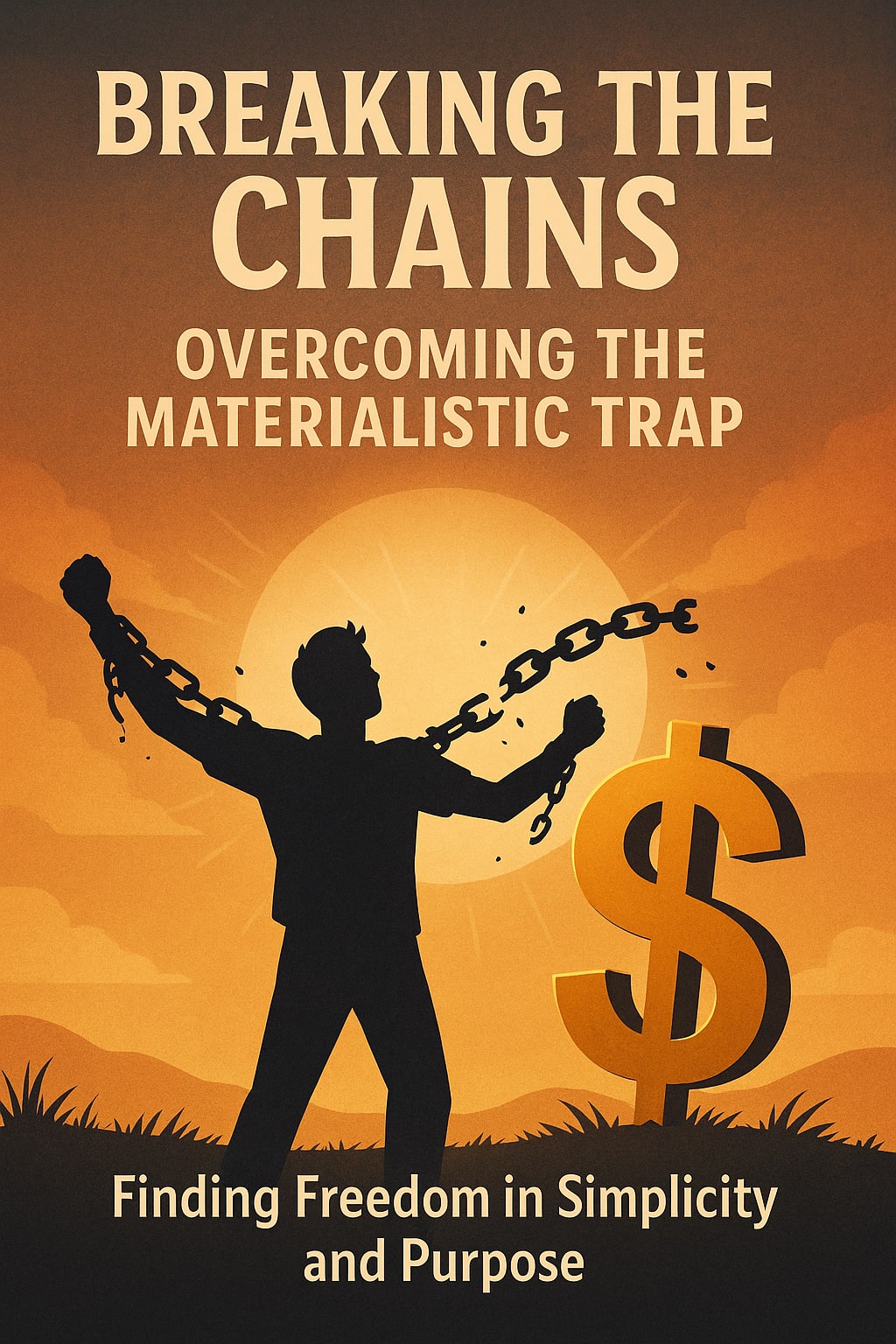
Breaking the Chains — Overcoming the Materialistic Trap
Finding Freedom in Simplicity and Purpose

Introduction: A World in Pursuit, A Soul in Drought
In today's fast-paced, hyper-connected world, the pursuit of material wealth and modern comforts has become synonymous with success. With every new gadget, luxury item, or trend, we’re sold the idea that happiness lies just around the corner—if only we had a little more. But in this endless chase for more, we often lose sight of the simplest truth: peace doesn't come from possessions—it comes from within.
Despite having access to unprecedented technology, facilities, and entertainment, anxiety and depression rates are climbing globally. Many people live more comfortably than kings of the past, yet their hearts are restless, and their minds cluttered. This chapter explores how to rise above the illusion of materialism and embrace a deeper, lasting kind of peace rooted in spirituality, simplicity, and purpose.
1. The Illusion of Materialism
Modernization has undoubtedly improved our lives in countless ways: instant communication, transportation, healthcare, and endless knowledge at our fingertips. However, it has also cultivated a culture of comparison, craving, and competition.
We’re constantly exposed to polished lives on social media, advertisements engineered to exploit our desires, and societal narratives that link self-worth with wealth. This leads to:
Chronic dissatisfaction (“I’ll be happy when…”)
Constant comparison
Spiritual emptiness and burnout
Materialism offers comfort, but not contentment. It satisfies the body but starves the soul.
2. The Islamic Perspective: Simplicity, Contentment, and Heart-Peace
Islam offers a profound path to balance. The Qur'an reminds us:
“Know that the life of this world is but amusement and diversion and adornment and boasting to one another and competition in increase of wealth and children…” — (Qur'an 57:20)
The Prophet Muhammad ﷺ lived in simplicity despite access to riches. His bed was made of palm fibers. He advised, “Be in this world as if you were a stranger or a traveler.” (Bukhari)
Key Islamic concepts that liberate us from materialism include:
Qana'ah (Contentment): True wealth is being satisfied with what you have.
Zuhd (Detachment): Living simply, not being controlled by possessions.
Tawakkul (Trust in Allah): Peace comes when you trust in divine provision.
Islam doesn’t reject the world but places it in perspective: use it as a bridge to the next life—not as your destination.
3. Christianity and Buddhism: Echoes of the Same Truth
✝Christian Viewpoint:
Christianity teaches that love for money is the root of many evils (1 Timothy 6:10). Jesus warned, “Do not store up for yourselves treasures on earth... but store up treasures in heaven.” (Matthew 6:19–20)
Peace, in the Christian path, flows from surrendering to God, loving others, and valuing the eternal over the temporary.
☸ Buddhist Insight:
Buddhism teaches that craving (tanhā) is the source of suffering. The path to peace lies in renunciation, mindfulness, and compassion.
The Buddha said, “Health is the greatest gift, contentment the greatest wealth, faithfulness the best relationship.”
4. The Mind and Heart: Internal Battle, External Noise
While spirituality offers a compass, the heart and mind must unlearn the conditioning of a materialistic society:
The mind clings to status and image.
The heart yearns for love, belonging, and meaning.
We must realign both by practicing:
Gratitude over greed
Stillness over speed
Purpose over pleasure
Technology & Society’s Role:
Technology isn't evil, but its misuse fuels materialistic obsession. Society glorifies wealth, influencers, and consumerism, often making simplicity seem boring or backward.
We need counter-cultural courage to say, “I have enough. I am enough.”
5. The Problem: A Culture That Teaches Want Over Wisdom
From childhood, many are taught to seek comfort, not character. Our heroes are the rich and famous, not the kind and content. This upbringing leads to:
Insecurity and dissatisfaction
Identity crises
Poor self-worth tied to wealth or looks
6. The Solution: Recalibrating the Soul
Here’s a practical approach to overcoming the materialistic trap:
a) Cultivate Gratitude
Write 3 things you’re thankful for each day.
Focus on what’s working in your life.
Compare less, appreciate more.
b) Simplify
Declutter your home and digital space.
Donate unused items.
Buy intentionally, not impulsively.
c) Practice Mindfulness
Meditate, pray, breathe deeply.
Unplug from screens and reconnect with nature.
d) Serve Others
Helping the needy reduces selfishness.
Volunteer work reminds us how fortunate we are.
7. Role of Parents, Families & Communities
Parents must model simple living and spiritual values. Teaching gratitude and patience starts young.
Communities should celebrate generosity over luxury, integrity over image.
Faith leaders can redirect people toward eternal values in sermons and gatherings.
The home is the first place where values are planted—or poisoned. Let it be a garden, not a mall.
8. The Role of Money: A Tool, Not a Master
Money is not evil—it’s neutral. But when it becomes our identity or source of worth, it controls us. Learn to:
Spend mindfully.
Save and share.
Avoid debt traps and status-based purchases.
We must teach ourselves and our children that money serves us—we don’t serve money.
Conclusion: The Way Forward
The modern world will continue offering illusions of happiness through things. But peace does not live in possessions—it lives in perspective.
To live with peace, one must:
Reclaim the mind from noise
Recenter the heart on faith
Revalue relationships and inner growth
The Peace Code begins with a choice: to stop chasing more, and start embracing enough.
About the Creator
Sayed Saad Gillani
Welcome to the words behind the silence.
I write to awaken emotion, challenge thought, and connect deeply through truth, fiction, and reflection. For those who crave meaning beyond noise—this space is for you.
Keep reading
More stories from Sayed Saad Gillani and writers in Chapters and other communities.
🌿 The Whispering House 🌿
Deep within a forest so untouched it didn’t appear on any map, nestled under a canopy of ancient trees, stood a house that no one had built—or at least, that’s what the stories said. It wasn’t listed in any record, not etched into local history books, not marked on GPS. But it was real. And it was alive.
By Sayed Saad Gillani9 months ago in Fiction
Fair Exchange, No Robberies
Dark Memoirs - Index There are at least two kinds of people in the world: those who write this half-arsed kind of intro to a story that looks to separate the rare and the norm, and those who realise it's an overused framing device and don't.
By Paul Stewart13 days ago in Chapters
Tattoos & Rail Guns Chapter 13: You May As Well As Be In The Army Now!
The next day began at dawn. Since the squad was not assigned to a mission outside the fort, today would start as a regular day. This meant an hour of exercise in the morning. Fortunately, it was a light day for the squad, consisting of little more than push-ups and sit-ups followed by a short two-mile run.
By Jamais Jochim5 days ago in Chapters
How to Succeed at the Benson Directory®
Congratulations and welcome to the Benson Directory® employee #22391! As our newest call handler, you will have the privilege of speaking with dozens of unique and interesting people on a daily basis as well as the opportunity to earn bonuses for high performance. Contained within this handbook you will find a set of ease to follow instructions designed to help you settle in to your new role and begin paving the way to success.
By S. A. Crawford2 days ago in Fiction



Comments
There are no comments for this story
Be the first to respond and start the conversation.