
Asteroid Apophis
Could it Hit Earth and What Would Happen if it Did?

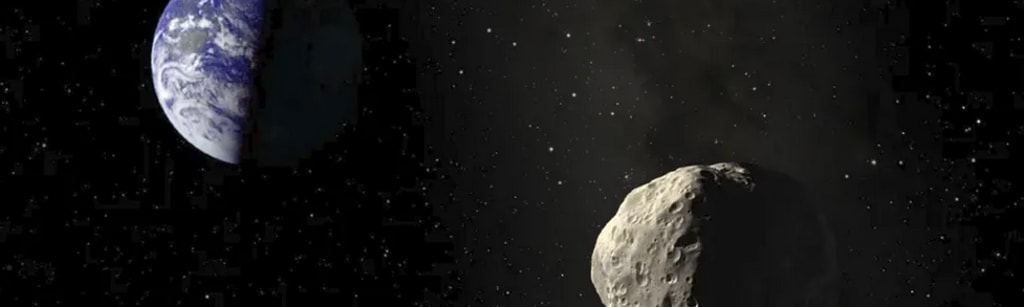
Asteroid 99942 Apophis has captured the attention of scientists and the public since its discovery in 2004 due to the possibility, albeit small, of a future collision with Earth. With its estimated diameter of 340 meters (1,100 feet), Apophis is large enough to cause significant regional damage, and its trajectory initially suggested a potentially close encounter with Earth in 2029 and 2036. While updated calculations have ruled out these impacts, Apophis remains an object of study and concern, raising questions about what would happen if such an asteroid did hit our planet and how we can prepare for the possibility.
What Is Asteroid Apophis?
Apophis, named after the Egyptian god of chaos and destruction, is a near-Earth asteroid (NEA) that orbits the Sun and passes close to Earth’s orbit. It was first discovered by astronomers at the Kitt Peak National Observatory in 2004, and initial calculations suggested a 2.7% chance of it colliding with Earth during a flyby on April 13, 2029. However, after further observation and analysis, the chances of a collision were significantly reduced, and scientists now confidently say there is no risk of impact during its 2029 approach or its subsequent flyby in 2036.
Despite the low risk of impact, Apophis remains important to planetary defense efforts. It will pass within approximately 31,000 kilometers (19,000 miles) of Earth’s surface in 2029 — closer than some satellites. This event will offer scientists a unique opportunity to study the asteroid up close without the danger of an actual collision.
What Would Happen if Apophis Hit Earth?
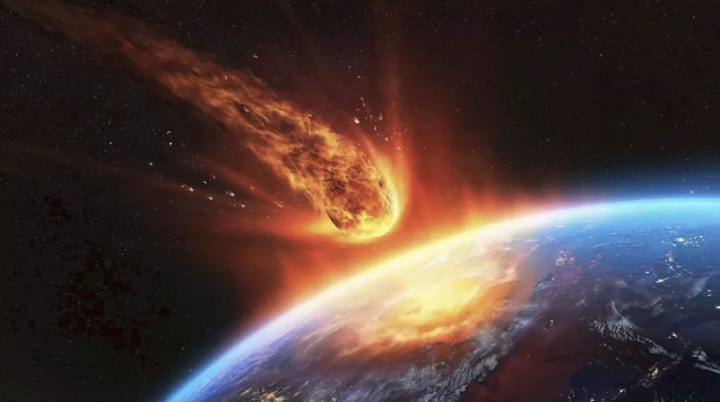
While the odds of Apophis impacting Earth are extremely low, it is still worth considering the potential consequences of such an event. If Apophis were to collide with our planet, the effects would be devastating, though it would not trigger the kind of global catastrophe that occurred during the Chicxulub impact that wiped out the dinosaurs 66 million years ago.
1. Impact Energy If Apophis struck Earth, it would release a tremendous amount of energy. Estimates suggest that the energy released would be equivalent to around 1,200 megatons of TNT, which is roughly 80,000 times more powerful than the atomic bomb dropped on Hiroshima. This is similar to the energy released by the largest hydrogen bomb ever detonated, the Tsar Bomba.
2. Regional Destruction The impact site would experience catastrophic destruction over a wide area. An asteroid the size of Apophis would likely create a crater several kilometers wide, and the shockwave from the impact would flatten structures for tens or even hundreds of kilometers around the site. Any cities or towns within this range would be completely destroyed, and the death toll would be enormous.
3. Tsunamis If Apophis were to strike an ocean, the resulting impact could generate massive tsunamis. These tsunamis would radiate outward from the impact site, potentially flooding coastal areas and causing widespread destruction along coastlines around the world. While local effects would be devastating, the global impact would be less severe than an asteroid striking land.
4. Atmospheric Effects An asteroid impact like Apophis would also inject a massive amount of dust, debris, and vaporized material into the atmosphere. This could create a temporary cooling effect, as sunlight is blocked from reaching the Earth’s surface. While this would not likely trigger a full “nuclear winter” scenario, it could have serious short-term effects on global agriculture and weather patterns.
5. Global Impact Though the most significant damage would be localized, the global consequences of an Apophis impact would
be felt in various ways. The atmospheric effects could lead to temporary climate changes, disrupting weather patterns and potentially causing global crop failures. Food shortages and economic instability might follow, as the disruption of ecosystems would ripple across industries and communities. Additionally, the psychological and geopolitical impacts could be profound, as the world responds to the aftermath of such a large-scale disaster.
Could We Defend Against an Apophis-Type Asteroid?
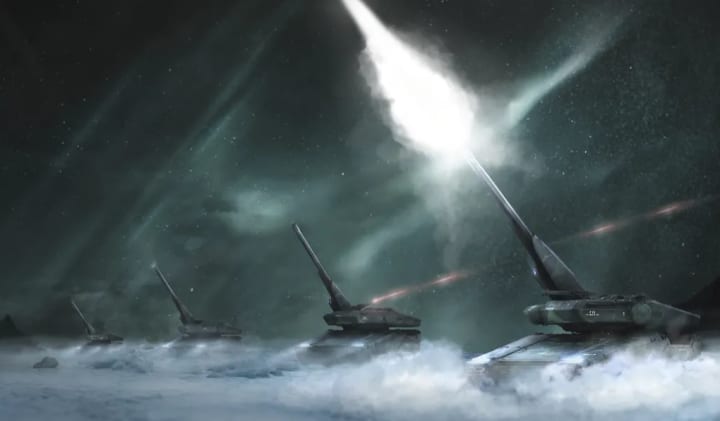
Planetary defense is a field that has gained increasing attention in recent decades, as scientists recognize the potential danger posed by near-Earth objects (NEOs) like Apophis. Various methods are being developed and tested to prevent a catastrophic asteroid impact. Some of the most promising defense strategies include:
1. Kinetic Impactors One of the most straightforward strategies for preventing an asteroid collision is the kinetic impactor method. This involves sending a spacecraft to collide with the asteroid at high speed, altering its trajectory slightly so it misses Earth. NASA’s DART (Double Asteroid Redirection Test) mission, which successfully impacted the asteroid moonlet Dimorphos in 2022, demonstrated the potential for this technique to work. If detected far enough in advance, a kinetic impactor could prevent a collision by changing the asteroid’s path just enough to avoid disaster.
2. Gravity Tractors A more gradual approach involves using a “gravity tractor,” a spacecraft that flies alongside the asteroid, using its gravitational pull to slowly alter the asteroid’s trajectory over time. While this method requires early detection and long lead times, it offers a potentially safer way to deflect an asteroid without the risk of breaking it into smaller, unpredictable fragments.
3. Nuclear Deflection In extreme cases, nuclear explosions could be used to deflect or destroy an incoming asteroid. This strategy would involve detonating a nuclear device near the asteroid, causing it to either break apart or change course. While this method is highly controversial due to the potential consequences of creating multiple smaller asteroids, it remains an option for last-resort scenarios where other methods have failed.
4. Early Detection Systems Early detection is crucial for any planetary defense strategy. The sooner we detect an asteroid on a collision course with Earth, the more time we have to devise a plan to prevent the impact. Programs like NASA’s NEOWISE and the Pan-STARRS observatory are dedicated to tracking and cataloging near-Earth objects, allowing us to predict potential threats well in advance.
The Importance of Planetary Defense
While the likelihood of Apophis impacting Earth has been ruled out for the foreseeable future, it serves as a reminder of the potential threat posed by asteroids. The study of Apophis and other NEOs provides valuable insights into how we can better protect our planet from future asteroid impacts. As technology and international cooperation in space grow, the tools to deflect or mitigate the damage of an asteroid impact are becoming more sophisticated.
However, funding and global coordination are essential. Governments and space agencies must continue to invest in asteroid detection, tracking, and deflection technologies. By building a robust planetary defense system, we can reduce the risks posed by objects like Apophis and ensure that Earth remains safe from cosmic threats.
Asteroid Apophis, once feared as a potential threat to Earth, has sparked important conversations about planetary defense and humanity’s ability to protect itself from extraterrestrial dangers. While the risk of an Apophis impact has been ruled out, it remains a powerful symbol of the need to stay vigilant in monitoring near-Earth objects. With advancing technology and increasing international collaboration, we are better equipped than ever to detect, track, and potentially deflect hazardous asteroids.
The future of planetary defense looks promising, but it is crucial to maintain research, investment, and preparation to safeguard our planet from the ever-present possibility of asteroid impacts.
About the Creator
Keep reading
More stories from Gus Woltmann and writers in Chapters and other communities.
Misunderstandings Surrounding Apologies
Apologizing is a fundamental aspect of human interaction, yet it’s often fraught with misunderstanding and misinterpretation. While a sincere apology has the power to mend relationships and restore trust, a poorly executed one can exacerbate tensions and deepen rifts. Understanding the nuances of effective apologies is essential for fostering empathy, repairing connections, and fostering a culture of accountability and forgiveness.
By Gus Woltmann2 months ago in Chapters
The Cave Part 6
If you have ever heard a tale about yourself that you cannot remember and doubtless think is made up, you will know how I felt when Tharkin related all that the eagle had seen of me before my memories were scattered. Of far distances and traveling companions that I did not recall, camping out under the stars and making our way to the mountains with deliberate purpose. The great bird had lost contact with my party once we entered the forests, and the seven other members were not seen again by him or his brethren since.
By Jamye Sharp24 days ago in Chapters
Italy’s Vanishing Village: Businesses and Schools Close as Birth Rates Collapse
Across Italy, a quiet demographic crisis is unfolding. In many small towns and villages, the number of newborns has dropped so dramatically that schools are shutting down, businesses are struggling to survive, and communities that once thrived with families are slowly fading away. One such town has become a stark symbol of this national problem, where the absence of children is reshaping everyday life.
By Irshad Abbasi 5 days ago in Chapters
TUS NUA - ch 53
TUS NUA – ch 53 New Beginnings – Mia and Midnight (*)(*)(*) Finola knew Ali’s brother-in-law needed to put his mind at rest. She fed her arm through his and led him outside. “We’ll sit here. If you like, I can put a block around us so our conversation will be private.”
By Margaret Brennan3 days ago in Fiction


Comments
There are no comments for this story
Be the first to respond and start the conversation.