
Afghan Defense Minister Mullah Yaqoob: Pakistan’s Security Weakness, ISIS Defeated, and Calls for Balanced Ties With U.S., China, and Russia
Afghan Defense Minister denies ISIS and Al-Qaeda presence in Afghanistan, blames Pakistan’s own security lapses for militant attacks, and urges cooperation over accusations.

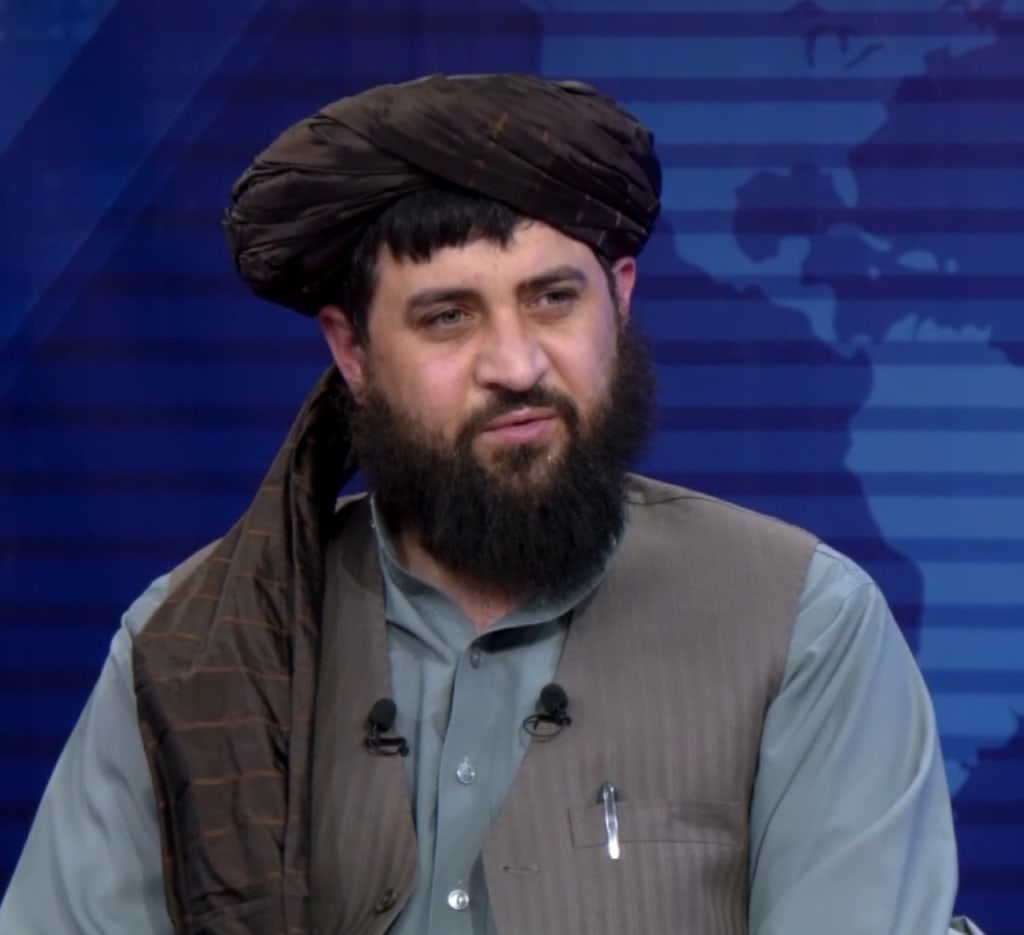
Afghanistan’s Defense Minister Mullah Yaqoob has claimed that Pakistan’s “security institutions are weak, and to cover this weakness they put blame on Afghanistan.”
Mullah Yaqoob is the eldest son of Taliban co-founder Mullah Omar, and in the past he also served as head of the Taliban’s Military Commission.
The minister further stated:
“Tehreek-e-Taliban Pakistan (TTP) and the Baloch (separatists) conduct their operations inside Pakistan. They attack big cities hundreds of kilometers away from the Durand Line.”
He said this in response to a question regarding Pakistan’s repeated allegations that the banned TTP and the Baloch Liberation Army (BLA) use Afghan soil to launch attacks inside Pakistan.
Mullah Yaqoob asked:
“If they (TTP, Baloch insurgents) are entering from Afghanistan and traveling hundreds of kilometers inside Pakistan, then why aren’t they being stopped there? Whether it is a car bomb, target killing, or blast—it should be prevented within Pakistan. In my opinion, this exposes the weakness of their security institutions, and to hide that weakness, they blame Afghanistan.”
Pakistan’s Position
Pakistan has repeatedly warned Taliban authorities in Afghanistan that TTP and other banned groups use Afghan territory for militant activities. Pakistan has also claimed in the past that it provided evidence of this to Afghan authorities.
Earlier this year, Pakistan’s military claimed to have killed 104 alleged militants in two separate incidents while they were trying to cross from Afghanistan into Pakistan.
Mullah Yaqoob: "We Don’t Want Bad Relations With Pakistan"
The Taliban defense minister emphasized that exchanging accusations and propaganda is not the solution. Instead, “reality should be acknowledged, cooperation should be increased, and a good plan should be made to resolve these issues.”
He clarified that the Taliban government does not want strained ties with Pakistan, because neither country benefits from hostility.
“The unfortunate reality is that relations between Afghanistan and Pakistan are not as normal as they should be, and I am not happy with this situation,” Yaqoob said.
Do ISIS and Al-Qaeda Still Exist in Afghanistan?
When asked about concerns from several countries that ISIS (so-called Islamic State) remains active in Afghanistan and capable of launching large-scale attacks, Mullah Yaqoob replied:
“That may be their claim, created for their own purposes. In my opinion, they cannot provide any evidence or justification for this. Thank God, ISIS has been eliminated from Afghanistan.”
He added:
“Not only those groups that were a threat to Afghanistan, but also those groups that could use Afghanistan to threaten other countries—such groups no longer exist here.”
He insisted:
“I can say with full confidence that not a single inch of Afghan soil is under the control of any group that could pose a threat to Afghanistan or to anyone else.”
On being asked whether any branch of Al-Qaeda still exists in Afghanistan, Mullah Yaqoob replied:
“When America invaded Afghanistan and its forces entered, the relationship between the Islamic Emirate (Afghanistan) and Al-Qaeda ended. Those individuals who were from the Middle East went back. We have no information of their presence in Afghanistan now.”
According to him, under the Doha Agreement with the U.S., the Taliban had committed not to allow Al-Qaeda or any other group to use Afghan territory.
“We are implementing this agreement, and the Americans also have not been able to provide any evidence that in the last four years Afghan soil was used against them or their allies.”
Although Yaqoob denies Al-Qaeda’s presence, in 2022 the U.S. claimed to have killed Al-Qaeda leader Ayman al-Zawahiri in Kabul.
Commenting on this, he said:
“America made this claim (about killing al-Zawahiri in Kabul), but we (the Afghan authorities) have not confirmed it. We had announced that we are investigating. I am not a member of the investigation team, and I have no information about it.”
He added:
“Any country that feels Afghanistan could be a threat to them should come and talk to us. I am confident we can reassure them and clarify the situation. In my view, if some countries stop campaigning against us and do not obstruct our work, we can independently prevent any threat—whether to Afghanistan or from Afghanistan to another country. Foreign interference only strengthens such groups because they start seeing themselves as fighting for an ideology. We are confident we can fully ensure Afghanistan’s security, and we assure every country that they need not fear any threat from Afghan soil.
We Want Relations With the U.S. Similar to China and Russia
Responding to a question about the overall security situation since the Taliban returned to power, Mullah Yaqoob said:
“Security in Afghanistan is very satisfactory. Personally, I am very confident about it. If you compare Afghanistan’s security with that of regional countries, I think you would give Afghanistan high marks. Sometimes incidents happen, but such incidents also occur in countries that claim to have the strongest security. To me, these are not major security issues. Overall, the situation here is satisfactory.”
He revealed that Afghanistan’s army currently has about 150,000 personnel, and over time it will be strengthened and expanded further.
On whether Afghanistan now stands aligned with China and Russia, Yaqoob said:
“Our policy is to maintain balance among major powers. We should not ally with one bloc in such a way that we appear against another bloc. That is our policy. But in the current situation, since China and Russia want relations with us, we cannot refuse. We are an independent country and can maintain relations with any state.
We also want the same kind of relations with the United States as we have with China and Russia—but this depends on their (the U.S.) actions.
About the Creator
Keep reading
More stories from Real content and writers in Chapters and other communities.
What is the penile Cancer, symptoms, treatment and patient story
New type of cancer/ penile Cancer João, a 63-year-old man from Brazil, first visited a doctor in 2018 when he noticed an unusual swelling and discomfort in his genital area. Despite repeated hospital visits, doctors initially dismissed his condition as excess skin and prescribed him basic medication.
By Real content8 months ago in Chapters
The Miles and Miles Of Hobby Living
When we live through our hobbies how much living is actually happening. We are living a lot because we are doing things we enjoy in life. Hobbies can go on for miles, because they can help our minds and bodies relax. The more we live through the miles and miles of hobbies we have the more calm and relaxed we are. Hobbies are put into life for miles so that they are something we are always going after. The more we put the hobbies that we enjoy in life the more we do them and the longer they last. As hobbies can last for miles, what do we think of them? Have we ever thought about our hobbies lasting for miles and miles? Or is that just a saying we use to make them seem longer than they actually are? The more we live life by doing hobbies, the longer our hobbies last. For example, when I read I read for days on end, now to some that might not seem like miles but to others who don’t read often it could. It is all in the way you look at your hobbies and life and how you live it for yourself, this I am sure of. So put everything you can into the hobbies that you are doing in life and they will go on for miles if that is what you want.
By Louise Barracoabout 2 hours ago in Chapters
The Forsyth House Fire
Since 1851, Forsyth House has stood on the corner of Union Street and Gordon Street in the heart of Glasgow. Its iconic, or was... because on Sunday 8th of March, 2026, a fire broke out in a small, seemingly un-named shop in the building and tore all that history down. As I write, the rubble is still unsettled and the street is still blocked off. Central Station is quiet on the upper level, and around 30 small businesses have quite literally gone up in smoke.
By S. A. Crawford3 days ago in The Swamp



Comments
There are no comments for this story
Be the first to respond and start the conversation.