
Advancing Sustainable Building Practices
The Impact of BIM on Energy-Efficient MEP Systems
Advancing Sustainable Building Practices
Energy efficiency in building systems, especially in Mechanical, Electrical, and Plumbing (MEP) systems, is more crucial than ever. It plays a significant role in cutting operational costs and reducing environmental footprints. Modern construction prioritizes minimizing energy usage through advanced MEP features like energy-efficient HVAC systems, smart lighting, and adaptive controls that respond to occupant needs. These solutions not only lower energy consumption but also contribute to decreased greenhouse gas emissions, aligning with global sustainability goals.Building Information Modeling (BIM) enhances energy efficiency by providing tools for precise analysis, simulation, and optimization throughout a building's lifecycle. With BIM, architects and engineers can craft detailed 3D models embedded with data about materials, insulation, HVAC systems, lighting, and other MEP elements. These models enable accurate energy performance simulations even before construction begins. Additionally, BIM supports ongoing monitoring and fine-tuning during the operational phase, ensuring that systems consistently operate at peak efficiency. This approach reduces costs, promotes sustainable design, and aligns with green certification standards, establishing BIM as a vital component of eco-conscious construction.
What is BIM?
Building Information Modeling (BIM) is a digital framework representing the physical and functional characteristics of a structure, encompassing every stage of its lifecycle—from initial concept through operation and eventual decommissioning. Unlike traditional 3D models, BIM integrates layers of data, including spatial configurations, materials, costs, timelines, and operational parameters, into a centralized digital repository. This comprehensive approach enables seamless collaboration among architects, engineers, contractors, and facility managers by providing a unified, continuously updated source of information about the building’s systems and specifications.
What are MEP Systems?
Mechanical, Electrical, and Plumbing (MEP) systems form the backbone of any building's functionality and comfort. These systems include critical components such as heating, ventilation, and air conditioning (HVAC); lighting and power distribution; water supply; and waste management.When it comes to energy use, MEP systems are pivotal. The efficiency of HVAC, lighting, and plumbing systems heavily influences a building’s overall energy consumption, with heating, cooling, and lighting often constituting a significant portion of energy demand. Well-designed MEP systems not only reduce energy usage but also enhance air quality, optimize temperature regulation, and lessen environmental impact.
How BIM Improves MEP Efficiency
Energy Analysis and Simulations BIM integrates seamlessly with energy analysis tools, enabling accurate simulations of HVAC performance, lighting efficiency, and electrical consumption. These simulations provide insights into energy behavior, guide the selection of energy-efficient equipment, optimize building orientation and insulation, and help minimize energy usage throughout the building's lifecycle.
Proactive Conflict Resolution
BIM facilitates the early detection of spatial conflicts between MEP elements like ducts, pipes, and conduits. This reduces costly on-site corrections, prevents material wastage, and avoids construction delays caused by unexpected clashes.
Optimized System Design
MEP designs created using BIM are tailored to real-world demands, ensuring accurate sizing of equipment and efficient layouts for ducts, piping, and electrical systems. This precision avoids oversizing, lowers energy loss, and ensures smooth operations. BIM also supports energy-efficient upgrades in existing MEP systems, making it an invaluable tool for retrofitting and renovations.
Enhanced Visualization
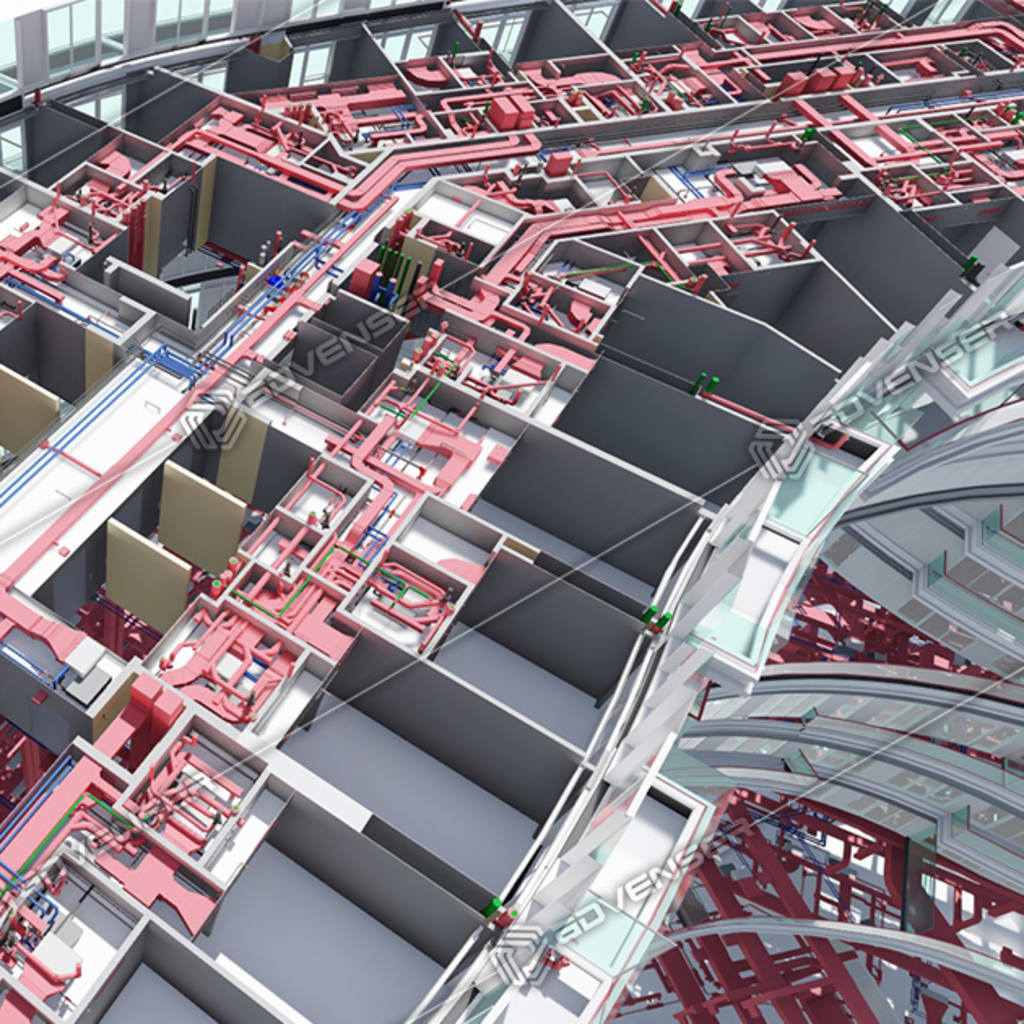
BIM provides detailed MEP 3D models systems within a building’s structure, enabling better understanding and communication among stakeholders. This clarity leads to more informed decision-making and reduces design errors.
Flexible Design with Parametric Modeling
BIM allows for the creation of dynamic MEP components that adapt easily to changes in design. This flexibility streamlines modifications, minimizes manual adjustments, and ensures efficient incorporation of alternative solutions.
Conclusion
Achieving energy efficiency in building systems is essential for reducing operational costs and fulfilling environmental responsibilities. BIM revolutionizes this process by integrating energy modeling, conflict resolution, and system optimization into the design and construction workflow. By enabling informed decision-making, minimizing errors, and ensuring sustained efficiency, BIM empowers stakeholders to create buildings that are both functional and sustainable.
As the demand for environmentally responsible construction continues to grow, BIM stands as an indispensable tool for improving energy efficiency, reducing costs, and supporting the global shift towards greener building practices.
About the Creator
Keep reading
More stories from mepbimservice and writers in Chapters and other communities.
The Role of BIM in Enhancing Energy-Efficient MEP Systems
Energy efficiency in modern building systems, especially MEP (Mechanical, Electrical, and Plumbing) systems, has become a crucial factor in reducing operational costs and minimizing environmental impact. Today's buildings are designed to maximize energy usage through advanced MEP components such as HVAC systems, efficient lighting, and smart control systems that reduce energy waste and adapt to the needs of building occupants. These systems help lower energy consumption, reduce greenhouse gas emissions, and contribute to broader sustainability goals.
By mepbimserviceabout a year ago in Writers
The Book of Petch
Petch couldn't peel his black eyes away from the sky. Kelgus was smoldering in some places and burning in others. Whatever had scorched it had also appeared to melt it rock in certain places. As far as Petch could remember of his youth studies, Kelgus was home to mostly flora and fauna. The Sorian Order had sent probes to the planet several times over the last fifty or sixty years as well as a couple landing missions, but the geographic study of the planet as well as the study of plant and animal life suggested that intelligent life such as primitive tribes or civilizations, didn't exist. As every species that lived in Olna now seemed to be on the city beach staring up, Petch's left wrist lit up which he touched with the first finger of his other hand. This generated a holoscreen with Jedro's face on it.
By Robert de Mattos2 days ago in Chapters


Comments
There are no comments for this story
Be the first to respond and start the conversation.