
A mystery in the Alps
A man disappeared and found more than 10 years later

In August 1989, young Canadian hockey talent Duncan MacPherson was about to begin a new coaching job in Scotland, but he never arrived. Over the years, many theories emerged about what might have happened to him: some believed he ran away with a rich Italian girl, others thought he suffered from amnesia, and there were even those who speculated he was recruited by the secret agency as a spy. However, the truth was far more shocking than anyone had imagined.
Duncan was born on February 3, 1966, in Saskatoon, Canada, to Lynda and Bob MacPherson. During his teenage years, he became an outstanding hockey player, breaking records with the Saskatoon Blades, a prominent junior hockey team. Although talented, he was unable to keep up with the level of professional players, but he didn’t mind, as he preferred coaching. He applied for various coaching positions across Europe. During a tour, he contracted Lyme disease and spent nearly two months in bed recovering.
While searching for a coaching job, Duncan was contacted by Ron, a Vancouver businessman who had recently purchased the Scottish Dundee Tigers team. Ron made an offer that was hard for Duncan to refuse. According to Duncan, Ron asked him to become the team’s full-time coach for a high salary, allowing him to fulfill his dream of working in the world of hockey without getting involved in political issues. Since he had no other offers, Duncan accepted the job at the end of July 1989.
After accepting the job offer, Duncan was due to start his new position on August 14. With the following weeks free before taking up the new role, he decided to travel to Europe to visit friends who had previously been professional players but were now playing or coaching with European teams. He also wanted to explore Europe's landmarks before embarking on the next chapter of his life. On August 4, 1989, he left Saskatoon and flew to Nuremberg, Germany, to stay with his friend George Pesut. After a few days at George's place, Duncan borrowed George's red Opel Corsa to travel through Austria and possibly Italy. He promised to return the car by August 11 to catch his flight to Dundee. George agreed.
On August 7, after leaving George's house, Duncan continued his journey to Füssen to stay with another friend, Roger Kortko. He only stayed for one day and left on the morning of August 8. Duncan had promised his mother that he would call her on August 14 after settling into his new job in Dundee, but they didn’t hear from him until August 16. Concerned, they thought he was just busy and hadn’t had time to call. However, their relief turned to worry when the phone rang, but it was not Duncan calling. Instead, it was his new boss, Ron Dixon, who informed them that Duncan had not shown up for work. Since Duncan would never have missed such an opportunity, his parents were deeply worried and knew something had happened. They immediately reported him missing.
Although the police promised to forward Duncan's photo and information to Interpol, the parents didn’t want to wait idly. They flew to Germany to begin their own investigation and track Duncan's movements. Their first stop was George Pesut’s place in Nuremberg, who expressed concern, as Duncan had not returned the car on time. George knew something was wrong because Duncan was not the irresponsible, careless type. After contacting the police about Duncan's disappearance in Nuremberg, the local authorities dismissed the report, suggesting that Duncan was probably with a rich Austrian or Italian girl. George and Duncan’s parents were certain this wasn’t true, as Duncan was in a committed relationship, and his girlfriend was planning to move to Scotland the following week. While George couldn’t share much about Duncan’s plans with his parents, he did mention that Duncan had visited Füssen to stay with Roger Kortko, meaning the parents would need to speak with him.
According to Roger, Duncan had not made an exact travel plan. He said Duncan mentioned wanting to go to Austria and possibly visit a friend in Bolzano, Italy, or go windsurfing on Lake Garda in Northern Italy before returning to Nuremberg on August 9. Since they weren’t sure of Duncan’s exact route, his parents used a map of Central Europe and concluded that if Duncan was heading to Northern Italy, he would certainly have had to pass through Innsbruck, Austria. This became their next destination.
Innsbruck and its surroundings are one of Austria's largest tourist attractions. Tyrol, with its surrounding mountains and glaciers, is a perfect location for hiking, skiing, and snowboarding. Even though it was August, some ski slopes were still open in the famous Stubai Valley, which was a hub for tourists. Duncan was likely there.
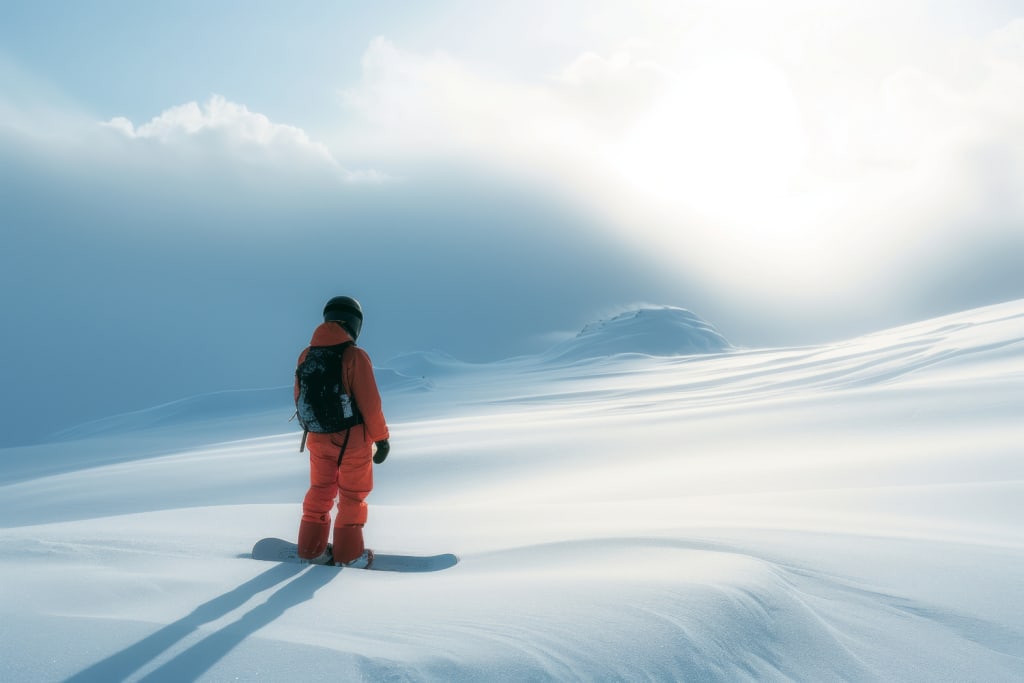
When Duncan’s parents arrived in Innsbruck, they were greeted the next morning with a beautiful sight: hills, mountains, and vast snow. Lynda was sure her son would have loved this area, and he might still be there.
Relying on their instincts, the parents began searching for Duncan around Innsbruck. They suspected that Duncan might have gone off the road while driving on mountain paths and passes. They searched the area for days, but found no leads. Since Duncan had mentioned wanting to go windsurfing in Italy, they also searched local lakes, hoping he might have had an accident and drowned. But unfortunately, they still found no trace.
With no response from the police, they continued their investigation. However, when inquiring at the Austrian and Italian borders, they were shocked to discover that no one there knew anything about Duncan. They angrily asked the police to send the information to Interpol. Although they promised to do so, the parents soon realized they had received many empty promises from the authorities.
Feeling that no one was taking Duncan’s disappearance seriously, the parents continued their search on their own. Since Duncan's passport had not been checked at either the Italian or Swiss border, Lynda was certain her son had not left the Innsbruck area.
They asked the local police if they had checked hotel records, but were told that it would be too much of a task. However, the parents persisted, and after nearly two weeks of going door-to-door and visiting every accommodation, they finally found the first significant clue: a local hostel had registered that Duncan checked in for one night on August 8, then left the next morning. Although it wasn’t much, they finally had a lead!
After they found the first tangible evidence that Duncan had been in the area, his parents begged the local police to issue a missing person report. However, the Austrians refused, saying that Duncan was an adult and could disappear if he wanted to. Moreover, they claimed that if anything had happened to him, his car would have already been reported as found.
The family was outraged and found a sympathetic editor at an Austrian newspaper who was willing to publish a missing person advertisement, which they funded themselves. Within a few weeks, the advertisement aired, and in the meantime, they sought help from the Canadian consulate to get past the Austrian police, who were not assisting them. After waiting two days, they finally met with the deputy ambassador, but no new information was provided. Like the Austrians, the ambassador also assured them that Duncan was probably fine, as he was a strong man. The couple knew this was not true, and they eventually learned that Duncan's car had been found.
A few hours later, after the paid television advertisement aired, a parking attendant reported that Duncan's car was parked in a hotel parking lot near Innsbruck. The parents immediately drove to Innsbruck, but upon arrival, something seemed off. The police claimed that they had already accessed the car and removed Duncan’s belongings. The couple found Duncan’s belongings in a bag from the police, but when they asked if fingerprints had been taken, they were told there was no reason to. When they asked why the car hadn’t been left untouched, the police refused to answer.
After the police handed over Duncan's belongings, the couple's suspicions grew even stronger that something was wrong. In the car, there was a backpack with some clothes, a passport, and a bag of rotten fruit. The police did not reveal where the car had been found, but when they saw a police car leave the station, they decided to follow it to find out where it was going. After a short pursuit, they found the car parked in the Stubai Valley, where it had been sitting for 42 days without anyone noticing it. The car had been left in the parking lot for such a long time in a monitored area, so it was hard to believe that no one had noticed it.
When they finally managed to access the car, the couple found several items, but one thing particularly caught their attention: an audio cassette on the center console, with a logo from a local music store. The shopkeeper clearly identified Duncan as the person who had purchased the cassette, and he also mentioned that another man had been with Duncan when he came into the store.
With concrete evidence (the car, the hostel receipt, and the witness statement) confirming that Duncan had been in Innsbruck, the couple focused their search on nearby alpine hotels, starting with the Alpensporthotel in Mutterbergalm. When they entered the hotel and inquired about Duncan’s stay, the hotel’s snowboard instructor, provided valuable information. He said he clearly remembered Duncan. According to him, Duncan rented a snowboard on the morning of August 9 and booked a lesson with him. Duncan, who was in excellent physical condition, performed surprisingly well, especially considering it was his first time snowboarding. After the lesson, Duncan said he wanted to practice for a few more hours, so he planned to take another lesson the following day. However, the next morning, Duncan didn’t show up.
The snowboard instructor’s testimony provided important information, but another question arose: had Duncan returned the snowboard to the rental shop? If not, it meant he might still be on the mountain. So, Duncan’s parents visited the rental shop, where the employee nervously and shakily responded. The manager claimed that their rental records had been changed, and the August data had already been deleted, but assured them that Duncan had returned the snowboard. The couple continued their search, hoping to find their son before the winter snow could cover any potential clues.
Soon, a Canadian businessman offered his help, sending a world-renowned search and rescue team to Austria, equipped with the latest technology. The couple was grateful for the assistance, but they didn’t realize that the police were once again working against them. The Austrian police deliberately misdirected the rescue team to the wrong locations.
Later, diplomatic information revealed that the police had developed a theory from the beginning, stating that Duncan had simply fallen into a ravine and died. Ravines can be particularly dangerous in winter because they may be covered by a thin layer of snow or ice, and if someone steps on it, they could fall 10 to 30 meters into the dark, icy depths.
The Austrian authorities didn’t inform Duncan’s parents or the rescue team, so they searched the surrounding mountains aimlessly. After weeks of searching without finding anything, the team gave up and returned home. Although Duncan’s parents didn’t want to, they too decided to go home, but they vowed to return as soon as the weather permitted.
Over the next 14 years, the couple traveled to Austria nine different times to continue their search, often meeting with locals and police officers. The locals seemed to have grown weary of the search, and hoped that if they behaved harshly enough towards the parents, they would simply disappear. But the parents never gave up looking for their son.
In November 1993, German television aired an investigative report on Duncan's case, and a few months later, a German woman, who had called them from Nuremberg, brought what might have been one of the most significant leads. The woman said she had been caring for a man suffering from severe amnesia, who was tall, spoke only English, and had two missing front teeth, which had been replaced with implants. The man had been found in nearby forests and didn’t remember anything, except that he had lived in New York State.
For Lynda and Bob, this was a key discovery, as the man’s physical characteristics resembled Duncan’s, who also spoke English and had previously lived in New York. The parents were convinced the man might be Duncan, especially since the man suffered from Lyme disease, which could cause amnesia. Lynda immediately called the Canadian embassy to investigate the matter, and the Austrian authorities confirmed that the man indeed existed.
The man was known as Mark, and it turned out that he had been released from a psychiatric institution and was living with a foster family. Austrian and Canadian authorities sent several photographs of the man, but unfortunately, the man didn’t resemble Duncan. The parents eventually sought help from Germany to meet the man in person, but dental records also confirmed that he couldn’t have been Duncan. Duncan MacPherson remained officially listed as missing.
Although the most promising lead in the case so far had been Lynda’s lawsuit against the Canadian government in the late 1990s, demanding the release of diplomatic materials between the two countries, another unexpected twist occurred. After years of legal battles, the Canadian government eventually released nearly 800 pages of sensitive documents related to the case. The documents clearly proved that the Austrian police had lied, but they also revealed something else surprising. Several pages were completely blacked out, and these pages concerned correspondence between Canada and the Czechoslovak government. Lynda quickly realized that the secret wasn’t just about the Austrian police’s lies, but that something potentially far more serious could have happened.
Before Duncan traveled to Europe, he had told his parents that a secret agent had approached him in the United States and wanted to recruit him. Although the opportunity seemed intriguing, the idea of creating a new identity and leaving his old life behind made Duncan reconsider. During the Cold War, it wasn’t uncommon for foreign athletes to be recruited, so Duncan, who traveled the world, could have been spying. Lynda believed that the secret agency had likely caught him spying in Czechoslovakia and had kept him there. Later, when she sued the Canadian government again to have the redacted documents released, the information contained nothing more than a question from the Canadian government asking whether Duncan had been in Czechoslovakia, to which the Czechs had replied negatively.
In July 2003, the Stubai Valley was struck by an exceptionally hot summer, resulting in several bodies, long buried, emerging. On July 18, a jacket was found on the Stubai Glacier, concealing a body. The authorities quickly concluded that it could be Duncan and notified the Canadian embassy. When Lynda and Bob arrived in Austria, they learned that the body had been transported to Innsbruck, where it was definitively identified as Duncan's through DNA and dental records.
Duncan's body had been found, but what had happened to him remained uncertain. Why did it seem like everyone was trying to hide the truth? When Lynda and Bob entered the medical room to view their son, his body was covered by a sheet, with only his face visible. His skin, as though it had become thick black leather from years of icy snow cover, still resembled their son’s.
For many years, Lynda was convinced that Duncan had fallen into a crevice and was then buried alive by a snowplow. She wanted an autopsy to confirm her theory, but the doctor stated that it wasn’t necessary, as it was unlikely to shed light on the cause of death. The parents insisted on the autopsy, but the prosecutor said it wasn’t needed, as it was clear that Duncan had fallen into a crevice and died there. Since they still wanted answers, they requested various tests and photographs of the body, as well as the items found with him, such as his snowboard and snowshoes. Meanwhile, they noticed that the snowboard and clothes seemed to have been torn apart, as if by machinery. This observation would later be found to be important, but at the time, they didn’t yet know why.
They then inquired at the police station, where they were allowed to look at the photographs showing the ski resort workers lifting Duncan out of the crevice, but no police officers, investigators, or medical personnel were present. Duncan’s extraction had been completely carried out by the hotel staff, and the officers had only taken away the body. Later, they asked about the condition of the snowboard, as it seemed to be torn. The doctor, speaking with the hotel staff, said that a snowplow had been used to help get Duncan out of the crevice. Since the cost of repatriation would have been high, they ultimately decided to have him cremated in Austria.
Once they returned home, they reviewed the photographs the doctor had given them, and they were shocking: Duncan's injuries were massive—his head, left arm, left hand, left knee, left leg, and left foot were all severed. The doctor spoke about the intense impact on ice-covered bodies that can cause such injuries during a slide down the mountain, but the family didn’t believe it.
They later consulted forensic anthropologists, doctors, and ski accident reconstruction experts, and all of them concluded that Duncan's injuries were not caused by natural forces. This was supported by various pieces of evidence. The location where Duncan was found suggested that the injuries were likely not caused by glacier movement, as the body had not moved significantly. Moreover, the injuries were so precise that they couldn’t have been explained by natural forces.
The evidence pointed to the fact that Duncan’s body was not torn apart by ice, but that machine intervention caused the injuries. Photographs from the forensic institute confirmed this. The ski accident reconstruction expert scientifically proved, based on the marks on the body and the shredded snowboard, that the injuries were consistent with marks left by the snowplow’s tiller.
Austrian hotel staff stated that a snowplow was used to remove Duncan's body from the crevice, but when Lynda took photographs of the ski slope, she noticed that there was no snow at the time, and the snowplow’s tillers were in a vertical position. This suggests that the snowplow could not have reached Duncan’s body in the manner described.
Duncan returned to the slopes after lunch to practice, and in the afternoon, when most of the guests had already left the mountain, he was likely the only snowboarder remaining. While crossing a crevice, he sustained serious injuries. Later, a snowplow passed by, and as the driver approached Duncan, he likely didn’t see him due to poor visibility. The snowplow’s tiller struck Duncan’s left leg, which pulled him and his snowboard along. This led to Duncan's death. The driver only discovered the horrific scene later.
The further details remain unclear, but some suggest there might have been a conspiracy among the local staff to cover up the accident, as the Stubai Glacier was economically crucial, and the locals didn’t want a tourist’s death to negatively affect their reputation. Due to their business interests, local authorities and businessmen tried to prevent the incident from becoming public, while for the MacPherson family, Duncan was more than just a statistical figure – he was their son.
About the Creator
How Iran Attacks Are Affecting Pakistani Workers in Dubai and the Gulf
Until a few days ago my work was going very well, but now several days pass without getting any work. Over the past five years I manageid to pay off the debts that were on me and my family. Now my goal was to build my own house. But if the situation continues like this, it may even become difficult to earn a living in Dubai.”
By Real content7 days ago in Chapters



Comments