
Trapped Under the Sea for Two Days
A sailor who survived in a shipwreck.

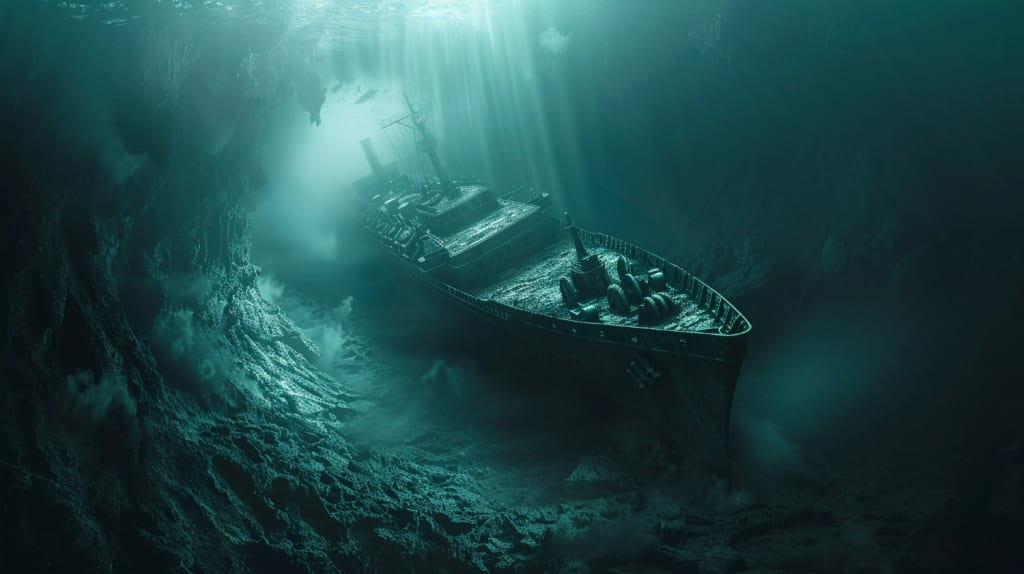
On May 26, 2013, Harrison Odjegba Okene, after getting up to go to the bathroom, unknowingly saved his own life. The ship he was working on sank due to a strange accident, and he became the only survivor. His story is unique as he is the only known person to have survived nearly three days at the bottom of the sea.
The accident occurred in the Gulf of Guinea, 32 kilometers off the coast of Nigeria, when a massive wave capsized the Jascon-4 tugboat. The 12-member crew had locked themselves in their cabins while they slept, which delayed their escape. Harrison, who was in the bathroom, was not in his cabin, making him the only one to survive. When the ship capsized, water flooded in quickly, and Harrison had to force the bathroom door open. Unfortunately, he couldn’t follow his colleagues, who were attempting to escape through the emergency exit, and tragically, three of his coworkers were swept away by the water. He himself ended up in another bathroom, where he clung to an overturned sink in the water, trying to survive.
The ship sank to the ocean floor, and while a rescue operation was immediately launched, divers were unable to locate any survivors as they couldn’t descend to the proper depth. Harrison spent nearly a day in the water before gathering the courage to leave the small air bubble he was in, then swam and groped his way to the engine room. There, thanks to another air bubble, he managed to stay alive, but he faced even more challenges, including the cold and hypothermia.
Harrison found some tools, which he used to remove some wall paneling and, with the help of a mattress, created a seat to sit on. Throughout the ordeal, he tried to keep his hope alive, praying and distracting himself from the horrors around him.
Harrison Okene spent his days in total darkness, hungry, thirsty, and cold, while being terrified and desperate. Deeply religious, whenever he felt especially frightened, he prayed to Jesus for help. Over time, the seawater began to peel the skin from his body, and he could smell the stench of decay, which he thought came from the decomposing bodies of his dead colleagues. Every small noise in the dark was amplified – the creaking of the ship, the crashing of debris, and the most terrifying of all, the sounds of fish feeding on the corpses.
Meanwhile, the Lewek Toucan rescue vessel arrived at the scene of the accident, and a deep-sea diving team was sent down to the wreck of the Jascon-4 to retrieve the bodies of the deceased crew members. The divers knew that they had a tough job ahead of them, as the ship had capsized and the water's thick mud resulted in practically zero visibility. The first obstacle they faced was the security locks, which they had to break open.
The diving team spent over an hour breaking into the ship's entrance. Once inside, the murky water was filled with furniture and other obstacles. They had already retrieved four bodies when suddenly, one of the rescue team members was touched by something in the water.
Harrison, who had almost given up hope, heard the divers knocking but initially thought they hadn’t noticed him. Then, he saw the light from one of the diver's headlamps as it swam down the corridor, but unfortunately, it disappeared too quickly for him to reach it. But then, the miracle happened: just when they thought they had found another body, it suddenly touched him and then unexpectedly squeezed his hand. They shouted, “He’s alive, he’s alive!” Afterward, the rescue team members tried to reassure Harrison that everything would be fine.
The divers were astonished that Harrison Okene had survived in the wreck. The maximum depth for recreational diving is 40 meters, and divers usually don’t stay deeper than 30 meters for more than 20 minutes. However, due to the pressure at the bottom of the shipwreck, Harrison’s air bubble had compressed, and a 6-cubic-meter bubble provided him with enough oxygen for about two and a half days. The greatest danger was the buildup of carbon dioxide, as the water absorbed the gas and prevented the CO2 levels from reaching lethal amounts. When they found him, Harrison was suffering from CO2 poisoning, struggling with shortness of breath and confusion, and he wouldn’t have lasted much longer.
The divers first warmed him up, then put an oxygen mask on him. In addition, he was at risk of decompression sickness, as nitrogen bubbles had formed in his blood due to the pressure change, and they had to treat him gradually. Harrison spent around 20 minutes with the oxygen mask to acclimatize, then was fitted with a diving helmet and harness to safely lift him out of the shipwreck. Although they were worried he might panic, Harrison remained calm as the divers led him out of the ship and brought him to the surface using a diving bell.
Harrison finally reached the surface on May 28, 2013, at around 7 PM. Disoriented, he believed he had only spent 12 hours underwater, but he later learned that he had survived for more than two days at depth. The divers brought up 1 survivor and 10 bodies, while the search for the 11th person had to be called off due to hazardous conditions.
Harrison fully recovered but struggled with survivor's guilt, and he did not attend the funerals of his colleagues, fearing that their families might react superstitiously to his survival. Since then, he has suffered from PTSD, experiencing nightmares, and he never worked on a ship again. He made a vow to God that if he was saved, he would never return to the sea.
About the Creator
The Cave Part 6
If you have ever heard a tale about yourself that you cannot remember and doubtless think is made up, you will know how I felt when Tharkin related all that the eagle had seen of me before my memories were scattered. Of far distances and traveling companions that I did not recall, camping out under the stars and making our way to the mountains with deliberate purpose. The great bird had lost contact with my party once we entered the forests, and the seven other members were not seen again by him or his brethren since.
By Jamye Sharp28 days ago in Chapters
🌿 5+ Powerful Dragon Plant Benefits for Calm, Balance & Style
Indoor plants do more than decorate a room—they transform how a space feels. One plant that stands out for both beauty and wellness benefits is the dragon plant, commonly known as Dracaena. With its elegant leaves and easy-care nature, this tropical houseplant has become a favorite among homeowners and interior designers alike.
By Leafy Heaven4 days ago in Chapters


Comments