
A Journey Through Time: Exploring the Rich History of Cricket
Tracing the Cricketing Odyssey: From Village Greens to Global Arenas

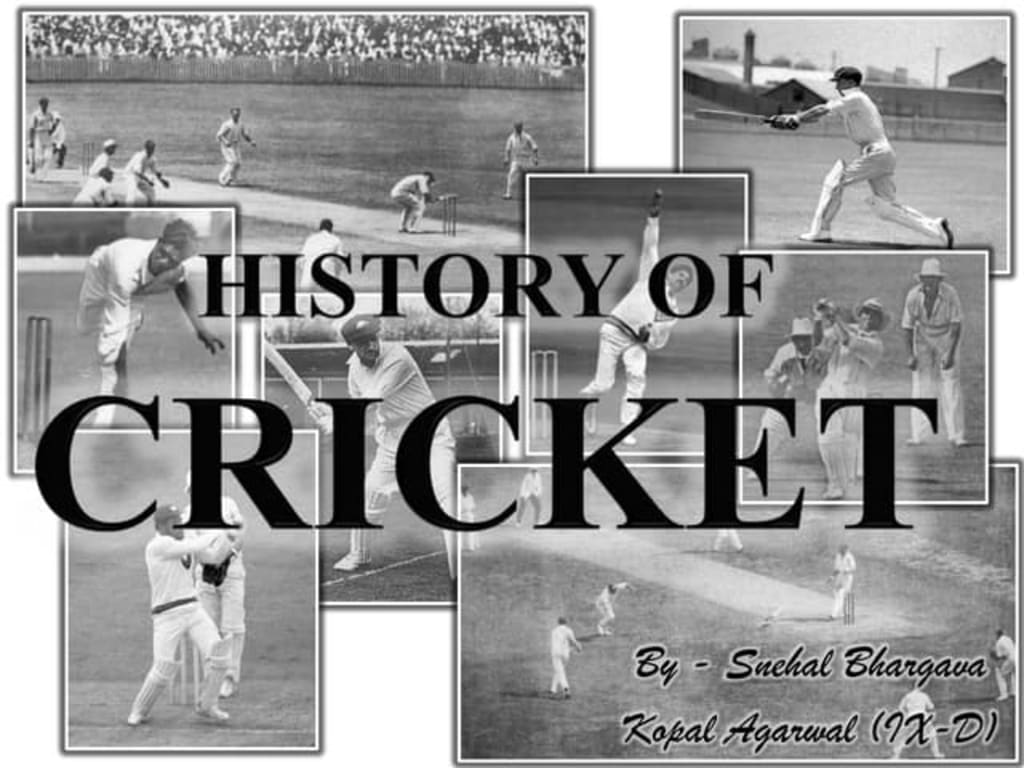
Cricket, a sport that evokes passion, camaraderie, and excitement among millions worldwide, has a history as intriguing and diverse as the game itself. From its humble beginnings in rural England to becoming a global phenomenon, cricket has undergone a remarkable journey through time, shaped by cultural, social, and political influences.
The origins of cricket can be traced back to 16th-century England, where it was played by shepherds using shepherd’s crooks as bats and a ball made of wool. Over time, the game evolved, gaining popularity among the rural population and gradually making its way to the urban centers. By the 18th century, cricket had become England's national sport, with matches being played in villages, towns, and cities across the country.
The establishment of the Marylebone Cricket Club (MCC) in 1787 marked a pivotal moment in cricket's history. The MCC became the custodian of the laws of cricket, standardizing the rules and regulations of the game, which laid the foundation for its organized development. As cricket continued to grow in popularity, it spread beyond England's shores, reaching colonies and territories of the British Empire.
During the 19th century, cricket became synonymous with British imperialism, as it was introduced to countries like Australia, India, South Africa, and the West Indies through colonial expansion. Local populations embraced the sport, adapting it to their own cultural contexts and making it an integral part of their social fabric. The establishment of domestic leagues and competitions further fueled cricket's growth, with rivalries and traditions emerging that endure to this day.
One of the most significant developments in cricket's history occurred in 1877 when the first-ever Test match was played between England and Australia at the Melbourne Cricket Ground. This marked the beginning of international cricket, laying the groundwork for the establishment of the International Cricket Council (ICC) in 1909. The ICC's role was to govern the sport globally, facilitating international competitions and promoting cricket's growth across continents.
The 20th century witnessed the rapid expansion of cricket, with new nations entering the fray and making their mark on the international stage. The emergence of legendary players like Sir Donald Bradman, Sir Garfield Sobers, and Sachin Tendulkar captivated audiences and elevated cricket to new heights of popularity. Iconic moments, such as the "Bodyline Series" between England and Australia in 1932-33 and the first-ever Cricket World Cup in 1975, became etched in cricketing lore, capturing the imagination of fans worldwide.
The latter half of the 20th century also saw the rise of limited-overs cricket, with the introduction of One Day Internationals (ODIs) and later, Twenty20 (T20) cricket. These shorter formats revolutionized the game, making it more accessible and appealing to a broader audience. The inaugural T20 World Cup in 2007 in South Africa marked a turning point in cricket's evolution, showcasing the sport's fast-paced and dynamic nature to a global audience.
In recent decades, cricket has continued to evolve, embracing technology and innovation to enhance the viewing experience and ensure fairness on the field. The introduction of Decision Review System (DRS), Hawk-Eye, and other technological advancements has added a new dimension to the game, sparking debates and controversies along the way. Moreover, the growing influence of franchise-based T20 leagues like the Indian Premier League (IPL) and the Big Bash League (BBL) has transformed cricket into a year-round spectacle, captivating fans with its blend of entertainment and sporting excellence.
As we stand on the threshold of a new era in cricket's history, the sport faces both challenges and opportunities. Issues such as player workload, the proliferation of T20 cricket, and the need for greater inclusivity and diversity continue to shape the cricketing landscape. However, with its rich heritage and global appeal, cricket remains a unifying force that transcends boundaries and brings people together in celebration of the spirit of competition and camaraderie.
In conclusion, the history of cricket is a testament to the enduring power of sport to unite, inspire, and entertain. From its humble beginnings in the English countryside to its status as a global phenomenon, cricket has captured the hearts and minds of millions around the world. As we look ahead to the future, one thing is certain: the story of cricket is far from over, and the best is yet to come.
About the Creator
Keep reading
More stories from Afeef Khan and writers in Chapters and other communities.
The Tragic Crash of US-Bangla Flight 211: Seeking Answers Amidst Sorrow
On March 12, 2018, the world was plunged into mourning as news broke of the tragic crash of US-Bangla Airlines Flight 211 near Tribhuvan International Airport in Kathmandu, Nepal. The aircraft, a Bombardier Dash 8 Q400, was en route from Dhaka, Bangladesh, carrying 71 individuals, including passengers and crew. As the devastating reality set in, shockwaves reverberated globally, leaving a profound impact on the aviation industry and the countless lives touched by the tragedy.
By Afeef Khan2 years ago in Chapters
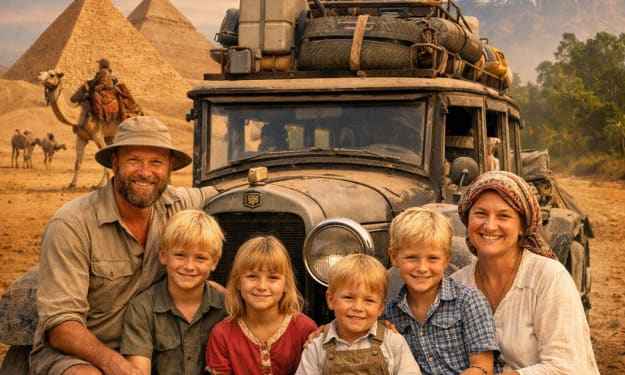
From Two Travelers to a Family of Six: The 22-Year Journey Around the World in a 1928 Car
In the late 1920s, when long-distance travel was slow, roads were rough, and the world was still largely unexplored by automobiles, a young German couple made a decision that would turn into one of the most extraordinary journeys in modern travel history. What began as a simple road trip in 1928 eventually became a 22-year global adventure. They left home as two travelers but returned as a family of six.
By Irshad Abbasi 6 days ago in Chapters



Comments
There are no comments for this story
Be the first to respond and start the conversation.