
Zootopia 2 and the Art of the Long Game
How a Sequel Reclaimed the Box Office—and Why It Matters

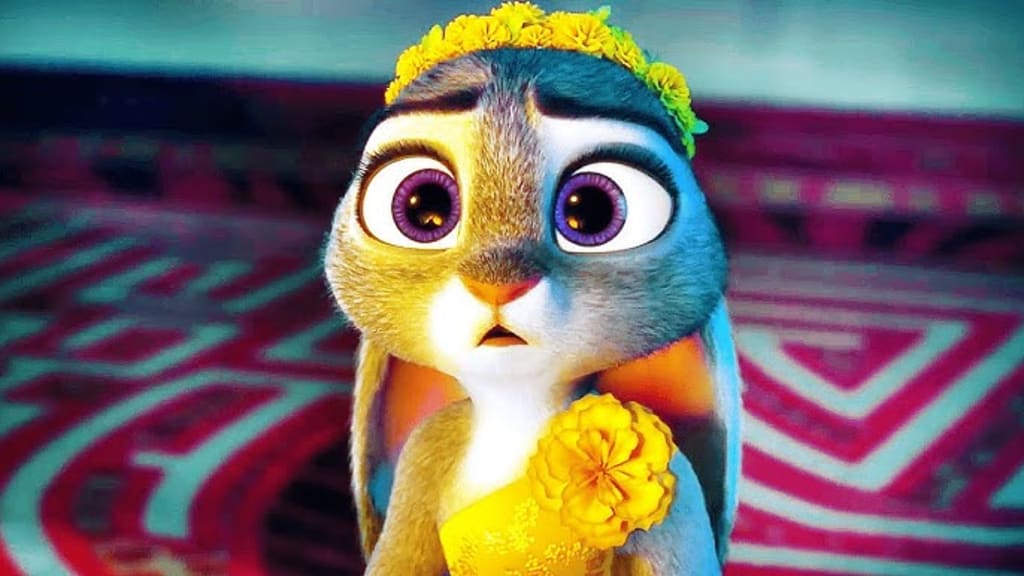
There’s a particular kind of skepticism reserved for sequels that arrive late. Not late in the calendar year, but late in cultural time—long after the original has been absorbed, quoted, memed, and gently folded into nostalgia. When Zootopia 2 was announced, the question wasn’t whether audiences loved the first film. It was whether they still needed it.
The box office has answered, decisively.
With Zootopia 2 reclaiming the No. 1 spot globally and surging past $1 billion in worldwide ticket sales—currently standing at an impressive $1.14 billion—the sequel has done more than outperform expectations. It has reminded the industry that patience, when paired with clarity of purpose, can still pay off. And perhaps more strikingly, it has proven that animation doesn’t have to chase novelty to feel relevant.
A significant portion of the film’s success comes from China, where Zootopia 2 has become nothing short of a phenomenon. The country’s massive theatrical turnout didn’t just buoy the sequel—it reshaped the narrative around it. This isn’t a domestic hit padded by overseas curiosity. It’s a global event driven by sustained international enthusiasm, something Hollywood has struggled to replicate consistently in the post-pandemic era.
What makes that success notable isn’t just scale—it’s specificity.
Zootopia has always been a film about systems. About cities built on aspiration and exclusion. About how well-intentioned structures can still fail the people inside them. These themes, introduced in the 2016 original, have only grown more resonant in the years since. The sequel doesn’t abandon that framework; it deepens it. And audiences, particularly international ones, seem to recognize themselves in that continuation.
Rather than reinventing its world, Zootopia 2 expands it laterally. The city is bigger, denser, more complex—but not shinier. This isn’t a sequel obsessed with escalation for its own sake. Judy Hopps and Nick Wilde return not as mascots, but as figures shaped by what they’ve already learned—and what they haven’t. The film trusts that viewers remember them not as archetypes, but as individuals who earned their growth.
That trust matters.
In an industry increasingly dominated by algorithmic storytelling, Zootopia 2 feels almost defiant in its confidence. It doesn’t rush through its themes. It allows jokes to breathe, emotional beats to land, and conflicts to remain unresolved longer than expected. This is family animation that refuses to flatten itself for speed.
China’s response underscores that point. The original Zootopia has long enjoyed cult-like popularity there, with its social allegory and urban world-building resonating across cultural lines. The sequel’s massive turnout suggests that audiences didn’t just show up out of loyalty—they came because the story still speaks to something lived. The tension between ambition and belonging, between surface harmony and structural inequality, translates easily when handled with care.
It also helps that Zootopia 2 looks the way it does.
The animation is richer, but not distractingly so. Fur textures, lighting, and cityscapes are rendered with technical precision, yet the film never feels like a demo reel. Visual upgrades serve story rather than overshadow it. There’s an understanding here that animation spectacle works best when it supports emotion, not when it competes with it.
The box office numbers reflect that restraint. At $1.14 billion worldwide, Zootopia 2 hasn’t just crossed the billion-dollar mark—it’s done so with consistency. Strong legs, repeat viewings, and word-of-mouth have carried it beyond opening-weekend hype. That kind of performance suggests genuine engagement, not just curiosity.
It’s also worth noting what this success represents in a broader context. Animated sequels have become increasingly risky bets. Audiences are selective. Nostalgia alone no longer guarantees turnout, and franchise fatigue is real. For every sequel that soars, several stall under the weight of expectation.
Zootopia 2 avoids that fate by understanding its own identity. It doesn’t try to be louder than the first film. It tries to be truer—to its characters, its themes, and its audience. That may sound abstract, but it’s evident in the way the film handles humor, conflict, and resolution. Nothing feels engineered solely for virality. The film isn’t chasing relevance; it’s operating from it.
Reclaiming the No. 1 box office spot isn’t just a financial victory—it’s a symbolic one. It suggests that audiences are still willing to reward stories that assume intelligence, that trust children and adults alike to engage with complexity. It suggests that global success doesn’t require dilution, only clarity.
For Disney, the win is significant. It signals that original worlds—rather than endless remakes—still have currency. That sequels can justify their existence not by expanding lore indiscriminately, but by asking better questions the second time around.
For the industry, Zootopia 2 offers a quieter lesson: scale doesn’t have to come at the expense of substance. A film can be broadly accessible without being emotionally shallow. It can appeal across borders without sanding down its edges.
And for audiences, the appeal may be simpler. This is a world they recognize—not because it’s familiar, but because it reflects something enduring. A city where everyone is told they can be anything, and slowly learns what that promise costs.
That Zootopia 2 has crossed $1 billion worldwide feels less like a surprise than a confirmation. The story didn’t arrive late. It arrived when it was ready.
In a box office landscape often dominated by urgency and noise, that patience has paid off—quietly, decisively, and at the very top.
About the Creator
Jane Carty
A graduate of Western Kentucky University with a degree in journalism and media studies, determined to give a voice to the people and places often overlooked. Bringing empathy, integrity, and a touch of humor to every story she writes.
Keep reading
More stories from Jane Carty and writers in BookClub and other communities.




Comments
There are no comments for this story
Be the first to respond and start the conversation.