
World Legends & Folklore
The Legend of the Green Children of Woolpit (England)

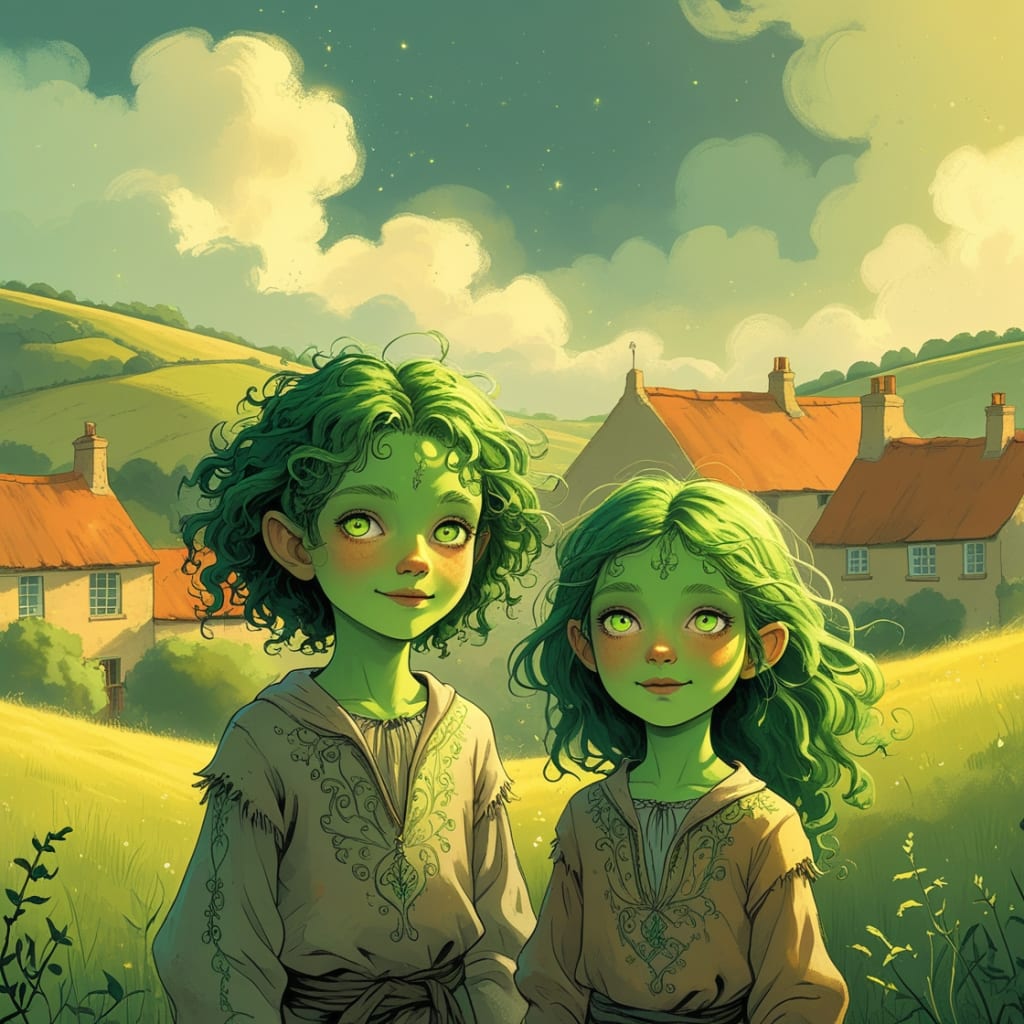
In the heart of medieval England, during the reign of King Stephen in the 12th century, lay the small, peaceful village of Woolpit. Named for the wolf pits dug around it to protect livestock, the village was surrounded by dense forests and quiet fields, untouched by the chaos of the outside world.
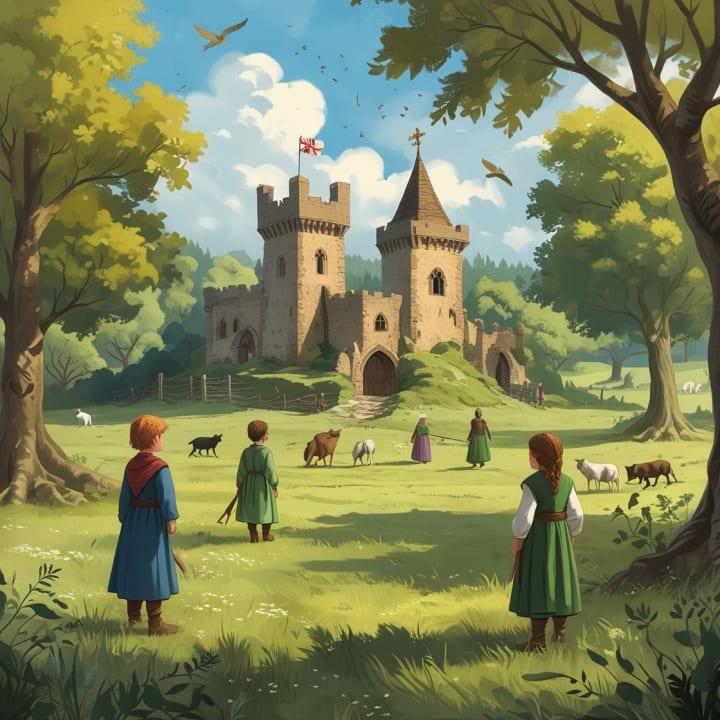
One summer day, as the harvest was being gathered, villagers were startled by a strange commotion near one of the old wolf pits. A group of workers had stopped their scything and gathered around something—or someone.

Two children stood at the edge of the pit. A boy and a girl, no more than six or seven years old. Their clothing was strange—made of unfamiliar material in odd colors—and even more remarkable was their skin: a shade of green, like the leaves in early spring.
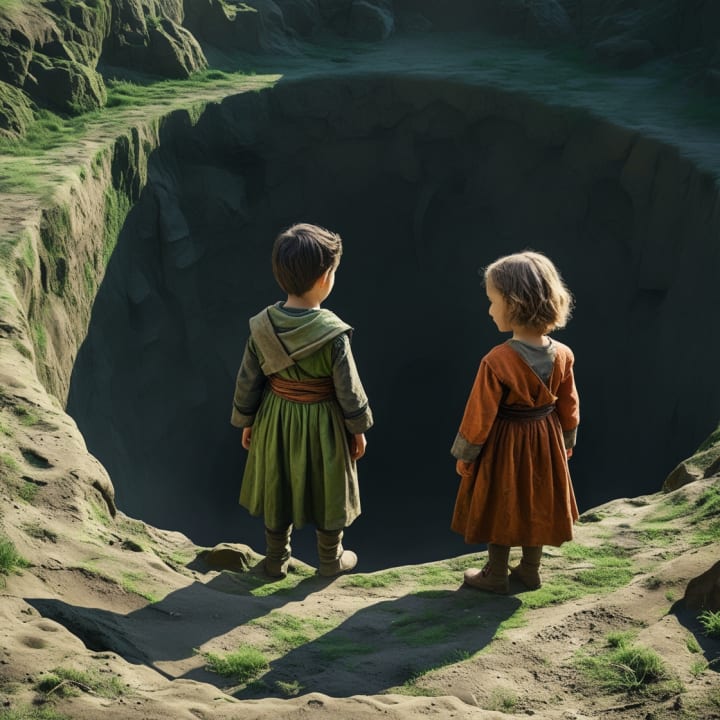
The villagers stared. The children stared back, frightened and confused. They spoke no recognizable language. They looked malnourished and disoriented, and when food was offered to them, they refused everything—until someone brought out raw broad beans still in their pods. These they devoured eagerly, as if they had eaten nothing else in their lives.
They were taken in by a local landowner, Sir Richard de Calne, who tried to care for them. Over time, the children slowly adapted. The girl, older and stronger, learned some English and began to eat normal food. The boy, however, grew weaker and died within a few weeks of their discovery.
The girl lived and grew into a healthy young woman. Her green hue faded, her language improved, and eventually, she was able to share parts of her story—though it only deepened the mystery.
She said they came from a place called “St. Martin’s Land,” a world of perpetual twilight, where the sun never rose and the light was always like dusk. In their land, everything was green—the sky, the trees, the people. They lived underground, and she claimed there was a “luminous country” across a large river, visible only from their side.
One day, she and her brother had been herding their father’s cattle. They heard a strange sound, like bells, and followed it through a tunnel or cave. Suddenly, they found themselves in the bright sunlight—blinding and unfamiliar. Disoriented, they emerged near the wolf pits and were discovered by the villagers.
She could not explain how they traveled between the worlds or how the tunnel had disappeared behind them. She never saw her home again.
As she grew, the girl—now simply known as Agnes—assimilated into English society. She was baptized, educated, and eventually married a man from King's Lynn, a royal official. She lived a full life, yet never wavered in her story of the green-skinned children from another world.
The tale spread across the countryside, carried by travelers and scribes. Chroniclers like William of Newburgh and Ralph of Coggeshall recorded the story decades later, each with slight variations, but the core remained: two green children appeared out of nowhere, speaking no known language, from a land without sun.
Some believe the story is allegory—a symbolic tale about foreigners or refugees arriving in an isolated village. Others theorize it was a folk memory of Flemish children orphaned during war, sick with chlorosis (a type of anemia that can give the skin a greenish tint). But these explanations never quite satisfy. Why did they claim to be from underground? Why the strange clothes, the language, the beans?
Modern interpretations suggest everything from interdimensional portals to alien encounters. Yet Woolpit remains quiet, its fields unchanged. Near the old wolf pits, long filled and forgotten, a plaque marks the mysterious arrival of the green children—a reminder of a story that defies easy explanation.
Centuries later, the mystery remains. Perhaps the story is simply that—a tale told by firelight on dark village nights, embellished over time. Or perhaps, just beyond the veil of the known world, there still lies a place where the sky is always twilight, and children walk among the beans in green.
About the Creator
Keep reading
More stories from Muhammad Saeed and writers in BookClub and other communities.
Robin Hood
The forest was unusually quiet that morning, as if Sherwood itself held its breath. Mist clung to the trees like a secret, and every bird's song seemed half-sung. In a clearing by the old oak — known as the Greenwood Throne — Robin Hood knelt, tightening the string on his longbow.
By Muhammad Saeed9 months ago in BookClub
Rachel Reviews: Lakefront Wolves by Joseph Deegan
Meet Finn. He's an 18 year old kid who has potential. He's bright with great school scores and he's also an athlete, a footballer of some prowess. He has it all going for him, it would seem, and yet, he's determined to send what could be a well-planned, stable existence firmly off the rails. He drinks, he smokes, he takes drugs, he has violent tendencies and he's in danger of losing not only his mind but all that he holds dear.
By Rachel Deeming10 days ago in BookClub
8 Life-Changing Books That Will Help You Let Go
Whether we’re releasing past mistakes, painful relationships, regret, anger, or unrealistic expectations, the ability to let go determines how freely we live. Many people intellectually understand that they should move on, but emotionally, they remain trapped in cycles of rumination and attachment.
By Diana Meresc3 days ago in BookClub
The Piggy Project
I’ve had so many names in this life I lose track of which ones were ever really mine and which ones I wore because someone needed me to. Some were handed to me before I had words to refuse them, before I knew what they meant, before I knew I could say no. Most weren’t meant to hurt. That doesn’t mean they didn’t leave marks. Marks that told me who I belong to, who I am by way of who claims me, recognizes me in the good and bad, who walks beside me.
By Fatal Serendipity7 days ago in Confessions


Comments (1)
thank's nice work...