
Why do many people who like *Gone with the Wind* dislike *Jane Eyre*?
Many readers who like *Gone with the Wind* tend to dislike *Jane Eyre*, and vice versa. Do these two novels reflect different worldviews?

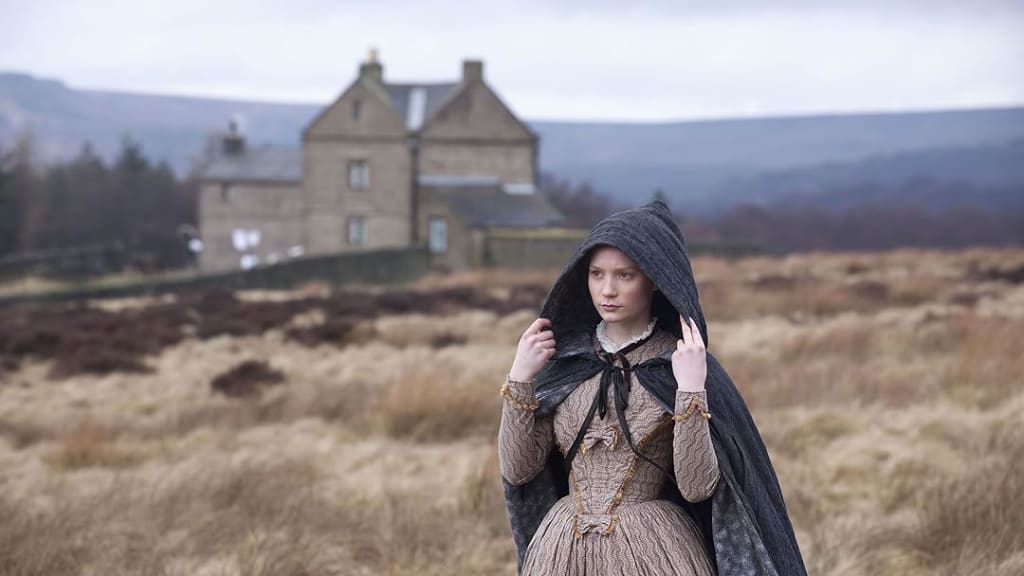
When I was in elementary school, I read *Jane Eyre* first, followed by *Gone with the Wind*. I deeply disliked the portrayal of the male protagonist and his wife in *Jane Eyre*. In short, the story of *Jane Eyre* is about a Cinderella figure who was mistreated from a young age and later met a wealthy, domineering man. After various complications, she discovers that the man has a wife, decides to leave, earns money on her own, and eventually returns to him after his wife dies.
As a child, I found the male protagonist's description of his wife to be revolting and terrifying. He freely insulted his wife in front of Jane, using all kinds of vile words to describe how disgusting his wife was. Stripping away the emotions, the factual information conveyed by his words is that Bertha Mason was a renowned beauty in Jamaica, admired in social circles. Her mother had a history of mental illness and was confined. Her father sought a marriage for her with a suitor five years younger from a prestigious family. Bertha fell in love with this fiancé, and her entire family worked together to win him over. The fiancé claimed to love Bertha too, so they got married, and her father gave her a dowry of £30,000. However, after the marriage, conflicts arose, and Bertha developed mental illness. Meanwhile, her husband's father and brother passed away, leaving him an inheritance and making him wealthy enough not to rely on Bertha’s dowry. He then took Bertha to Europe, imprisoned her in his estate, and confined her for ten years. During those ten years, he lived a hedonistic life in Europe and claimed to have fallen in love with a young governess, planning to marry her—until Bertha’s brother interrupted the wedding.
In the male protagonist's account of his marriage to Bertha, he repeatedly said things like "I wasn't after her money," "she seduced me," "her rivals provoked me," and "I never had a private conversation with her." In short, he portrayed himself as someone who was deceived and trapped. But since Bertha was already mad, everything was told from his perspective, allowing him to spin the story however he liked:
"My father didn’t mention her wealth, only telling me that Miss Mason was a famous beauty from Spanish Town, which was true. She was indeed a beautiful woman, tall and dark, like Blanche Ingram. Her family was eager to secure me because of my noble birth. She shared the same intent. They dressed her in fine clothes and introduced us at a ball. I seldom saw her alone and spoke with her even less. She used every method to please me, displaying her beauty and talents to win my favor. Men in her social circle admired her and were jealous of me. I was swept away by vanity and lust, foolishly believing that I loved her. The dull flirtations of society, combined with youthful lust, recklessness, and ignorance, can make a person do all sorts of foolish things. Her relatives encouraged me, her rivals provoked me, and she seduced me, so before I knew it, I was married to her."
After inheriting his father’s fortune and imprisoning Bertha, his internal thoughts were that she had tainted him, she was a filthy burden, and she had wasted his youth. He thought as long as he provided her with proper care, he could live with a clear conscience:
“Move to Europe where no one knows your stained name, no one knows you bear this filthy burden. You can take the madwoman to England, lock her up in Thornfield, give her proper care, and protect her. Then, you can travel wherever you like, freely marry someone else, and leave behind the woman who soiled your name, wasted your youth, and isn’t truly your wife.”
The "proper care and protection" he spoke of meant turning the once-famous beauty of Spanish Town into a creature resembling a wild beast.
“In the dim shadows of the room, a figure paced back and forth. Was it human or beast? At first glance, no one could tell. It crawled on all fours, scratching and growling like a strange animal. But it wore clothes, its thick gray-white hair matted like a horse’s mane, covering its head and face. Mr. Rochester shoved me behind him. The madwoman lunged forward, fiercely grabbing his neck and biting his cheek. They struggled. She was a tall woman, almost as big as her husband, and quite strong. Though he was strong, she nearly choked him several times. He could’ve knocked her down with a well-aimed punch, but he chose only to grapple with her. Finally, he pinned her arms, and Grace Poole handed him a rope. He tied her arms behind her back, then tied her to a chair.”
It was horrifying. The father and son had pursued Bertha for her beauty and wealth, but now she was labeled as a “madwoman.” The male protagonist praised the female lead, calling her “my little dove” while continuing to degrade his wife as insane and demented.
On the other hand, in *Gone with the Wind*, Scarlett also harbors feelings for a married man, but the portrayal of Melanie is much kinder. Melanie is not as beautiful or eye-catching as Scarlett, and her personality is gentle and mild. Scarlett was jealous of her for many years, not understanding why Ashley loved her, but at the same time, she and Melanie relied on each other through many trials. When Melanie died, Scarlett finally realized that she had always loved Melanie, who had been her emotional strength all along. The friendship between these two women transcended Scarlett’s infatuation with Ashley.
The first time I read about Melanie’s death, I couldn’t help but cry. Behind that door, Melanie was slowly dying, and with her death, Scarlett lost the strength she had unknowingly depended on for so long:
"Why, oh why hadn’t she realized sooner how much she loved Melanie, how much she needed her? But who would have thought that this small, ordinary woman would be the one she could count on in times of crisis? She remembered that quiet, hot afternoon at Tara when the smoke from the Northern soldier’s body still lingered in the air, and Melanie stood at the top of the stairs holding Charles’s sword. At the time, Scarlett had thought, ‘How ridiculous! Melanie can’t even lift that sword!’ But now she knew that if needed, Melanie would have charged down the stairs to kill that soldier—or die herself. Yes, that day, Melanie had been ready to fight for her, sword in hand."
When Scarlett looked back and realized that Melanie had always been there, quietly guarding her, loving her with unconditional loyalty, she understood the immense strength Melanie had offered her. When Scarlett realized that this strength was about to disappear forever, she felt her courage and confidence fading away.
“Melanie was the only female friend I ever had,” Scarlett thought sadly. “She was the only woman besides my mother who truly loved me. And just like my mother, everyone who knew her wanted to stay close to her.”
Both novels are written by female authors, yet the depiction of the secondary female characters clearly shows a difference in the authors' artistic sensibilities.
About the Creator
Keep reading
More stories from Daihang Wu and writers in BookClub and other communities.
What impression did Thailand leave on you?
The middle class in Thailand often strives to send their children to bilingual or international schools, starting from kindergarten. The annual tuition fees are at least 100,000 THB (around 20,000 RMB) and rise to a minimum of 200,000 THB (around 40,000 RMB) by high school.
By Daihang Wuabout a year ago in Earth
Rachel Reviews: The Spiral Archive by Pieter Hendrik
It's difficult for me to know where to start with a review of this book as it was, for me, an entirely unique experience and one that I'll probably never have again. I don't want that to be interpreted as unenjoyable but it has left me scratching my head a little and ruminating on its content, its themes and its characters.
By Rachel Deeming9 days ago in BookClub
The Kitchen Witch
The Power of the Hearth Kitchen witchcraft arises from an ancient understanding that spiritual power is embedded in the rhythms of daily life. Across cultures and centuries, the hearth functioned as the physical and symbolic heart of the home. Fire provided warmth, transformed raw ingredients into nourishment, preserved health through boiling and drying, and offered protection against scarcity and illness. In agrarian societies, survival depended on the careful management of food, seasonal knowledge, and domestic order. These responsibilities elevated the kitchen into a space of profound importance, where skill, intention, and continuity sustained entire households.
By Marcus Hedare7 days ago in BookClub




Comments
There are no comments for this story
Be the first to respond and start the conversation.