
When We Stopped Reading: On the Lost Art of Feeling Deeply
How the Decline of Reading is Quietly Changing the Way We Love, Feel, and Connect

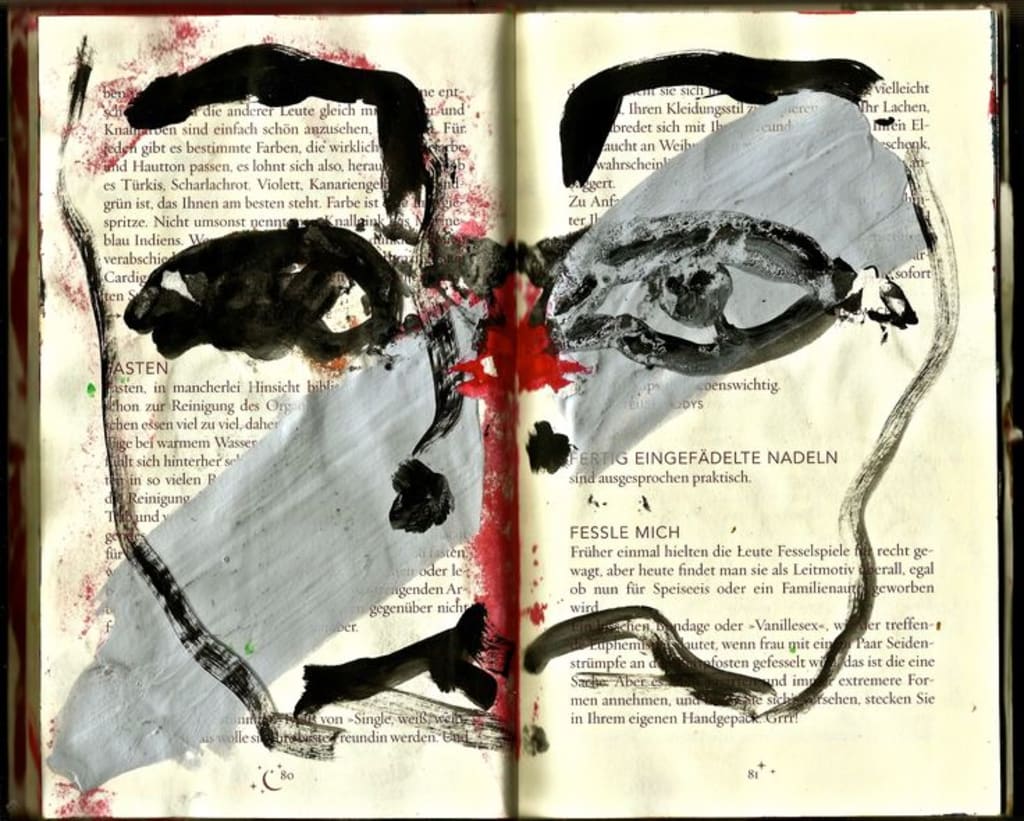
There was a time when people carried books like sacred objects. Folded pages stained with coffee and fingerprints, verses underlined in pencil, words whispered between lovers as secret codes. A time when we met ourselves — or who we could be — in the lives of fictional characters, when heartbreaks were rehearsed in pages long before they found us in real life. But something shifted.
We still read, yes. We scroll. We tap. We consume headlines, reels, captions carefully trimmed to hold our attention for no more than seven seconds. But do we read, in the old, intimate way? The kind of reading that asked for silence and presence, the kind that left us aching, thinking, changed?
Fewer people read books today. That’s no secret. Between streaming services, social media, and the race for productivity, books have become relics of a slower time. The long pause. The luxury of attention. And maybe we tell ourselves that life is too fast now — who has time for 400 pages of internal monologue when emails flood in at 2 a.m. and the world is always on fire?
But I wonder — as we stopped reading, what else did we leave behind?
Perhaps it's just a coincidence, but I have noticed something else too: we seem less soft these days. Less romantic. Less willing to feel big feelings without shame. Love is often ironic now, tenderness is filtered through memes, and vulnerability is something we schedule between therapy sessions and deadlines. There’s a hardness creeping in — a defense mechanism, perhaps — but I can’t help wondering if it’s also the result of no longer living among stories.
Because literature never asked us to be efficient. It asked us to feel.
It taught us how to sit with discomfort, to unravel motivations, to fall in love slowly with someone’s mind. It showed us what longing sounds like in a sentence. What sorrow looks like when stretched across an entire chapter. It invited us to see the world through another’s eyes — a child’s, a murderer’s, a ghost’s, a woman abandoned by time. And in doing so, it made us better at being human.
In books, we were allowed to hurt without needing a solution. We mourned characters as though they were real people. We discovered the exact words to describe our quietest thoughts. We held metaphors in our mouths like lozenges on difficult days. And in the process, our own emotions found space to bloom. Messy, inconvenient, poetic emotions.
Now, I meet people who haven’t read a novel in years. People who find love in dating apps but are terrified of calling it love. People who would rather text for hours than sit in silence with someone and just be. There is nothing wrong with progress, with technology — but there is something tragic in the absence of slowness, of introspection, of stories that don’t fit in a TikTok. Because stories taught us how to wait.
To wait for a letter. To wait for a character to grow. To wait for the slow burn of attraction to build into something worth falling into. Romance in literature was never instant. It was layered. It was filled with misunderstandings, with yearning glances, with missed trains and returned books and unspoken truths. It was sacred, not transactional.
Can we still feel that way now, in a world that rewards speed over depth?
I think we can. But we might have to reclaim it. Start small.
Pick up the book that’s been gathering dust on your shelf. Let it ruin your day in the best way. Read a paragraph that makes you cry and send it to someone who will understand. Remember what it felt like to read The Little Prince for the first time, or to stay up all night with a story that wouldn't let you go. Carry a novel in your bag, not just your phone. Read to your partner. To your friend. To yourself, in bed at night, when the world finally goes quiet.
Because when we stopped reading, we didn’t just lose the stories — we lost a piece of ourselves.
Books remind us that it’s okay to feel deeply. That there’s beauty in confusion, in longing, in not knowing. They remind us that being soft is not a weakness, that love is not embarrassing, that the world is vast and layered and filled with strange, broken, beautiful people trying to make sense of their lives — just like us.
And maybe, just maybe, if we return to reading, we might remember how to return to each other.
About the Creator
Amar Habeeb
A wandering mind with ink-stained fingers, I write to make sense of the noise inside turning ache into art, Somewhere between heartbreak and healing, humor and hurt, you’ll find my voice: unpolished, unfiltered, and searching.
Keep reading
More stories from Amar Habeeb and writers in BookClub and other communities.
My Body Forgot to Forget
They told me I was better. That after twenty-six sessions, five hundred and something dollars, and an entire box of off-brand tissues, I was over it. Neatly folded trauma, filed alphabetically under “C” for childhood stuff that wasn’t that bad anyway, placed into the drawer of memory marked Resolved.
By Amar Habeeb8 months ago in Confessions
My New Book is Finally Here
My poetry collection Beautiful and Brutal Things is done. It's actually done and finally published over 270 pages. Over a year of my life went into this book. More than a year, really. Long days at my computer, sometimes seven days a week because I couldn't stop even when I probably should have. Then two months of editing that felt harder than the writing itself. But it's finished, and I'm still standing, and the book is real.
By Tim Carmichael4 days ago in BookClub
Occult Linguistics
The Hidden Architecture of Sacred Language Occult linguistics occupies a distinctive intellectual and spiritual territory where language is understood as an active, formative force rather than a passive vehicle for meaning. In this framework words, letters, sounds, and symbols are treated as living structures capable of shaping perception, consciousness, and reality itself. Language functions not only as representation but as participation, embedding human thought within cosmological, ritual, and metaphysical systems that have developed over thousands of years. Across esoteric traditions language is regarded as an extension of creation, a medium through which invisible principles become perceptible and operative.
By Marcus Hedare5 days ago in BookClub


Comments (1)
You make some great points about how reading has changed. I used to love getting lost in a book for hours. Now, with all the distractions, it's hard to find that time. Do you think we can ever get back to that old, intimate way of reading? And what about the idea that not reading makes us less empathetic? I've noticed that too. It's something to think about.