
What I Learned from War and Peace by Leo Tolstoy
What I Learned from War and Peace by Leo Tolstoy

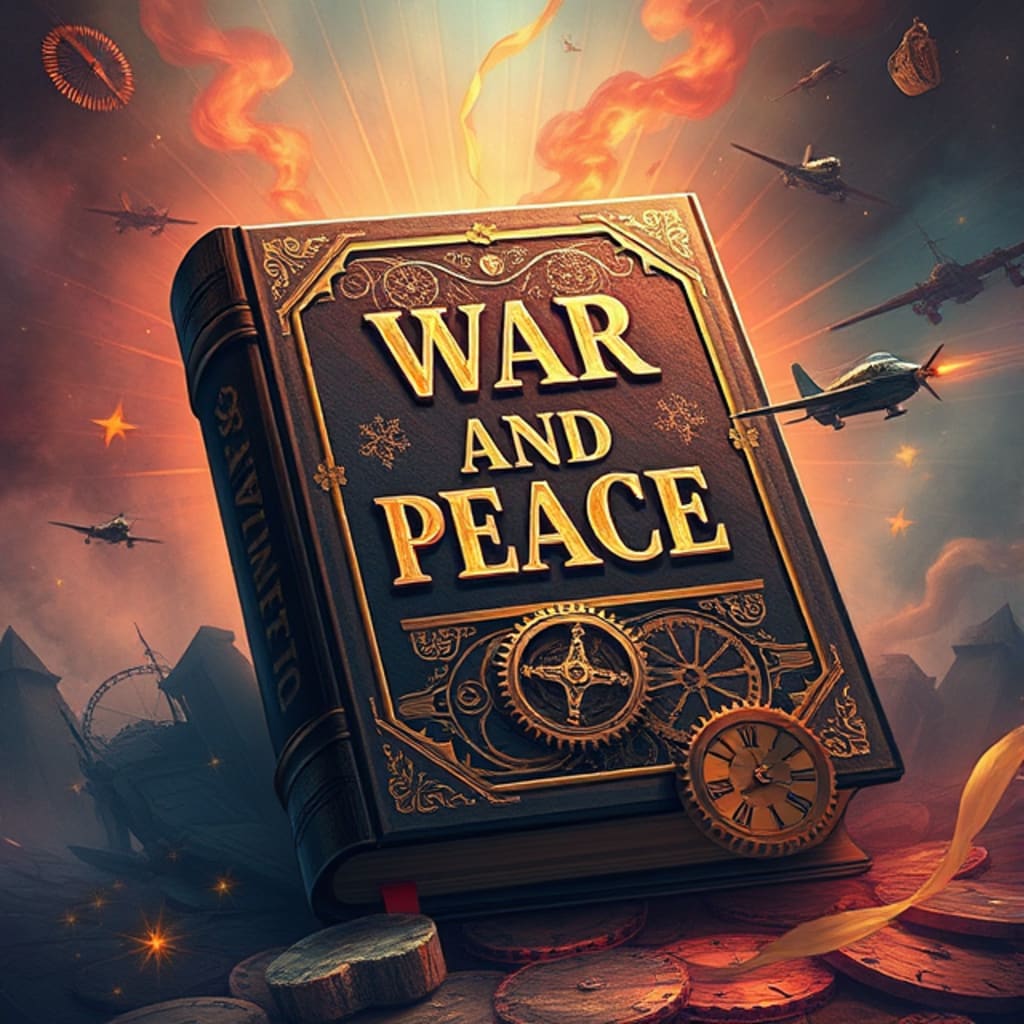
Few novels have the reputation of War and Peace by Leo Tolstoy. It’s a book that looms large, often intimidating readers with its sheer length and complexity. Yet, for those who embark on the journey through its pages, the rewards are profound. When I read this monumental work, I found myself not only immersed in a vivid historical tapestry but also grappling with timeless questions about life, love, power, and the human condition. Here are the key lessons I gleaned from this masterpiece.
1. History is Made by Ordinary People
One of the most striking aspects of War and Peace is its treatment of history. Tolstoy challenges the traditional "great man" view of history, where events are driven by the decisions of powerful leaders. Instead, he emphasizes the collective actions of countless individuals—from soldiers in battle to farmers in their fields. This perspective reshaped my understanding of historical events, highlighting the importance of ordinary people in shaping the world.
For example, Tolstoy’s depiction of the Napoleonic Wars demonstrates how the chaos and unpredictability of human behavior often derail even the most meticulous plans of generals and kings. This insight was a reminder to me that history isn’t just the story of rulers but of everyone who lived through those moments.
2. The Complexity of Human Relationships
Tolstoy’s characters are richly drawn and incredibly human. They are flawed, inconsistent, and capable of growth or regression. Through the lives of Pierre Bezukhov, Natasha Rostova, Andrei Bolkonsky, and others, I saw reflections of the many facets of love, friendship, and family.
Natasha’s youthful passion and mistakes reminded me of the impulsiveness and vulnerability of first love, while Pierre’s existential search for meaning mirrored questions I’ve asked myself. The evolving dynamics between these characters taught me that relationships are rarely straightforward. They are messy, sometimes painful, but ultimately enrich our lives.
3. The Illusion of Control
A recurring theme in War and Peace is the illusion of control. Tolstoy often shows how individuals, no matter how powerful, cannot dictate the outcomes of their actions with certainty. Whether it’s Napoleon planning his military campaigns or a character navigating personal relationships, their efforts are frequently undone by unforeseen circumstances.
This resonated deeply with me. In a world obsessed with planning and achievement, Tolstoy’s message was a humbling reminder of the limits of human control. It encouraged me to embrace uncertainty and to find peace in the flow of life, rather than trying to force it into a predetermined mold.
4. The Search for Meaning
Pierre Bezukhov’s spiritual journey is one of the most compelling arcs in the novel. From a disillusioned aristocrat to someone who finds solace in simplicity and connection, Pierre’s transformation is a meditation on the search for meaning.
Reading about Pierre’s struggles made me reflect on my own life. His eventual realization that happiness lies in living authentically, being kind, and finding joy in the present moment struck a chord with me. It reminded me that life’s purpose isn’t something external to be achieved but something internal to be discovered.
5. The Beauty of the Everyday
While War and Peace is filled with grand battles and dramatic events, some of its most memorable moments are the quiet, everyday scenes: a family gathering, a walk through the countryside, or a simple conversation. Tolstoy’s ability to find beauty and significance in these ordinary moments was a powerful lesson for me.
In our fast-paced world, it’s easy to overlook the small joys of daily life. Tolstoy’s writing encouraged me to slow down and appreciate the present, to find meaning in the mundane, and to cherish the simple pleasures of existence.
6. The Power of Forgiveness and Redemption
Many of Tolstoy’s characters experience profound moments of forgiveness and redemption. Whether it’s reconciling with family or finding inner peace after a mistake, these moments underline the importance of letting go of grudges and embracing compassion.
This theme was particularly moving for me. It reminded me that forgiveness isn’t just about others; it’s also about freeing ourselves from the burden of resentment. By showing his characters’ struggles and growth, Tolstoy inspired me to strive for empathy and understanding in my own life.
7. Life is a Paradox
Perhaps the greatest lesson I learned from War and Peace is that life is full of paradoxes. It is both fleeting and eternal, chaotic and ordered, painful and beautiful. Tolstoy doesn’t offer easy answers or neat conclusions; instead, he invites readers to embrace life in all its complexity.
This perspective was transformative for me. It taught me to accept the contradictions in my own life and to see them not as obstacles but as the essence of what it means to be human.
Conclusion
Reading War and Peace was not just an intellectual exercise; it was a deeply emotional and philosophical experience. Tolstoy’s insights into history, human nature, and the meaning of life have stayed with me long after I turned the final page.
If there’s one thing I’ve learned above all, it’s that the journey of understanding ourselves and the world around us is never-ending. Like the characters in Tolstoy’s epic, we are all works in progress, navigating the complexities of existence with courage, curiosity, and grace.
About the Creator
Fred Bradford
Philosophy, for me, is not just an intellectual pursuit but a way to continuously grow, question, and connect with others on a deeper level. By reflecting on ideas we challenge how we see the world and our place in it.
Keep reading
More stories from Fred Bradford and writers in BookClub and other communities.
What I Learned from Animal Farm by George Orwell
Few literary works have stood the test of time as effectively as George Orwell's Animal Farm. Published in 1945, this novella is an allegorical masterpiece that encapsulates the dangers of totalitarianism, the corruption of ideals, and the cyclical nature of power. Beneath its surface as a "fairy story," as Orwell himself labeled it, lies a deeply political narrative that continues to resonate with readers of all generations. Through its sharp satire and symbolic characters, Animal Farm explores profound themes about human nature, politics, and societal structures.
By Fred Bradfordabout a year ago in BookClub
7 Books For People Who Feel Lonely
Loneliness is not a personal failure—it is a deeply human experience. In a world more connected than ever, many of us still feel unseen, unheard, or emotionally isolated. We scroll, we work, we perform, yet something essential feels missing: meaningful connection. The good news? Books can become lifelines. They remind us that others have felt what we feel, survived it, and transformed it into wisdom.
By Diana Meresc6 days ago in BookClub



Comments
There are no comments for this story
Be the first to respond and start the conversation.